Color is a critical part of any product. It’s the first thing your customer sees. Whether you are manufacturing components for assembly or finished assembled goods, the color has to be right every time or you risk scrapping, reworking, or discounting the product. This impacts your bottom line.
In aerospace, a defect, mismeasurement, or slight error can be the difference between a successful launch and mission failure. It’s because of this that aerospace companies have the most stringent requirements for quality and dimensional accuracy.
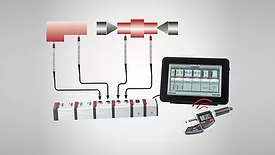
Today, there are myriad ways to breathe new life into existing gages without the need to invest in new gaging. Users are familiar with the gages they have. They may be under quality control cycles, are easy to use, provide good results, and have proven themselves over time.
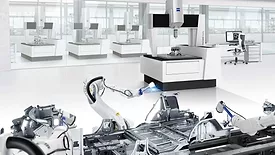
How do you select the right shop-floor CMM for your production line? Making an informed decision means understanding application needs, what solutions can meet your needs and how to “future proof” your selection.
The discipline of machine vision encompasses imaging technologies and methods to perform automatic inspection and analysis in various applications, such as verification, measurement, and process control.
Lenses play a crucial role in the quality of the images produced by a machine vision system since they determine the sharpness of the image on the camera sensor. Lenses can influence image quality in a variety of ways.
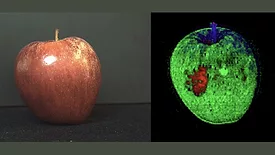
While machine vision applications have been highly successful for decades using "analytical" vision tools, deep learning is able to successfully solve very complex classification and object detection problems with ease.
Product packaging - in an extremely broad range of markets from food to pharma - frequently incorporates an extremely important sealing technology called “tamper evident” seals.
This (PM)2 method can be applied to any organization, public or private, and contributes to the better management of a country as described by the authors in our SAC-Model.