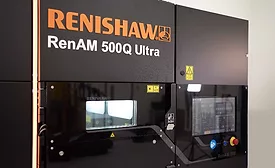
Renishaw has expanded its RenAM 500 series with the launch of the RenAM 500 Ultra AM system, cutting build times by up to 50 percent without compromising on quality, and giving metal additive manufacturing (AM) users the tools to produce parts faster.
The National Center for Defense Manufacturing and Machining (NCDMM) and America Makes, the National Additive Manufacturing Innovation Institute, announced the winners of the $1.2M Environmental Additive Research for Tomorrow’s Habitat (EARTH) Project funded by the Office of the Under Secretary of Defense, Research and Engineering Manufacturing Technology Office (OSD(R&E)) and the Air Force Research Laboratory (AFRL).
The automation of materials testing has been an evolutionary process. The task of automatically feeding standard specimens into universal testing machines has been in place for decades—at least as far back as the 1980s.
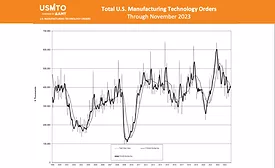
Despite a soft economic landing, U.S. manufacturing technology orders, per the U.S. Manufacturing Technology Orders Report published by AMT, saw a 10.3% decline to $399.8 million, contributing to a year-to-date drop of 13.3% compared to 2022.
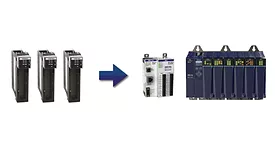
All three of the Rockwell Automation ControlLogix analog motion modules, 1756-HYD02, 1756-M02AS, and 1756-M02AE, have reached end-of-life and, as of December 2024, will be discontinued and no longer available for sale.
A new method to manage quality must not only improve quality, it must also address areas of waste. If we could detect defects even earlier in the process and given that increasing the number of quality gates is untenable, what else can we do?
The Deflategate scandal erupted following the 2014 AFC Championship Game between the New England Patriots and the Indianapolis Colts when accusations emerged that the Patriots had intentionally deflated footballs to gain an unfair advantage.
Aircraft wheels are put through aggressive and cyclic NDT inspection protocol and the wheel’s potential for failure has led manufacturers to require various repetitive inspections at regular intervals.