Have you ever heard the expression “that is not the way we do things here!” Paradigm paralysis is one of the most prevalent—and least recognized—barriers to innovation in modern industry.
The traditional manufacturing environment of predictable supply chains alongside stable customer demand and patient improvement cycles no longer exists in modern industry operations.
Six Sigma is entering a fourth generation—one that connects operational excellence directly to enterprise strategy. This article explores how leaders can evolve continuous improvement (CI) into a portfolio-driven discipline that links financial outcomes, innovation, and customer experience.
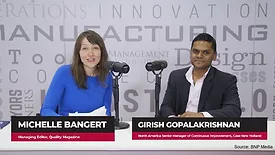
Michelle Bangert talks with Girish Gopalakrishnan, North America senior manager of continuous improvement at Case New Holland, about connected frontline workers at The Assembly Show in Chicago.
In an era where cybersecurity is often seen as just a budget checkbox, it's crucial to recognize its potential to drive growth and enhance trust. Explore how leveraging a combined approach of Lean, Six Sigma, and Theory of Constraints can transform cybersecurity from a mere shield against threats into a powerful catalyst for business success.
Successful Lean Six Sigma (LSS) deployment requires management leadership. Trained as LSS Champions, leaders sponsor and oversee projects, aligning them with strategic objectives and allocating resources.
Manufacturing leaders prioritize quality, as customers expect consistency, safety, and performance. While companies have long relied on lean initiatives and Six Sigma programs, automation has emerged as a crucial tool for enhancing these efforts. In the last two decades in automation, I've seen it evolve from a cost-saving measure to a means of achieving consistency and precision throughout production, focusing on supporting quality at every stage rather than just integrating robots.