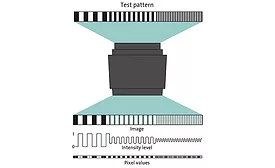
The cameras, lenses and illumination used in a machine vision system all make significant contributions to the overall quality of the images that are produced. The rapid developments in CMOS image sensor technology over the last few years have created significant challenges for lens manufacturers.
Lighting selection and setup play a critical role in the success of a machine vision application. Vision systems rely on specific types of lighting to optimize contrast or to highlight a specific feature of interest.
Bruker announced the launch of the new Luxendo InVi SPIM AIM next-generation lattice light-sheet microscope, which features an advanced illumination module (AIM) for lowest phototoxicity light-sheet fluorescence microscopy of live samples.
In the dark ages before the prevalence of LED lighting choices, shop floors had to rely on consumer lighting options, like fluorescent and incandescent bulbs, or later, through xenon bulbs concentrated through fiber optics, according to Bradley Weber, Datalogic’s application engineering leader and industry product specialist for manufacturing.
Precision lenses do an excellent job conveying contrast and color from object to image, but they can do a poor job of transferring accurate dimensions, especially if they have small focal lengths.