
Articles Tagged with ''lighting''


Vision & Sensors | LIghting
Machine Vision Lighting Powers Industrial Automation Advances
Learn how lighting can optimize multispectral imaging, collaborative robots, and deep leaning applications.
Read More

Vision & Sensors | Optics
Core Concepts of Machine Vision Lighting
Proper lighting design is essential to assure a successful machine vision project. Ignoring this is one of the most common causes of machine vision project failures.
Read More
Vision & Sensors | Lighting
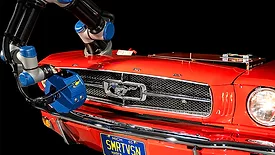
Creative Illumination Techniques Enable Computational Imaging
Computational imaging can simplify certain problems that are difficult to solve with standard visual imaging.
Read More
Vision & Sensors | Machine Vision 101
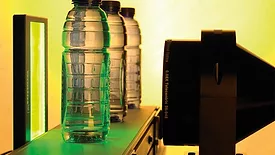
Machine Vision Lighting and Why It’s Important
When considering illumination, the object or field to be imaged is really what matters.
Read More


Vision & Sensors | Lighting
Three Challenges In Machine Vision Lighting Today And How To Solve Them
With increased speeds, dynamic production lines, and advanced inspection processes, smart automated lightng is driving machine vision solutions.
Read More

Test & Inspection
Shining A Light On Color Quality Control
Monitoring color during the entire production process can help manufacturers identify color drifts before they become a problem.
Read More

Vision & Sensors | Lighting
Simplify Deep Learning Systems with Optimized Machine Vision Lighting
Smart Lighting Improves Image Input Data for Effective Convolutional Neural Networks
Read More