Fostering a culture of continuous improvement (CI) is vital for success in today’s fast-paced industry. Leaders emphasize that CI is a mindset that empowers every employee to drive meaningful change through shared values, engagement, practical tools, and continuous feedback.
Contract manufacturers can enhance their competitive advantage by applying quality best practices from the medical and aerospace industries, both of which demand flawless performance and strict contamination control.
Rebecca H. Mott's article highlights how W. Edwards Deming's 14 principles can drive organizational success in today's fast-paced business environment. It connects Deming’s insights to the American Society for Quality’s Innovation Body of Knowledge, emphasizing strategic focus, leadership, and effective processes for sustainable innovation.
APQP’s roots trace back to the 1980s U.S. automotive industry, where fierce competition from Japanese manufacturers pushed companies like Ford, GM, and Chrysler to improve quality and consistency.
Athletes facing challenges are often told to "return to the fundamentals." Odell Beckham Jr.'s iconic one-handed catch in 2014, deemed "absolutely impossible," showcased his talent and inspired young players. This highlights the crucial role of fundamentals in achieving excellence in sports and beyond.
In our ever-changing world of global business, quality is a cornerstone of success. Organizations striving for excellence cannot afford to overlook Total Quality Management (TQM), a management philosophy centered on the continuous improvement of processes, products, and services through the involvement of all employees.
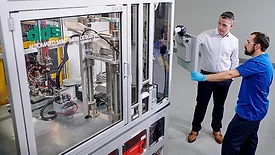
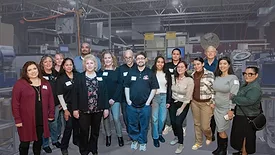
Reed Switch Developments Corp. (RSD), a woman-owned manufacturer in Racine, WI, specializes in magnetic reed switches and sensors. Recognized as last year’s Quality Plant of the Year, RSD has achieved a 25% increase in sales year-to-date, leveraging in-house technical expertise and automation to manage growth amid rising costs and economic uncertainty.
As technology continues to evolve, the integration of innovative solutions will be essential for driving future growth and success in the manufacturing industry.
Today’s manufacturing environment demands greater product variety, shorter lead times, and higher customer expectations. To meet these challenges, manufacturers need agile and efficient intralogistics solutions, specifically scalable, modular systems that adapt to production changes and optimize resources while ensuring high quality.
Lean thinking doesn’t just require casting aside what was learned in school or on the job – it also calls for re-thinking beliefs that may have been held since childhood.
Many continuous improvement (CI) champions encounter resistance to adopting the necessary mindset, often perceiving individuals as closed-minded or too comfortable. Unlearning long-held beliefs can be stressful, especially for those whose careers depend on them, and psychologists note this process can often be harder than learning new skills—particularly for the most successful individuals.