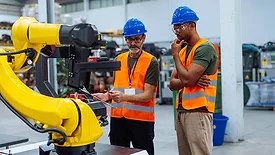
AI is profoundly reshaping manufacturing, enabling businesses to achieve higher quality standards, greater operational efficiency and more imaginative resource utilization.
Unplanned downtime challenges manufacturers, but AI-powered predictive maintenance helps predict failures and reduce costs. A Deloitte study shows that 86% of executives view intelligent factory technologies as crucial for future competitiveness.
ERP systems have evolved to integrate key business functions and remain relevant, but their complex implementation requires effective planning for success.
As manufacturing quality demands grow, the shift to artificial intelligence (AI) presents an opportunity to streamline paper-intensive processes, reduce errors, and enhance product quality through better data integration.
While enjoying my Cheerios, I encountered a hard piece of plastic, dubbed a "quality escape." I reported this to General Mills, hoping for a thorough investigation, but received only a generic response with a coupon. I was left disappointed that my feedback didn’t prompt serious quality control actions.
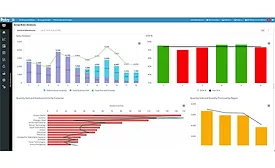
Quality professionals are using statistical tools, originally meant for product quality control, to tackle climate change. For example, control charts that monitor manufacturing variations are now tracking energy consumption, identifying spikes, and measuring carbon emissions.
Embedded quality can enhance manufacturing strategies amid ongoing product failures and recalls. Discover why delivered quality is key to your organization’s success.
A customer inquired about confidence intervals for capability indices, emphasizing their role in process capability reporting. The capability index, often represented by Cpk, estimates how well a process metric meets customer requirements.
NEW YORK, NY—By the end of this decade, manufacturers worldwide will generate 4.4 zettabytes of data. Many organizations currently lack the expertise needed to leverage this massive influx of data fully, resulting in inefficiencies and revenue losses of hundreds of millions of dollars annually.
Teaching Lean and Six Sigma tools is an exciting journey, especially with statistical methods like ANOVA and regression analysis. With two decades of experience, I've seen how these concepts can be intimidating to candidates. However, mastering data and variable relationships is essential for effective problem-solving.