Quality assessments of parts often rely on a "yes" or "no" on a printed report, a "good" part versus "bad." However, advancements like 3D scanning allow engineers to visualize and analyze surface textures, revealing crucial insights beyond basic roughness values, which is vital for meeting increasing performance demands.
Risk assessment is not a one-time exercise but a continuous cycle that must adapt to changes in organizational context, industry regulations, and emerging threats.
This article highlights the importance of risk management in Conformity Assessment Bodies (CABs). It discusses key principles and tools to help CABs identify and mitigate risks, enhancing resilience and assessment accuracy. Read one to see what practical insights are offered for integrating risk management into CAB operations.
Over the last 20 years at conferences, I've noticed many improvement posters rely on line and bar charts, which aren't always effective. While some use control charts and histograms, they often miss illustrating the "before and after" of improvements. It's crucial to better showcase these changes with appropriate chart types.
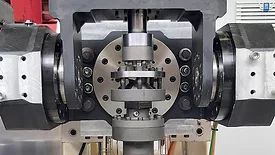
AHP Hydraulics, a Belgian solutions integrator known for delivering "smart solutions in hydraulics," faced a significant challenge from client SIDEM NV, which needed a more precise ball joint tester for its automotive suspension and steering units.
Last month, we covered how quality engineers use control charts, capability analysis, and Pareto charts. In Part 2, we'll explore how they link these patterns to their underlying causes.
Collecting measurement and test data in manufacturing is vital for enhancing productivity and cutting costs. However, if key practices are not followed, resources can be wasted. To maximize the value of quality data, three essential actions must be taken.
In the fast-paced manufacturing industry, agility is vital for adapting to design changes. A centralized method for tracking modifications ensures team alignment, reduces miscommunication, and enhances productivity, fostering collaboration to keep up with innovation.
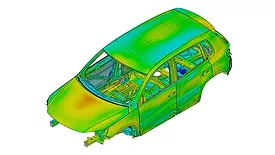
Simulation software lets engineers evaluate and fine-tune stamping lines before dies are cut or parts are produced.
March 12, 2025
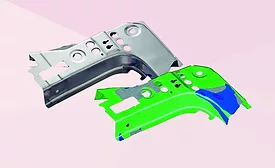
PFÄFFIKON, Switzerland—AutoForm Engineering GmbH, a supplier of software for stamping and body-in-white (BiW) assembly processes, has released a new version of its AutoForm Forming R12 software. This version provides new capabilities and enhancements for the sheet metal forming process, in particular for the feasibility and validation phases of stamping processes.
Quality engineers help manufacturing teams identify and resolve production issues through data analysis. They use statistical tools to uncover root causes and apply principles from methodologies like Six Sigma and Lean Manufacturing.
 RSS
RSS