When people think of medical devices, they often picture pacemakers, insulin pumps, or MRI scanners. Increasingly, however, medical innovation no longer comes in metal or plastic—it comes in code. Software as a Medical Device (SaMD) refers to software intended to perform a medical function without being part of a physical device.
I was watching an NFL Football game when I first heard it. The commentator—interestingly enough, the rules commentator, a new fixture in football broadcasts, in place to help the audience better understand the how’s and why’s of the way a game is being officiated—referred to the situation as a “50 guys in the bar standard.”
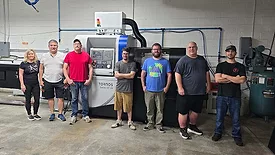
As Grand Traverse Tool has moved deeper into the medical, aerospace, and energy markets, quality verification requirements have become increasingly demanding.
Well-executed Advanced Product Quality Planning (APQP) is a cornerstone of most successful product launches across a wide spectrum of manufacturing companies today.
To stay profitable as a manufacturer, you have to run a tight ship. I’ve been lucky enough to visit with the owners and key people at thousands of our manufacturers all over the world.
Managers in regulated industries often rely on control charts to confirm that processes are under control. That expectation is built into most quality systems, but when engineers use those charts only to document compliance, they lose a chance to study how the process behaves.
Successful Lean Six Sigma (LSS) deployment requires management leadership. Trained as LSS Champions, leaders sponsor and oversee projects, aligning them with strategic objectives and allocating resources.
Explaining control charts is difficult due to the unappealing terminology in quality management. Terms like “control charts” and “Statistical Process Control” can deter understanding. Alternative names like “process behavior charts” haven't improved appeal either. Given the popularity of user-friendly tracking on smart devices, there’s a need to rebrand these tools to make them more accessible and engaging.
AI is transforming manufacturing, with major companies enhancing quality and smaller firms like Composiflex Inc. reducing inventory and improving delivery through business intelligence. With 72% of manufacturers using AI reporting cost reductions and increased efficiency, these tools present essential growth opportunities in the face of evolving supply chain risks.
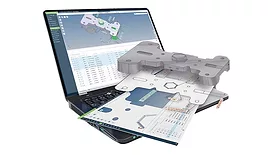
In the manufacturing landscape, the disconnect between design, production, and quality is a growing challenge. As OEMs embrace Model Based Definition (MBD) and Product Manufacturing Information (PMI), suppliers must adapt quickly. Discover how innovative solutions are bridging these gaps, streamlining the journey from 3D design to inspection, and driving a more efficient future in manufacturing.
 RSS
RSS




.webp?height=168&t=1762275482&width=275 "a mid-adult male factory worker in protective gear")