How do we know when the differences between populations are evidence of real differences, or merely differences to be expected by the nature of random samples?
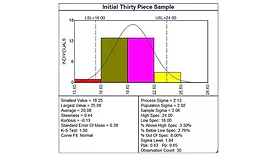
A process was, on an irregular basis, failing to meet the mark, perhaps 5% of the time. The process engineer observed the process in action and took a sample of thirty parts for analysis.
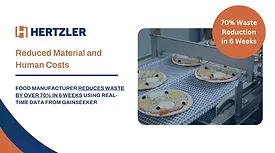
Giorgio Foods cut waste by over 70% in 6 weeks! Learn how real-time data from GainSeeker replaced manual tracking, transforming their culture and bottom line.
For decades, quality has been treated as something that sits alongside production rather than as an integral part of it. Most organizations invest in quality primarily to avoid failure: recalls, regulatory findings, customer complaints, and brand damage.
I’m fond of the phrase “These words say this. These words don’t.” I first encountered it in the marketing of the company Pig Newton, the production company of comedian Louis C. K.
If you’re new to digital twins, you don’t need a moonshot program. You need a clear question, a modest scope, and a disciplined way to keep your model useful.
A digital twin is a high-fidelity model of something in the real world – a product, machine, production line, or entire factory – that you can safely test and optimize on a computer instead of the shop floor.
The manufacturing industry is undergoing a transformation driven by rapid technological advancements, changing consumer preferences, and evolving regulatory frameworks.
By investing in intelligent systems today, manufacturers gain not only the agility to navigate tariffs but also the foundation for continuous improvement.
In large part, 2025 supply chains have been defined by tariffs. More than just an accounting problem, they have become an ongoing point of contention and stress for manufacturers struggling to protect margins and maintain product sustainability.
 RSS
RSS