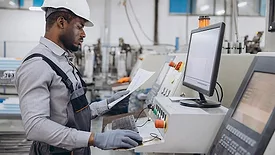
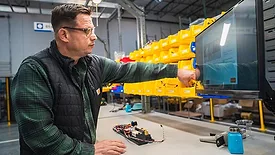
Quality isn’t just a department; it's a mindset that distinguishes thriving companies from just surviving. Customers expect flawless, on-time delivery, but many manufacturers only react to issues, patching cracks to keep production going. ERP software can transform this, making quality a proactive strategy.
AI is transforming manufacturing, with nearly 60% of top use cases leveraging it to reduce defects and boost productivity, though questions about the extent of these improvements remain.
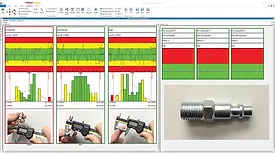
Measurement data software collects contextual information that offers real-time insights and actionable items, ensuring that key details about the workpieces are not overlooked in a busy manufacturing environment.
Digital twins, once a concept of speculative fiction, are now essential in manufacturing and quality control. These virtual replicas of physical assets enable organizations to simulate and optimize processes, allowing for precise predictions and error detection far beyond traditional trial-and-error methods.
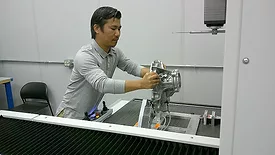
Factories are increasingly using laser measurement systems for improved quality control, replacing manual inspections with faster and more accurate tools. Industries like automotive, aerospace, and medical are seeing significant benefits, especially in precision and waste reduction.
Before 2018, Trace Die Cast struggled with complex quality reports that were time-consuming to compile. That year, they adopted ZEISS PiWeb, enhancing data management and improving communication for quicker decision-making on the shop floor.
I saw a discussion on building vs. buying Quality Management System (QMS) software. While many shared thoughts on specific products, few addressed the core decision between building or buying. Most agreed that available solutions didn’t fit their needs, revealing common issues in software acquisitions that start with this key choice.
Recent research shows significant manufacturing job deficits, particularly in Wyoming, while Illinois had many open roles but left 70% unfilled. This reflects a broader workforce shift post-pandemic, with millions retiring early and many changing jobs for better opportunities.
 RSS
RSS