Quality Magazine logo
search
cart
facebook twitter linkedin youtube
  • Sign In
  • Create Account
  • Sign Out
  • My Account
Quality Magazine logo
  • NEWS
  • PRODUCTS
    • FEATURED PRODUCTS
    • SUBMIT YOUR PRODUCT
  • CHANNELS
    • AUTOMATION
    • MANAGEMENT
    • MEASUREMENT
    • NDT
    • QUALITY 101
    • SOFTWARE
    • TEST & INSPECTION
    • VISION & SENSORS
  • MARKETS
    • AEROSPACE
    • AUTOMOTIVE
    • ENERGY
    • GREEN MANUFACTURING
    • MEDICAL
  • MEDIA
    • A WORD ON QUALITY PUZZLE
    • EBOOK
    • PODCASTS
    • VIDEOS
    • WEBINARS
  • EVENTS
    • EVENT CALENDAR
    • IMTS
  • DIRECTORIES
    • BUYERS GUIDE >
      • Supplier Insights
    • NDT SOURCEBOOK
    • VISION & SENSORS
    • TAKE A TOUR
  • INFOCENTERS
    • Digital Quality Management Systems
    • NEXT GENERATION SPC & QUALITY ANALYTICS
  • AWARDS
    • ROOKIE OF THE YEAR
    • PLANT OF THE YEAR
    • PROFESSIONAL OF THE YEAR
  • MORE
    • Expert Columns
    • NEWSLETTERS
    • QUALITY STORE
    • INDUSTRY LINKS
    • SPONSOR INSIGHTS
  • EMAG
    • eMAGAZINE
    • ARCHIVES
    • CONTACT
    • ADVERTISE
  • SIGN UP!
Software

Software

Arthur’s 4-50 Rule: Identifying the Small Fraction That Drives the Biggest Impact

This is Arthur’s 4-50 Rule—4% of anything produces 50% of the benefits or problems.

By Jay Arthur
a factory floor where a male engineer is giving a guided tour to a female manager
Credit: simonkr, E+ Collection, Creative #1205959398 (Royalty-free)
January 20, 2026

In the late 1800s, Vilfredo Pareto observed that 20% of Italians held 80% of the wealth. This has since become known as the 80/20 rule—20% of what you do produces 80% of the benefit. Similarly, 20% of any business produces 80% of the mistakes, errors, waste and lost profit. Where Vilfredo Pareto thought it only applied to wealth, Quality visionary Joseph Juran generalized it to all phenomena, especially defects. Juran actually gave this rule a name: Pareto’s Rule. Juran later said he wished he’d named it “Juran’s Rule” so that he would have gotten credit for it.

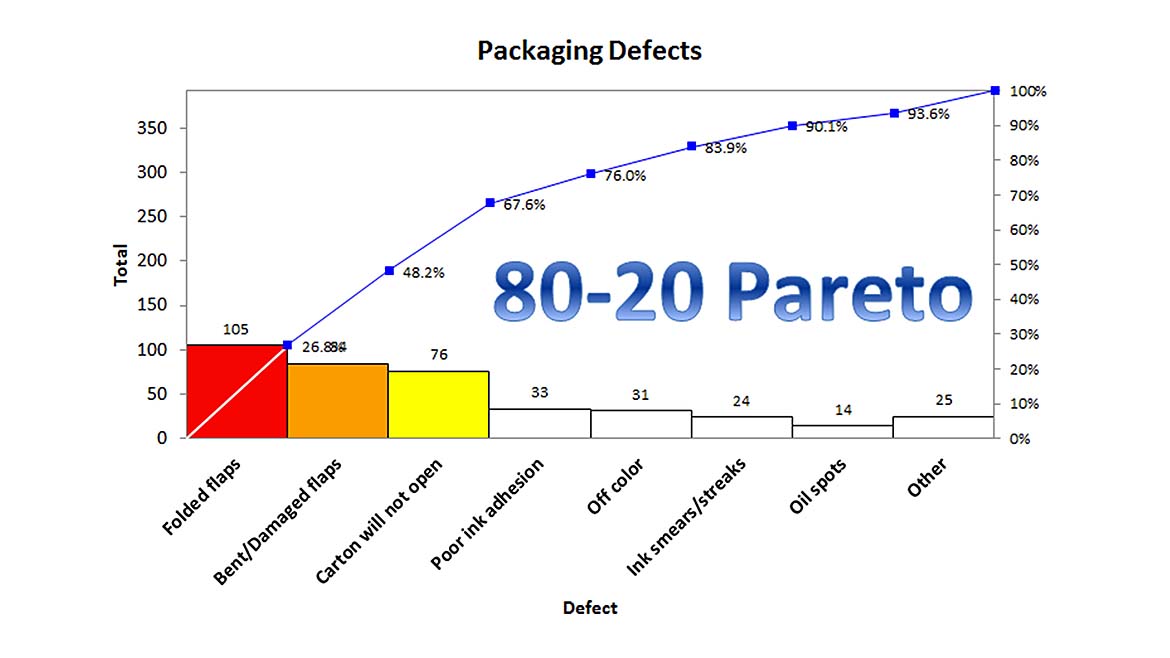
Over the years, working with data from industries as varied as manufacturing to healthcare, I have found that Pareto’s Rule doesn’t go far enough. Since the 80/20 rule is a power law, the distribution also applies within the 20%. So as little as 4% contributes over 50% (Figure 1).
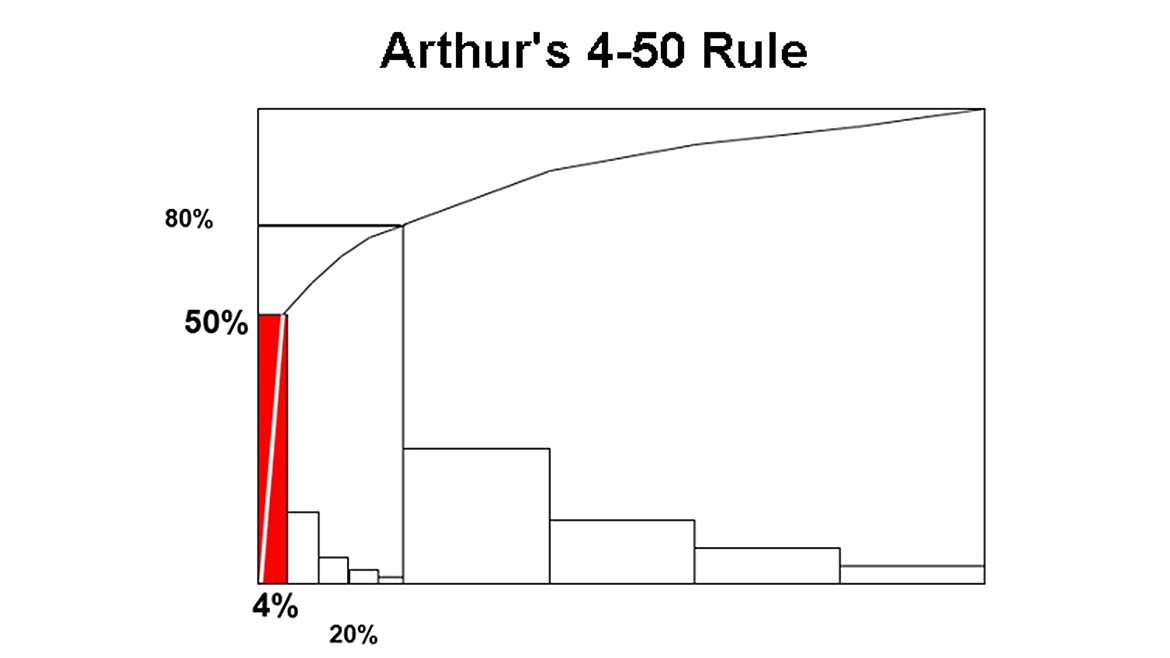
The image displays a Pareto chart illustrating the 80/20 rule
Credit: simonkr, E+ Collection, Creative #1205959398 (Royalty-free)

In America, 4% of population holds over half the wealth. 4 city blocks out of 100 have over half the crime. This means that when you boost patrols in those four blocks, crime goes down. Four percent of Boy Scouts become Eagle Scouts—the superstars. This is true of any sport or job. Four percent will become the stars.

Having learned from Juran, I call this Arthur’s 4-50 rule.

This distribution applies in other areas—4% of the knowledge about any subject will deliver over half the results. This means that you don’t need to know everything to do anything. You just need to know the essence. There exists, in any field of knowledge, the vital few things you need to know to succeed. This is true of Lean Six Sigma.

In business, 4% of customers generate half of the sales. Four percent of customers also cause over half the customer service issues. This means that you can stop catering to the crybabies and start scouting more customers like the top 4%.

In business operations, 4 steps out of 100 cause over half of the mistakes, errors, waste, rework, lost productivity, lost profits and patient harm. This means that you don’t have to fix everything in your business, just the one step out of 25 that is the Million Dollar Misstep.

This is Arthur’s 4-50 Rule—4% of anything produces 50% of the benefits or problems. The dark side of the 4-50 rule—the 50% at the other end will produce only 4% of the benefit or problems.

The Pareto Chart

While Juran named Pareto’s Rule, I believe that Dr. Kaoru Ishikawa invented the Pareto Chart. His Guide to Quality Control (1968 pgs.42-49) shows the first Pareto chart—a sorted bar chart and a cumulative line chart. (Note: He called it a Pareto Diagram.) Here’s an example (Figure 2, pg. 43):
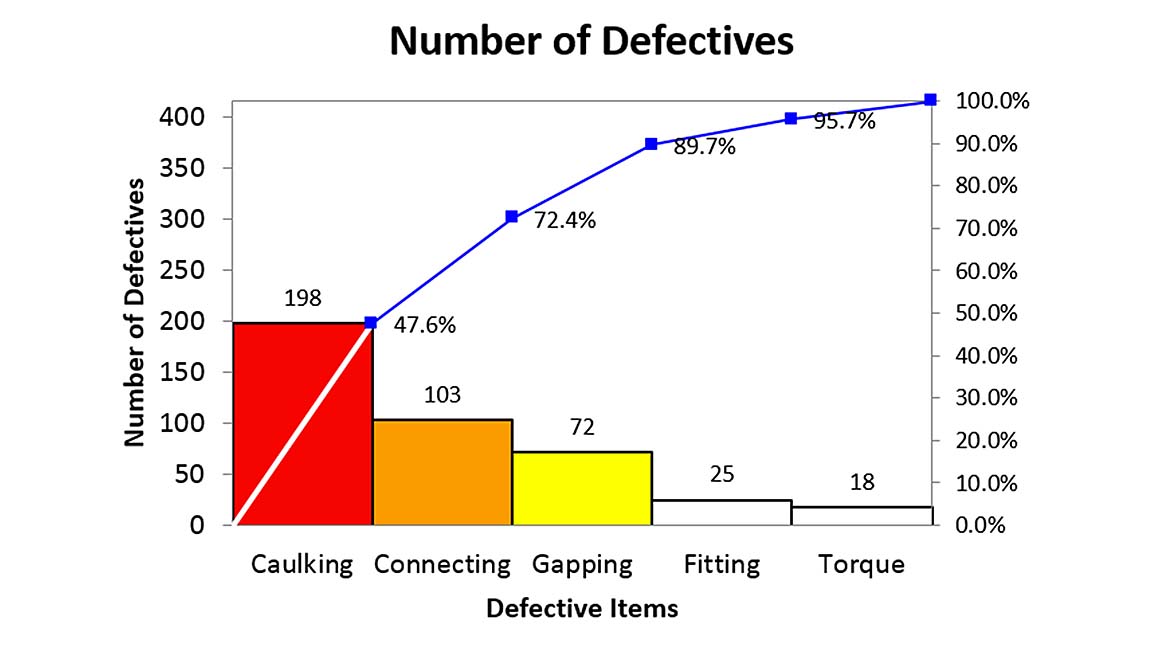
The image displays a Pareto chart illustrating the frequency of various defective items, helping to prioritize which issues to address first
Using Excel PivotTables and Pareto charts, it’s possible to use the 4-50 rule to pinpoint and solve the most pressing problems.
Credit: simonkr, E+ Collection, Creative #1205959398 (Royalty-free)

Arthur’s 4-50 Rule in Quality Improvement

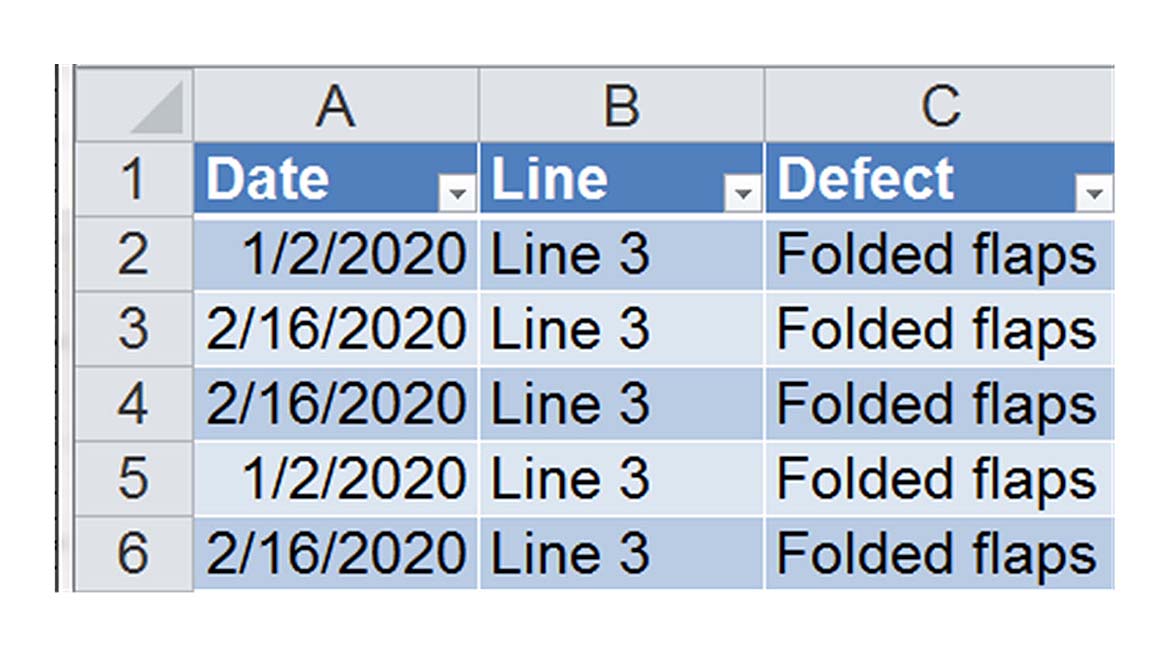
Using defect data that looks like that shown in Figure 3, it’s possible to use PivotTables to start drilling down into data to find the 80-20 and 4-50 rule. This data shows the when, where and what of packaging defects.
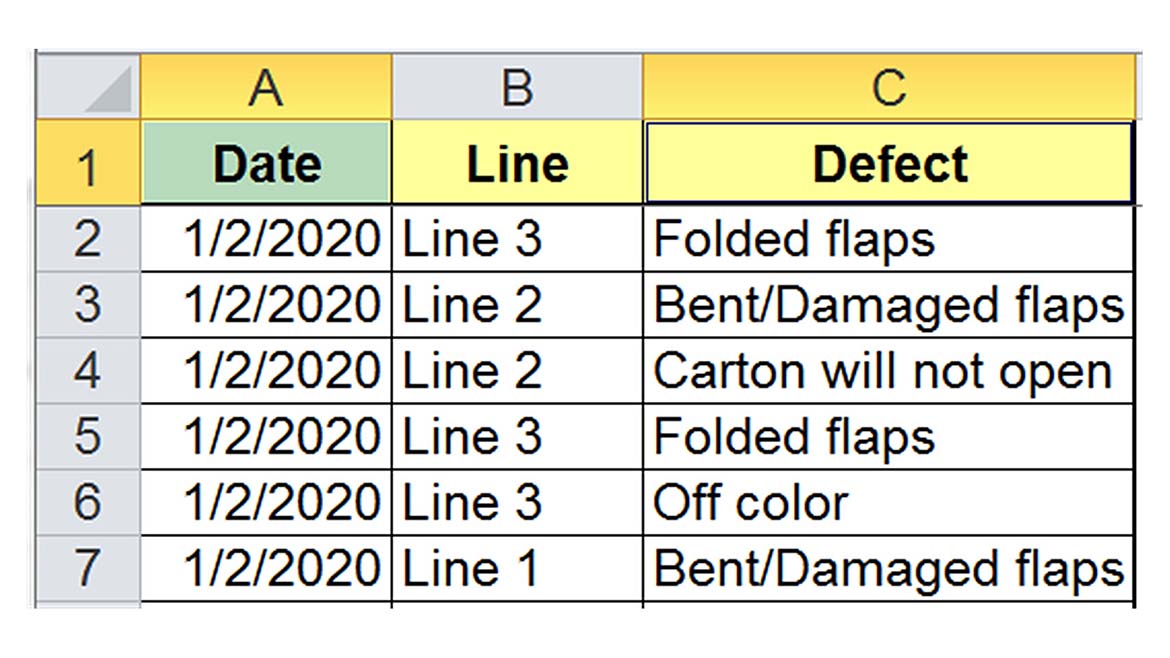
The image displays a spreadsheet tracking quality control defects
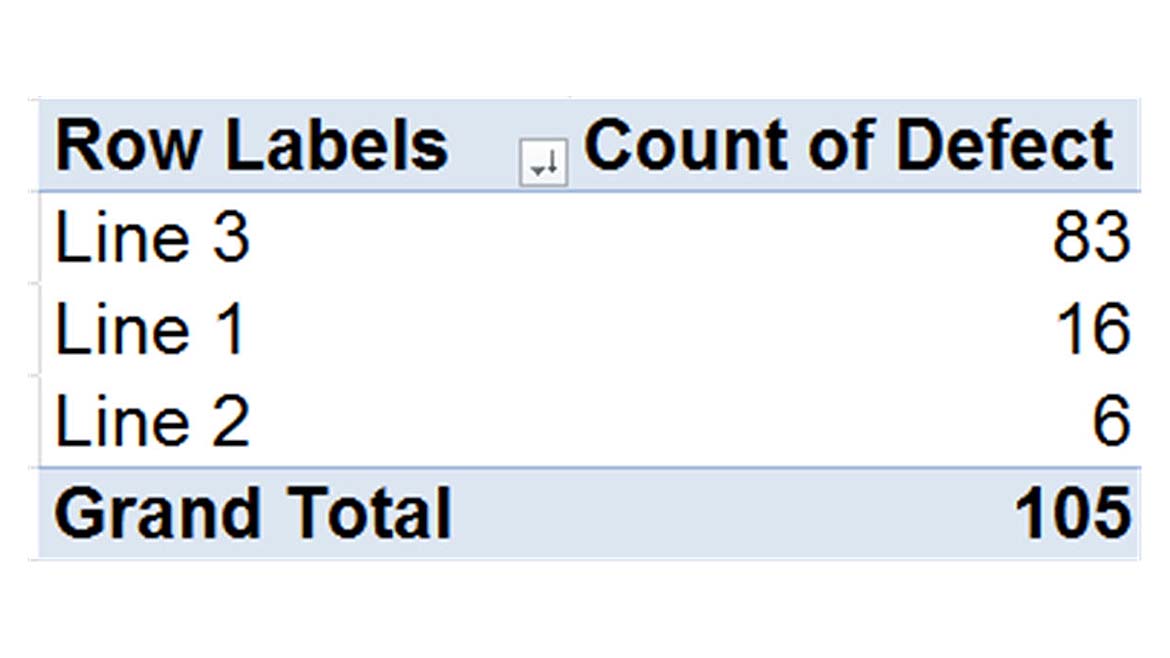
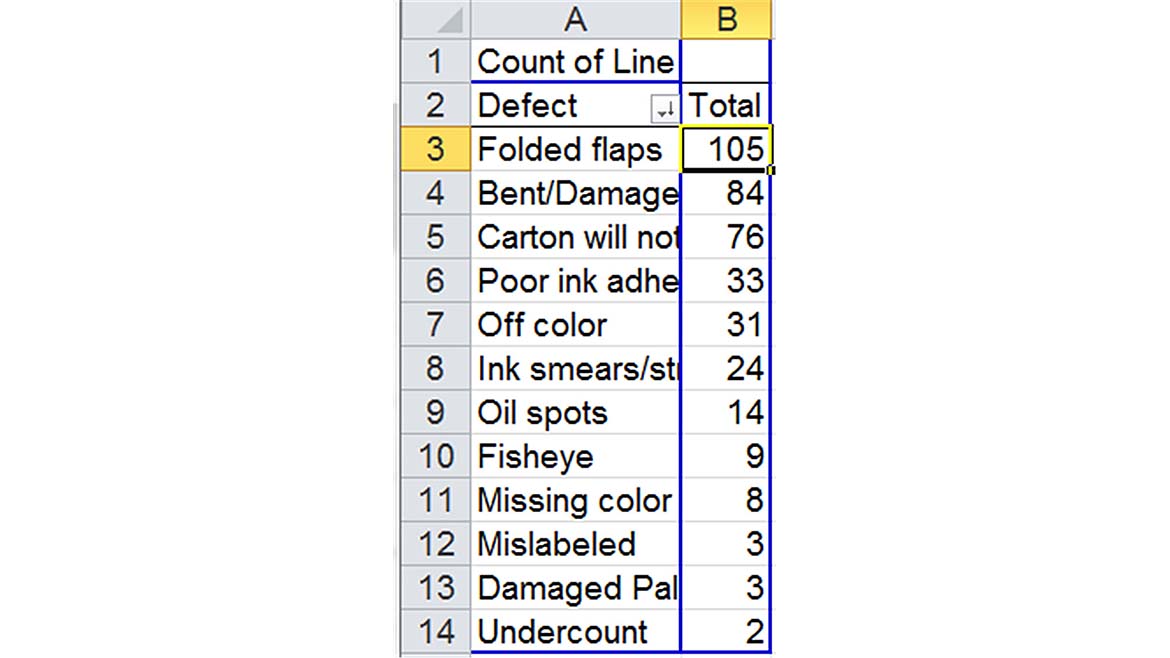
Using PivotTables, one can summarize the number of times each type of defect is found in packaging (Figure 4).
Credit: simonkr, E+ Collection, Creative #1205959398 (Royalty-free)
The image displays a spreadsheet, likely from Microsoft Excel, that categorizes and counts various defects in a product or process
Which can then be turned into a high-level, 80-20 Rule Pareto Chart (Figure 5).
Credit: simonkr, E+ Collection, Creative #1205959398 (Royalty-free)
pareto
In Excel, if you double click on the 105 for Folded Flaps, Excel will pull all of the data behind that sum (Figure 6).
Credit: simonkr, E+ Collection, Creative #1205959398 (Royalty-free)
data
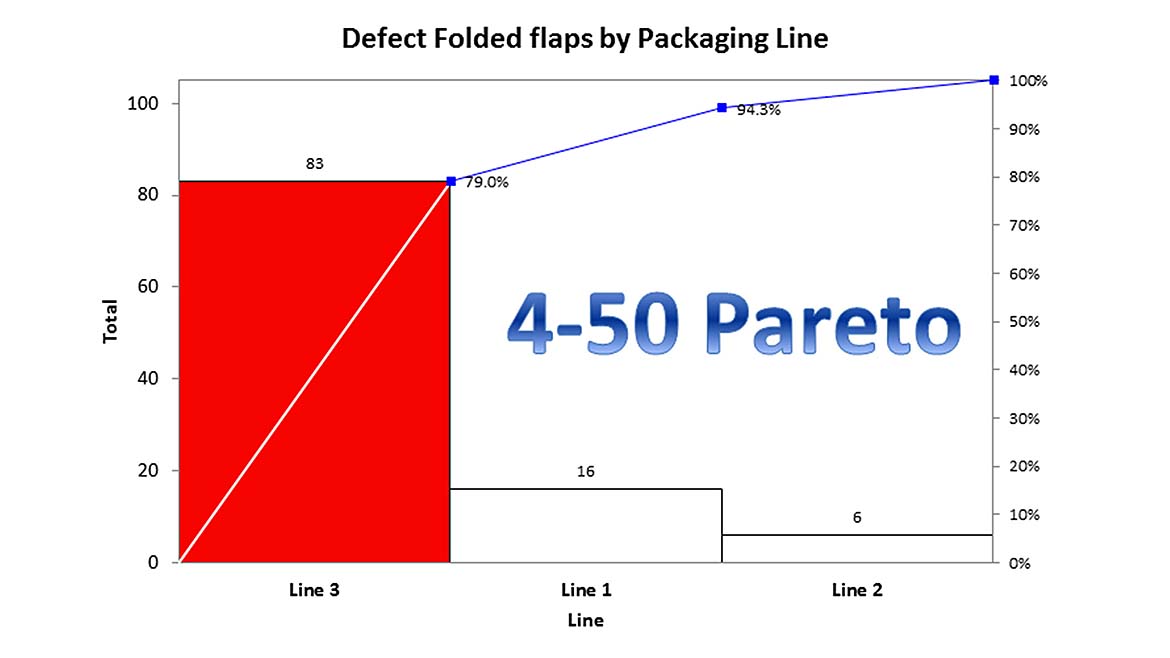
Then, we can use another PivotTable to summarize where the Folded Flaps defects are found (Figure 7) and create the 4-50 Rule Pareto chart (Figure 8).
Credit: simonkr, E+ Collection, Creative #1205959398 (Royalty-free)
4-50 rule pareto
Line 3 creates 79% of the Folded Flap defects. At this point, we know who should be on the root cause analysis team—people on Line 3 that know something about Folded Flap defects. We don’t need people from Line 1 or 2.
Credit: simonkr, E+ Collection, Creative #1205959398 (Royalty-free)

Ishikawa (Fishbone) Diagram

By narrowing the focus to the big bar on the 4-50 Rule Pareto chart, I have found that we often end up with a minnow-bone diagram (Figure 9), not a fishbone or whalebone diagram. This simplifies root cause analysis. It can often be done in an hour or two, not days. I have also found that whalebone diagramming is a sure sign that the problem hasn’t been laser-focused to the 4-50 Rule. Go back and drill down.
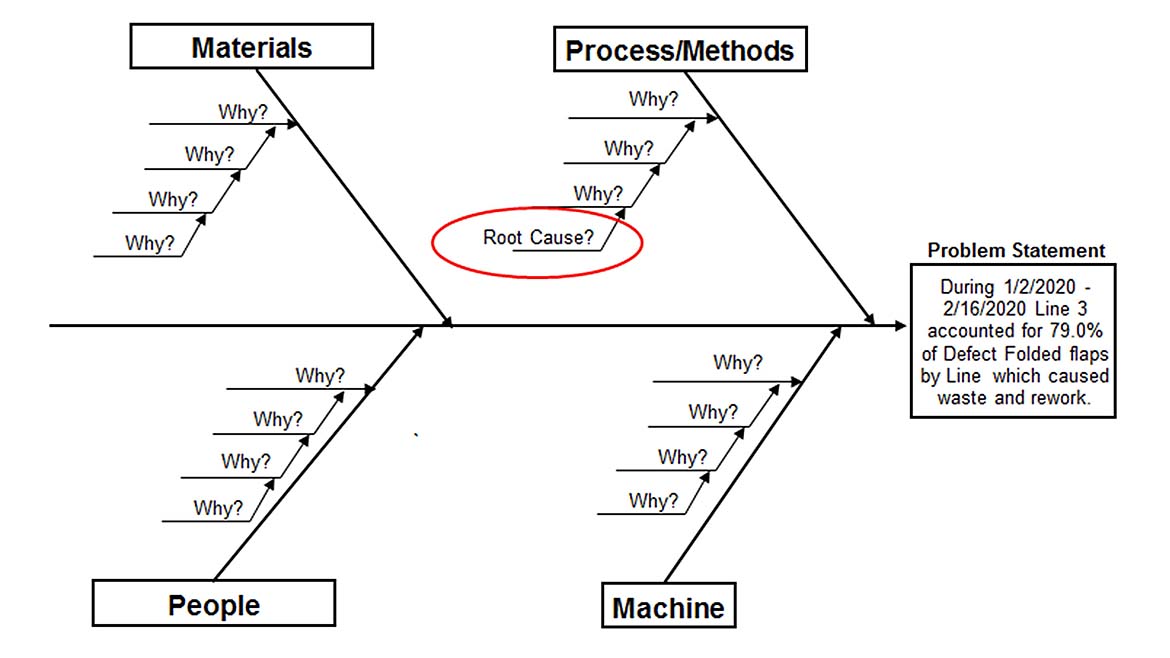
The image displays a fishbone diagram, also known as an Ishikawa or cause-and-effect diagram
Credit: simonkr, E+ Collection, Creative #1205959398 (Royalty-free)

Additional Analysis

It is also possible to drill down into the other two big bars on the 80-20 Rule Pareto chart—Bent/Damaged Flaps and Carton Will Not Open to tackle the other key problems in packaging. These three bars account for 67.6% of all packaging defects. Fix these and dramatic improvements in productivity and profitability are ensured.

Arthur’s 4-50 Rule

So that’s the power of the 4-50 Rule to pinpoint and resolve key problems. Using the 4-50 Rule, I have worked with a metal manufacturer to save $1,000,000 a year. With a hospital system, we were able to save $5,000,000 a year. That’s the power of Excel PivotTables and the 4-50 Rule.

Pareto’s power law still applies within the 4 percent (0.8% causes 51% of the problem), but I haven’t found data detailed enough to drill down another level. The 4-50 Rule is always enough.

So, where’s your pain in production or administration? Find the data.
 Use Arthur’s 4-50 Rule to fix the worst first.

READ MORE

  • Smart Performance Charts (SPC) 
  • Before and After Control Charts, Pareto Charts and Histograms 
  • Big Money from Small Data 
KEYWORDS: manufacturing metrology Pareto chart Process Mapping quality

Share This Story

Looking for a reprint of this article?
From high-res PDFs to custom plaques, order your copy today!

Jay Arthur teaches business people how to Turn Data Into Dollars® using QI Macros for Excel. He is the author of Agile Process Innovation, Lean Six Sigma Demystified (2nd), Lean Six Sigma for Hospitals (2nd) and QI Macros. Download a free 30-day trial at www.qimacros.com/30. For more information, call (888) 468-1537, email [email protected] or visit www.qimacros.com.

Recommended Content

JOIN TODAY
to unlock your recommendations.

Already have an account? Sign In

  • 2024 Quality Rookie of the Year Justin Wise 1440x750px banner with "Quality Rookie of the Year" logo inset

    Meet the 2024 Quality Rookie of the Year: Justin Wise

    Justin Wise is an exceptional individual who has been...
    Aerospace
    By: Michelle Bangert
  • Man with umbrella and coat stands outside while it rains at night looking at a building.

    Nondestructive Testing: Is there an ethics problem?

    I was a whistleblower who exposed fraudulent activities...
    NDT
    By: Dale Norwood
  • Unraveling Deflategate: Football stadium with closeup of football on field

    Unraveling the Tom Brady Deflategate

    The Deflategate scandal erupted following the 2014 AFC...
    Measurement
    By: Greg Cenker and Henry Zumbrun
Manage My Account
  • eMagazine Subscriptions
  • Newsletters
  • Online Registration
  • Subscription Customer Service
  • Manage My Preferences

More Videos

Sponsored Content

Sponsored Content is a special paid section where industry companies provide high quality, objective, non-commercial content around topics of interest to the Quality audience. All Sponsored Content is supplied by the advertising company and any opinions expressed in this article are those of the author and not necessarily reflect the views of Quality or its parent company, BNP Media. Interested in participating in our Sponsored Content section? Contact your local rep!

close
  • Key Takeaways for Quality Leaders
    Sponsored byComplianceQuest

    Key Takeaways for Quality Leaders from the 2026 Gartner Magic Quadrant™ for QMS

  • This image shows a person seated next to a Bobcat T66 compact track loader.
    Sponsored byPolyWorks by InnovMetric

    Supercharging Digital Gauging at Bobcat North America

  • Dorsey Calibration Lab photo by Tom LaBarbera Picture this Studios
    Sponsored byDorsey Metrology International

    Ensuring Product Quality in a Competitive Manufacturing Landscape

Popular Stories

This image shows a person seated next to a Bobcat T66 compact track loader.

Supercharging Digital Gauging at Bobcat North America

a professional in the aviation field performing maintenance, repair, and overhaul (MRO) work

Manufacturing Retention: Strategies for Improving Company Culture, Engagement and Skill Development

Dorsey Calibration Lab photo by Tom LaBarbera Picture this Studios

Ensuring Product Quality in a Competitive Manufacturing Landscape

2026 Quality Professional of the Year!

Events

June 22, 2026

Automate 2026

Automate is North America's largest robotics and automation event — and the best place to take your ideas from insight to impact.
 
Our show floor features the world’s leading automation solutions, from AI and robotics to motion control, vision systems, and more. Plus, our educational conference is second to none, led by the brightest minds in automation today.
 
Ready to transform the way you work? Take the next step at Automate.
July 14, 2026

Quality Leaders Forum: Better Communication, Better Quality Data

The Quality Leaders Forum is a quarterly, editor-moderated fireside chat series hosted by Quality Magazine, featuring candid conversations with senior manufacturing and operations executives shaping enterprise-level quality.

View All Submit An Event

Products

Lean Manufacturing and Service Fundamentals, Applications, and Case Studies

Lean Manufacturing and Service Fundamentals, Applications, and Case Studies

See More Products
Quality Podcast Channel Custom Content

Related Articles

  • Clear Vision, Values Key to Quality that Drives Results: ASQ, Forbes Research

    See More
  • Image illustrating depth sensing

    Identifying the Best Technology for Your 3D Vision Application

    See More
  • Group of five businesspeople holding and fitting gears together in an office at work. United business professionals having fun connecting gear pieces during a meeting

    Collaboration is the Biggest Challenge

    See More

Related Products

See More Products
  • Lean Manufacturing for the Small Shop, 2nd Edition

See More Products
×

Stay in the know with Quality’s comprehensive coverage of
the manufacturing and metrology industries.

Newsletters | Website | eMagazine

JOIN TODAY!
  • RESOURCES
    • Advertise
    • Contact Us
    • Directories
    • Manufacturing Division
    • Store
    • Want More
  • SIGN UP TODAY
    • Create Account
    • eMagazine
    • Newsletters
    • Customer Service
    • Manage Preferences
  • SERVICES
    • Marketing Services
    • Market Research
    • Reprints
    • List Rental
    • Survey/Respondent Access
  • STAY CONNECTED
    • LinkedIn
    • Facebook
    • YouTube
    • X (Twitter)
  • PRIVACY
    • PRIVACY POLICY
    • TERMS & CONDITIONS
    • DO NOT SELL MY PERSONAL INFORMATION
    • PRIVACY REQUEST
    • ACCESSIBILITY

Copyright ©2026. All Rights Reserved BNP Media, Inc. and BNP Media II, LLC.

Design, CMS, Hosting & Web Development :: ePublishing