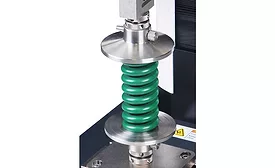
Compression is the application of pushing or crushing forces acting upon an object or a material that allows it to become squeezed or squashed. It is the opposite of tension, or the application of pulling forces that allow a material to stretch or elongate.
Computers and software play a major role in force measurement and quality control. Whether in the engineering lab, quality control inspection area, receiving inspection or on the production floor, the use of computers and measurement software are beneficial to product quality and production efficiency.
Additive manufacturing (AM) is everywhere and anywhere nowadays. Every day technical websites, and even most social media sites, are posting cool videos and new applications.
Aero-engine discs are very critical parts since they are exposed to high stress and temperature during flights. Engine disc components such as bearing rings, fan and compressor discs are subjected to extensive inspections during the different manufacturing stages, including dimensional controls up to the detection of the tiniest surface flaws on rolling surfaces (bearing raceways).
Nondestructive Testing (NDT) is the name given to the processes designed to verify the integrity of a structure in such a way that the performance of that component is not impaired by the test.
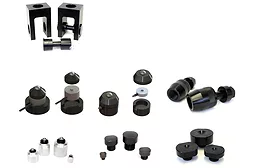
Not using the proper adapters to calibrate load cells, truck and aircraft scales, tension links, dynamometers, and other force measuring devices can produce significant measurement errors and pose serious safety concerns.
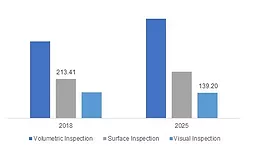
Global Non-Destructive Testing Services Market is set to grow from its current market value of more than $3 billion to over $4.5 billion by 2025; according to a new research report by Global Market Insights, Inc.
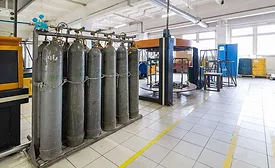
Helium leak testing is one of the oldest and most developed members of the family of trace-gas-based leak testing methods. Even though the title contains the word “helium,” this article is intended as an overview of trace gas methods in general.
According to the Compressed Air and Gas Institute (CAGI), the average compressed air system loses 30 percent of its air through leaks but locating those leaks has been a time-consuming and te-dious process.
 RSS
RSS