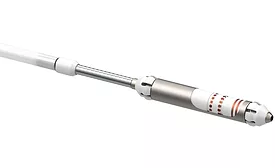
Dedicated to advanced NDT inspection technologies, Eddyfi expanded its portfolio of internal rotating inspection system (IRIS) products to support tubing as small as 12.7 mm (0.5 in) in outside diameter (OD) to pipes as large as 168 mm (6.6 in) in OD.
The true measure Minebea lntec continues to expand its foreign body detection product range with the introduction of the new X-ray inspection system Dymond Bulk.
Optimized for single-handed operation, the EPOCH 6LT flaw detector combines a leading-edge ergo-nomic design with powerful ultrasonic functionality in an instrument built specifically for rope access and high portability applications.
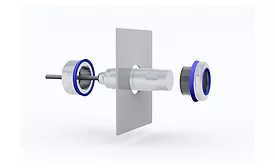
Hoffmann-Krippner announced the availability of the EHEDG (European Hygienic Engineering and Design Group) certified hygienic mounting kit for PiL’s P53 “Steel Head” ultrasonic sensors.
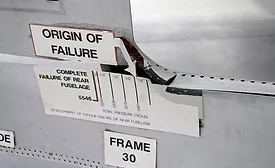
Fatigue testing varies greatly from application to application. Below are some of the top six examples to showcase how fatigue testing has become invaluable in a range of industries.
The many variables associated with material type, sample geometry and in service use of a part or component complicates the design and implementation of an appropriate fatigue testing regime.
Since 1850 we have known that metal subjected to fluctuating stresses will fail at a stress much lower than required to cause fracture on a single quasi static pull to break.
When I was 19 years old, my first paying job in the nondestructive testing (NDT) industry was inspecting a weld repair on a water intake pipe at the Seabrook Station nuclear power plant in New Hampshire.
Composite components are used extensively in the design of new generation aircraft. During manufacturing, the aircraft’s structural components must be inspected with ultrasonic technology to ensure their integrity.
Electronic leak testing using either air or a tracer gas has made significant advances in the last decade with the addition of new techniques, improved sensitivity and faster test cycles.