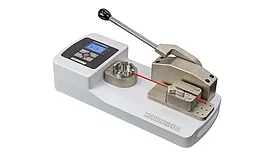
One force measurement application gaining popularity is wire terminal testing, where a controlled pull on a crimped connection is used to measure force, assessing its integrity and quality.
SAE International’s Battery Standards Testing Committee recently issued a recommended practice that established nondestructive in-line production test methods for evaluating water leak tightness for propulsion battery packs.
In 2023, SAE International’s Battery Standards Testing Committee, consisting of over 20 companies in EV battery manufacturing and testing, was tasked with recommending practices for evaluating liquid leak-tightness in battery packs.
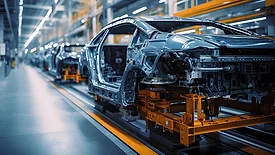
Nissan's Smyrna, TN, plant hosted sixty attendees from Assembly South before a Nashville show. Covering over 6 million square feet, the facility includes production areas and a test track. In mid-April, Nissan reversed its plan to cut shifts due to concerns over tariffs and trade war risks.
Industries like aerospace and automotive now require stringent quality assurance, focusing on proactive measures throughout the product lifecycle to ensure safety and continuous improvement.
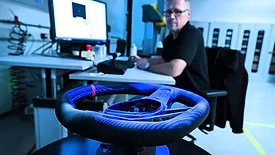
Factories are increasingly using laser measurement systems for improved quality control, replacing manual inspections with faster and more accurate tools. Industries like automotive, aerospace, and medical are seeing significant benefits, especially in precision and waste reduction.
As demand for electric vehicles rises, the automotive industry must prioritize battery component quality. This article explores the critical role of how materials used in automotive battery manufacturing undergo rigorous mechanical testing to verify their quality and to maintain industry standards.
High-speed machine vision technology, combining ultra high-speed imaging with advanced algorithms, is transforming industrial quality inspection by enhancing precision and efficiency. This article highlights its technical principles, applications, and development trends, as well as the challenges and breakthroughs in the field.
 RSS
RSS
.webp?height=168&t=1751233044&width=275 "Battery-pack failure modes")