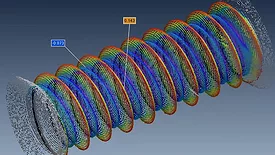
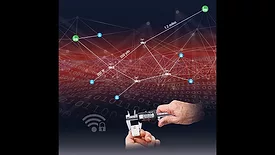
How new optical sensors work and how they might be used to address critical needs for part qualification and process control in precision manufacturing applications.
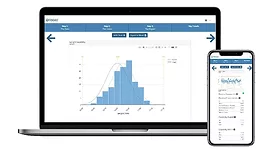
Advancements in technology are making SPC software more user-friendly and accessible. New features such as machine learning and predictive analytics are being added to SPC software, making it even more indispensable to an organization.
Why is certification of an organization’s quality management system to ISO 9001 – or AS9100, or IATF 16949 or ISO 13485 – so special? What does the certification signify? And what supports the paper behind that framed certificate?
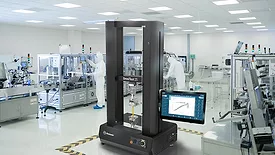
Tensile testing is varied in purpose and industry specific. The manner of holding the test specimen and applying the axis of tensile force is what makes the application unique and enables quality assurance at almost any point in any product's lifecycle.
Two basic types of tensile test are broadly relevant; is the test specimen strong enough to resist breakage, or is it easy to use safely and efficiently?
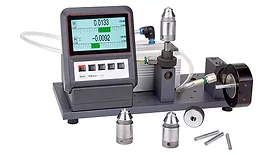
When air gaging was introduced, it provided the first high-performance 50u”/1um or better gaging on the shop floor. In fact, air gaging provided two breakthroughs for dimensional measurement.
Foundational benefits of today’s wireless measurement systems include automation, ease of operation, streamlined scalability, robust data encryption and protection, unrestricted distances and unencumbered use for transmission. Now it’s time to plan how to implement the system.
CPR for internal auditors is an acronym designed to help internal auditors remember concepts for conducting better audits. The acronym represents conformance/compliance; process approach; and risk-based thinking.
You have no doubt heard of ChatGPT, or Google’s Bard, or one of the many artificial intelligence chatbots. These chatbots allow the user to simply type in a command to write something and spit out an essay, or even a poem.
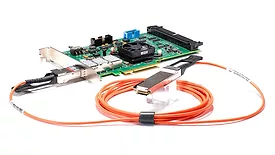
Until the CoaXPress v2.1 standard was released in 2021, the only physical medium between cameras, PCs, and frame grabbers for the CoaXPress (CXP) interface had been 75Ω coaxial cable. For most vision applications, the CXP 2.1 interface perfectly suited high-throughput inspection systems, quality control and factory automation needs. So, who would want to change that winning formula?
 RSS
RSS