Manufacturers struggle with product quality and throughput due to increasing assembly complexity from automation, connectivity, and electric vehicle parts. Process engineers face challenges like strict documentation, short cycles, and safety concerns, emphasizing the need for more efficient manufacturing and quality inspection.
Integrated digital inspection ecosystems eliminate manual programming, accelerate reporting, and empower teams to act on live data before parts drift out of specification.
Speed and traceability are vital in fast-paced manufacturing. Automation and digital integration enhance inspection workflows by streamlining CMM programming, generating compliant reports, and enabling real-time quality monitoring.
Here are four factors that I believe we as an industry need to closely study, honestly evaluate our contributions to, and commit to work towards—today.
Here are four factors that I believe we as an industry need to study closely, honestly evaluate our contributions to, and commit to working towards today.
The medical device industry is evolving with AI and automation affecting production and quality management. Quality engineers are moving towards systems thinking and proactive decision-making, as AI becomes integral to production, presenting challenges and opportunities for innovation while ensuring safety.
It's not difficult to see the importance of studying and understanding cycles. There are many important cycles worth understanding, not just the so-called natural ones. These are important to success in our personal lives, in business, and in manufacturing.
This year Marlin Steel incorporated several autonomous machines that enable technicians to multi-task instead of being tied to a particular machine for the duration of the operation.
Small to medium manufacturers like Marlin Steel lead a shifting industrial landscape. While traditional large-scale production relied on economies of scale and centralization, modern companies focus on precision, customization, and sustainability.
A simple cable or a wireless system? Each path has clear strengths, and neither is universally “better.” Understanding the tradeoffs helps quality engineers pick the proper setup for the job.
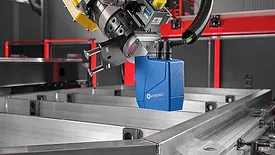
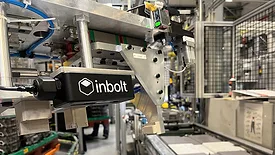
This article discusses how integrating robotics with computer vision is transforming quality control. Far from a niche innovation, vision-enhanced robotics is becoming essential to resilient, high-performance factories.
Quality sat down with the team from Sierra College−Amy Schulz, executive dean for Workforce and Strategic Initiatives, and Roy Ingram, department chair for Electronics, Automation, Robotics, and Industrial Systems, on a topic dear to the heart of the quality industry- the workforce, automation, and training.
PHILADELPHIA—Engineers at Drexel University have developed a benchtop tool that enables automakers and suppliers to get a better look at the electrochemical and mechanical functions of EV batteries.
 RSS
RSS