Quality Magazine logo
search
cart
facebook twitter linkedin youtube
  • Sign In
  • Create Account
  • Sign Out
  • My Account
Quality Magazine logo
  • NEWS
  • PRODUCTS
    • FEATURED PRODUCTS
    • SUBMIT YOUR PRODUCT
  • CHANNELS
    • AUTOMATION
    • MANAGEMENT
    • MEASUREMENT
    • NDT
    • QUALITY 101
    • SOFTWARE
    • TEST & INSPECTION
    • VISION & SENSORS
  • MARKETS
    • AEROSPACE
    • AUTOMOTIVE
    • ENERGY
    • GREEN MANUFACTURING
    • MEDICAL
  • MEDIA
    • A WORD ON QUALITY PUZZLE
    • EBOOKS
    • PODCASTS
    • VIDEOS
    • WEBINARS
  • EVENTS
    • EVENT CALENDAR
    • IMTS
  • DIRECTORIES
    • BUYERS GUIDE >
      • Supplier Insights
    • NDT SOURCEBOOK
    • VISION & SENSORS
    • TAKE A TOUR
  • INFOCENTERS
    • Digital Quality Management Systems
    • NEXT GENERATION SPC & QUALITY ANALYTICS
  • AWARDS
    • ROOKIE OF THE YEAR
    • PLANT OF THE YEAR
    • PROFESSIONAL OF THE YEAR
  • MORE
    • Expert Columns
    • NEWSLETTERS
    • QUALITY STORE
    • INDUSTRY LINKS
    • SPONSOR INSIGHTS
  • EMAG
    • eMAGAZINE
    • ARCHIVES
    • CONTACT
    • ADVERTISE
  • SIGN UP!
Management

The Role of Specification Limits

Determine if a process is in a state of statistical control.

By Jim L. Smith
August 1, 2017

In my previous column I discussed the role of specification limits in manufacturing, which led to thoughts about process control limits.

Walter Shewhart invented the process control chart while working for Western Electric in the 1920s. He created the basis for the process control chart and the concept of a state of statistical control through the use of natural process limits via designed experiments.

The basic idea of control limits is to periodically sample the process, measure a quality characteristic on a few selected product units, then plot these results (generally average and range) in a time series. After sufficient process history has been taken, upper and lower control limits (sometimes called natural process limits) are established at ±3 standard deviations from the average of readings (not the specification center line).

Any data points outside these ‘natural’ process control limits give an indication the process is not behaving as desired; thereby indicating the process is out of statistical control. When there are data points falling outside the control limits, there is an indication of a special-cause event, so the process should be discontinued until the issue’s root cause has been found and resolved which will then return the process to a state of statistical control.

This is a relatively simple concept and just one reason the methodology has become popular and so extensively applied. With that said, however, it seems that effective implementation of process control charts remains elusive to many.

One reason may be confusion with the concept of rational subgroups. If the proper sampling strategy isn’t employed the control charts becomes less effective, so care must be taken to choose an appropriate selection strategy. Frequently a sampling strategy is determined by logistics within an organization’s facility and manufacturing process. Often the logistics will not produce desired rational subgroups. If this is the case, control charts can give false signals and lead to improper conclusions.

Preferably, rational subgroups will be groups of product that capture or include virtually the entire inherent natural, or what Shewhart termed common cause, variation for any specific quality feature that has been targeted for control.

A colleague mentioned his frustration with a process that had very tight limits resulting in over-control due to false signals which should only happen occasionally if the proper sampling technique, from a stable process, is deployed. He worked in the semiconductor industry where the product unit is a chip that is produced on wafers within lots comprised of a specific number of wafers. The production process had many potential sources of inherent variation.

Most sampling was performed by measuring several chips on a specific wafer within a specific lot, with the resultant wafer average being used as the control statistic. While this is a logistically and seemingly an economically appropriate sampling approach, it failed to produce the rational subgroups needed for common control chart applications. There will still be inherent, common cause variation across sample groups.

Simply using a common estimate of within-group variation produced an underestimate, and sometimes a gross underestimate, of the true inherent variation in the process. This generated control limits that were too tight and resulted in over control. Ultimately there were so many false out-of-control data points that all signals began to be ignored.

The eventual success story is that the certified quality engineer over this process realized what was happening. A team was formed and a decision was made to conduct an experimental design. An analysis of variance (ANOVA) was performed to extract valid estimates of the relevant process variance components required to effectively estimate common-cause process variation. Once this was done the appropriate rational subgroup methodology was revised and the problem was resolved.

The point is that control limits provide information about process behavior and have no intrinsic relationship to engineering specifications. In practice, the process mean may not, and typically doesn’t, coincide with the specified engineering target of the quality characteristic because most manufacturing processes simply cannot deliver the process characteristic at the desired level.

Control charts shouldn’t be used without first performing process capability studies to determine the relationship between natural process limits and engineering specification. When capability is known the purpose of control chart limits is to permit simple detection events that are indicative of actual process change. When significant change (special cause variation) is detected the culprit must be identified and eliminated with affected data points eliminated from control chart limit calculation.

Bottom line, after the process capability study has been conducted, engineering specification limits are infrequently consulted by the manufacturing process personnel.

KEYWORDS: analysis of variance continuous improvement spc statistical process control (SPC)

Share This Story

Looking for a reprint of this article?
From high-res PDFs to custom plaques, order your copy today!

Qm0222 clmn face p2 author jim smith

Jim L. Smith has more than 45 years of industry experience in operations, engineering, research and development and quality management. You can reach Jim at [email protected]

Recommended Content

JOIN TODAY
to unlock your recommendations.

Already have an account? Sign In

  • 2024 Quality Rookie of the Year Justin Wise 1440x750px banner with "Quality Rookie of the Year" logo inset

    Meet the 2024 Quality Rookie of the Year: Justin Wise

    Justin Wise is an exceptional individual who has been...
    Aerospace
    By: Michelle Bangert
  • Man with umbrella and coat stands outside while it rains at night looking at a building.

    Nondestructive Testing: Is there an ethics problem?

    I was a whistleblower who exposed fraudulent activities...
    NDT
    By: Dale Norwood
  • Unraveling Deflategate: Football stadium with closeup of football on field

    Unraveling the Tom Brady Deflategate

    The Deflategate scandal erupted following the 2014 AFC...
    Measurement
    By: Greg Cenker and Henry Zumbrun
Manage My Account
  • eMagazine Subscriptions
  • Newsletters
  • Online Registration
  • Subscription Customer Service
  • Manage My Preferences

More Videos

Sponsored Content

Sponsored Content is a special paid section where industry companies provide high quality, objective, non-commercial content around topics of interest to the Quality audience. All Sponsored Content is supplied by the advertising company and any opinions expressed in this article are those of the author and not necessarily reflect the views of Quality or its parent company, BNP Media. Interested in participating in our Sponsored Content section? Contact your local rep!

close
  • Key Takeaways for Quality Leaders
    Sponsored byComplianceQuest

    Key Takeaways for Quality Leaders from the 2026 Gartner Magic Quadrant™ for QMS

  • This image shows a person seated next to a Bobcat T66 compact track loader.
    Sponsored byPolyWorks by InnovMetric

    Supercharging Digital Gauging at Bobcat North America

  • Dorsey Calibration Lab photo by Tom LaBarbera Picture this Studios
    Sponsored byDorsey Metrology International

    Ensuring Product Quality in a Competitive Manufacturing Landscape

Popular Stories

iStock-1352825159-jpg.jpg

U.S. Should Substantially Boost Support for Manufacturing USA Program, Issue National Industrial Manufacturing Strategy, Says New Report

Two Individuals Using Quality Management Software

Quality’s Dirty Secret

Key Takeaways for Quality Leaders

Key Takeaways for Quality Leaders from the 2026 Gartner Magic Quadrant™ for QMS

2026 Quality Professional of the Year!

Events

July 14, 2026

Quality Leaders Forum: Better Communication, Better Quality Data

The Quality Leaders Forum is a quarterly, editor-moderated fireside chat series hosted by Quality Magazine, featuring candid conversations with senior manufacturing and operations executives shaping enterprise-level quality.

August 12, 2026

Eliminate Manual FAI Processes and Reduce Inspection Time by Up to 90%

Discover how advanced FAI software automates First Article Inspection workflows by generating inspection plans, validating results in real time, integrating 2D/3D data, and reducing quality escapes to improve efficiency and compliance.

View All Submit An Event

Products

Lean Manufacturing and Service Fundamentals, Applications, and Case Studies

Lean Manufacturing and Service Fundamentals, Applications, and Case Studies

See More Products
Rookie of the Year Custom Content

Related Articles

  • The Role of Specification Limits

    See More
  • The Role of Disposition Limits

    See More
  • This image shows a manufacturing employee inspecting a MEMS glass wafer, which is a component used in medical equipment like ventilators. Bullen-p1FT-Bullen---Bullen-inspection-of-ultrasonically-machined-CVD-Silicon-Carbide.jpg

    Quality as the Connective Tissue: Reframing the Role of Quality on the Factory Floor

    See More

Related Products

See More Products
  • certified.jpg

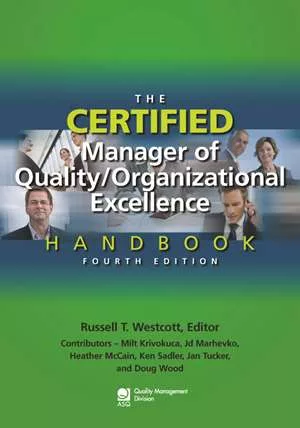
    The Certified Manager of Quality / Organizational Excellence Handbook, 4th Edition

  • ZEuCDwAAQBAJ.jpg

    Lean Six Sigma In The Age Of Artificial Intelligence: Harnessing The Power Of The Fourth Industrial Revolution

  • Building Lean Supply Chains with the Theory of Constraints

See More Products

Related Directories

  • OpusWorks by The Quality Group

    OpusWorks accelerates enterprise transformation with scalable training, project management, and AI-powered insights. Our platform delivers role-based learning and STATWORKS! to drive Continuous Improvement. Open Enrollment supports data-driven decision-making and performance optimization. CPI Portal complements this by offering access to enterprise tools, pre-configured classes and resources for individuals and teams.
×

Stay in the know with Quality’s comprehensive coverage of
the manufacturing and metrology industries.

Newsletters | Website | eMagazine

JOIN TODAY!
  • RESOURCES
    • Advertise
    • Contact Us
    • Directories
    • Manufacturing Division
    • Store
    • Want More
  • SIGN UP TODAY
    • Create Account
    • eMagazine
    • Newsletters
    • Customer Service
    • Manage Preferences
  • SERVICES
    • Marketing Services
    • Market Research
    • Reprints
    • List Rental
    • Survey/Respondent Access
  • STAY CONNECTED
    • LinkedIn
    • Facebook
    • YouTube
    • X (Twitter)
  • PRIVACY
    • PRIVACY POLICY
    • TERMS & CONDITIONS
    • DO NOT SELL MY PERSONAL INFORMATION
    • PRIVACY REQUEST
    • ACCESSIBILITY

Copyright ©2026. All Rights Reserved BNP Media, Inc. and BNP Media II, LLC.

Design, CMS, Hosting & Web Development :: ePublishing