Management
Quality as the Connective Tissue: Reframing the Role of Quality on the Factory Floor
Sometimes, the most effective quality intervention isn’t an entirely new system but a marker, a whiteboard and the willingness to stand in the middle of the floor and talk.
For much of my career, I’ve watched quality departments inherit a role they never asked for: the group that shows up when something goes wrong. We get called after a defect escapes, after a customer raises a concern or after production has already slowed to a crawl. In that model, quality is equated with enforcing rules, checking work and catching mistakes. Necessary, yes, but reactive, siloed and, unfortunately, often resented.
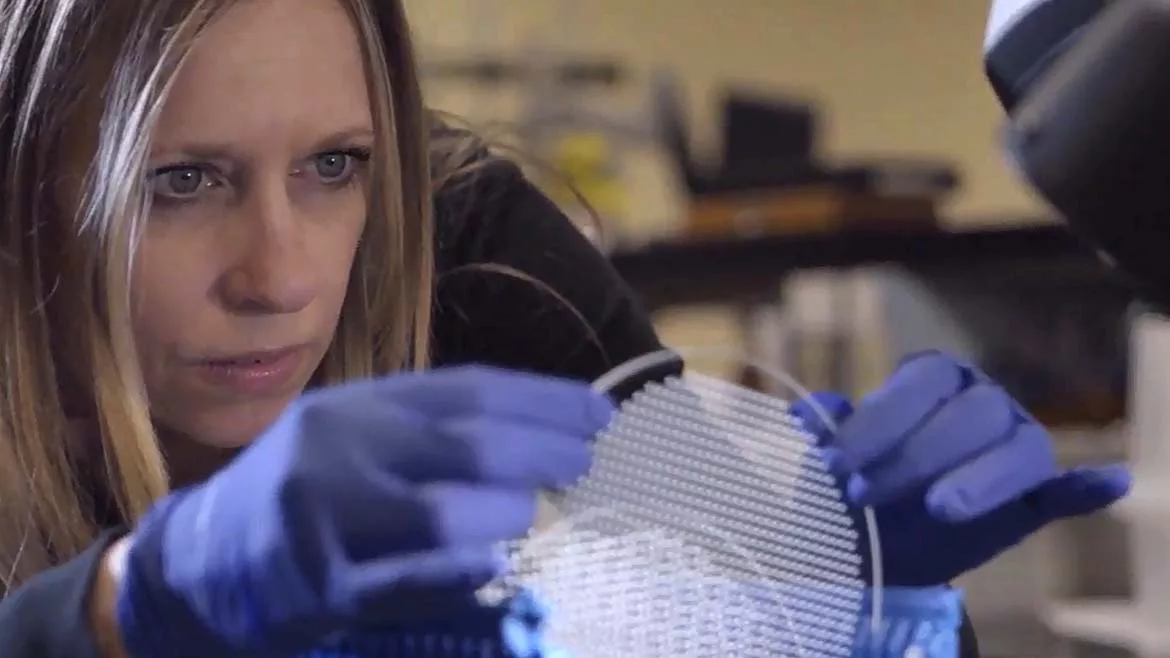
At Bullen Ultrasonics, that reactive model simply didn’t hold up. We machine advanced ceramics, glass and specialty materials at micron-level tolerances for aerospace, medical, defense and semiconductor applications. When you’re working with brittle materials where a microcrack can compromise an entire component, quality can’t be something you incorporate at the end. It has to be embedded, lived and shared in real time.
That reality forced a shift in how we thought about quality itself. Instead of treating quality as a compliance function, we reframed it as the connective tissue of the operation. In other words, the mechanism that creates trust, transparency and alignment across the plant.
From Dashboards to Dialogue
One of my earliest moves surprised almost everyone, including a few on my team. We had invested heavily in sophisticated digital dashboards with real-time metrics, automated reports and trend lines accessible with a click. On paper, it was everything a modern quality system should be.
In practice, it wasn’t working.
The data was accurate, but the conversations weren’t happening. Operators rarely logged in. Leaders skimmed the numbers but missed the nuance. The dashboards told us what was happening, but not why or how people felt about it.
So we replaced them with a $10 whiteboard.
We placed the whiteboard in the center of our production floor, where everyone passed it every day. Each week, we updated it by hand with metrics for scrap dollars by department. We added short, plain-language notes from leadership about what went well, where we struggled and what we were learning.
The whiteboard became a gathering point almost overnight. It became a starting point for discussions among the engineers and an important reference point during supervisor-led shift meetings. In just a few months, we were having more open, productive and honest conversations regarding performance than we had experienced in years of using automation-based reporting systems.
The lesson was humbling and essential: communication beats sophistication every time—and it set the stage for bigger changes.
Quality tools don’t create alignment. Shared understanding does.
Quality Engineers, Standing Side by Side
As communication improved, we quickly saw that another structural limitation remained; this one being a separation between quality (and therefore process) and production. Traditionally, quality engineers sit adjacent to production and step in as needed. We decided to embed them directly into production teams. This meant quality engineers spending their days on the floor, coaching side by side with operators, observing processes in real time and solving problems collaboratively rather than issuing findings after the fact. Their role shifted from “auditor” to “partner.”
We emphasized the simple message that everyone wears the Bullen jersey and everyone is responsible for what happens.
We celebrated victories—big ones like getting lower scrap rates on a tough ceramic part and little ones like tweaking engineering to save production cycle time without sacrificing quality. We didn’t assign blame for problems. Instead of “who made this mistake?” we asked “How was it possible for this to occur within our system?”
That shift did more than improve metrics. It changed how our teams functioned. Operators began to speak up sooner, engineers listened more closely and quality went from something that happened to production to something that happened with production.
The Soft Skills That Make Quality Work
Structural changes alone don’t create trust. They only work when reinforced by consistent leadership behavior on the floor.
If there’s one thing I’ve learned, it’s that culture changes don’t start with tools. They begin with behavior. The most powerful levers I pulled had nothing to do with control charts or audits.
They were human.
I made it a point to listen before reacting, especially when emotions ran high. I asked “why?” far more often than “who?” When tensions rose, focusing on “why” helped keep conversations productive rather than personal. I had difficult conversations directly and respectfully, without allowing frustration to slip into a blame mentality.

Those behaviors created psychological safety, which is a term we don’t always associate with factory floors, but we should. When people feel safe raising concerns, defects surface earlier. When they trust leadership to respond fairly, problem-solving accelerates. When they believe quality is there to help, not punish, performance improves across the board.
At Bullen, that trust translated into faster root cause analysis, better cross-functional alignment and a noticeable increase in ownership at every level.
Quality as a Communication Engine
Over time, it became clear that these behaviors had entirely transformed quality’s role. Quality’s most valuable contribution was enabling clear, consistent communication across our operation.
Quality touches every part of our organization, including engineering, production, automation, tooling, and leadership. By positioning quality as the glue that connected everything, we developed a common vocabulary for evaluating performance, assessing risks and making improvements.
This approach aligned naturally with Bullen’s broader mission and values. As a vertically integrated, family-owned company with more than 50 years of experience, we pride ourselves on responsiveness, transparency and trust. Our customers rely on us to deliver absolute confidence in material integrity for high-risk applications where failure isn’t just unacceptable; it’s not an option.
That same expectation now sets the tone for how we work together internally.
Information moves quickly and visibly across teams. Questions are raised at the first sign of risk, not after a part fails inspection. Decisions are documented, discussed and understood by the people doing the work. Just as we would never ship a component without confidence in its integrity, we no longer move work forward without shared clarity, alignment and ownership.
By embedding quality into daily conversations, we improved speed without sacrificing rigor. Decisions happened closer to the work. Trade-offs were discussed openly. Compliance with standards such as ISO 9001, AS9100 and IATF 16949 became a byproduct of effective communication, not the primary driver.
What This Means For Quality Leaders
For quality professionals, especially those in advanced manufacturing, my message is simple: your influence extends far beyond audits and inspections.
Ask yourself:
- Where does information actually flow in your organization?
- Are your metrics starting conversations, or ending them?
- Do your teams see quality as a partner or a referee?
Your answers guide you to where quality needs to be more present in daily work, not just more visible in reports.
You don’t need to abandon digital tools or formal systems. At Bullen, we still use automation, traceability and data extensively. But we treat them as support, not substitutes, for human connection.
Sometimes, the most effective quality intervention isn’t an entirely new system but a marker, a whiteboard and the willingness to stand in the middle of the floor and talk.
Closing Thoughts
Reframing quality as the connective tissue of our operation changed how we work together. It strengthened trust, accelerated problem-solving and reinforced the idea that excellence is a shared responsibility.
Quality will always require discipline, standards and technical expertise. But in my experience, its true power lies in its ability to connect people by turning data into dialogue, compliance into commitment and processes into shared purpose.
When quality becomes the engine of communication, issues are addressed sooner, teams align faster and each improvement strengthens the next to accelerate performance over time.
Looking for a reprint of this article?
From high-res PDFs to custom plaques, order your copy today!