Quality Magazine logo
search
cart
facebook twitter linkedin youtube
  • Sign In
  • Create Account
  • Sign Out
  • My Account
Quality Magazine logo
  • NEWS
  • PRODUCTS
    • FEATURED PRODUCTS
    • SUBMIT YOUR PRODUCT
  • CHANNELS
    • AUTOMATION
    • MANAGEMENT
    • MEASUREMENT
    • NDT
    • QUALITY 101
    • SOFTWARE
    • TEST & INSPECTION
    • VISION & SENSORS
  • MARKETS
    • AEROSPACE
    • AUTOMOTIVE
    • ENERGY
    • GREEN MANUFACTURING
    • MEDICAL
  • MEDIA
    • A WORD ON QUALITY PUZZLE
    • EBOOK
    • PODCASTS
    • VIDEOS
    • WEBINARS
  • EVENTS
    • EVENT CALENDAR
    • IMTS
  • DIRECTORIES
    • BUYERS GUIDE >
      • Supplier Insights
    • NDT SOURCEBOOK
    • VISION & SENSORS
    • TAKE A TOUR
  • INFOCENTERS
    • Digital Quality Management Systems
    • NEXT GENERATION SPC & QUALITY ANALYTICS
  • AWARDS
    • ROOKIE OF THE YEAR
    • PLANT OF THE YEAR
    • PROFESSIONAL OF THE YEAR
  • MORE
    • Expert Columns
    • NEWSLETTERS
    • QUALITY STORE
    • INDUSTRY LINKS
    • SPONSOR INSIGHTS
  • EMAG
    • eMAGAZINE
    • ARCHIVES
    • CONTACT
    • ADVERTISE
  • SIGN UP!
NDT

NDT | Computed Tomography

Computed Tomography's Solution to Battery Safety Concerns

A battery is a great example of the value of CT compared to simple radiography.
By Andrew Ramsey
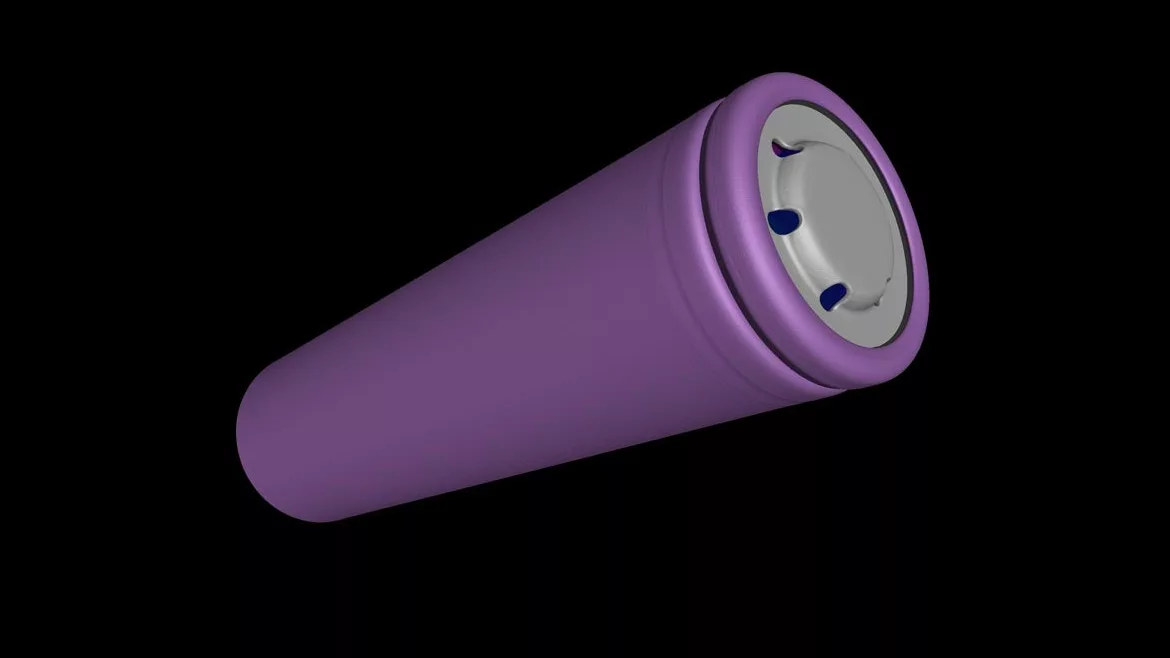
QM 0222 NDT CT 1 CT Scan Off-the-Shelf 18650 3D -Purple Feature

Image source: Nikon Metrology

February 8, 2022

As the products and materials we manufacture become more structurally complex, industrial radiography becomes more and more important. Industrial radiography is a method of nondestructive testing that uses ionizing radiation to inspect internal materials and components and quantify defects and degradation that could lead to the failure of engineering structures. In the past, simple X-ray radiography was sufficient in providing an image needed for this inspection. However, because it views structures in 2D, simple radiography is limited in engineering applications as the objects become more complex. This is where computed tomography (CT) becomes valuable. Known in the medical field to provide detailed 3D images of the body noninvasively for diagnostic purposes, CT scans can also be applied to industrial samples for inspection and diagnosis of quality defects.

With a CT scan, the sample rotates up to 360 degrees while acquiring those X-ray images, producing projection images from every angle, and providing a 3D map of the X-ray absorption throughout the object. These images are then reconstructed into a 3D volume. In as little as five minutes, the CT process can build a complete volumetric representation of an object, producing a highly detailed 3D image of the internal structure and allowing for nondestructive cross-sections of the sample.


INSPECTING THE SMALLEST DETAILS

A battery is a great example of the value of CT compared to simple radiography, and this value can be demonstrated through numerous known battery failures from the past decade. Whether found in a cell phone or in an electric vehicle, batteries both large and small are complex structures made up of numerous small yet critical parts. In a 2D projection image, layers become superimposed on top of one another creating a messy and unclear view, making it difficult - if not impossible - to pick up the detail needed for these inspections. 2D images also make it difficult to identify foreign object debris, short circuits and other manufacturing defects that impact the quality and longevity of the battery.

A 3D image produced by CT though is detailed enough to visualize the electrode structure in multiple different planes, providing the ability to capture, visualize and even measure defects in very high resolution and high magnification imaging. CT scans allow an engineer to virtually cut a battery in any orientation and start to see the integrity of the roll inside, and more importantly, they can make out the electrodes, the uniformity, and the integrity of the can and the gasket. This is when resolution is key. In a battery, the higher the level of detail, the higher the chance that critical components, such as electrodes, gaskets, and separators, can be seen. In these instances where the failure of small yet critical parts can potentially cause serious damage or injury, CT provides a valuable way to assure quality control.
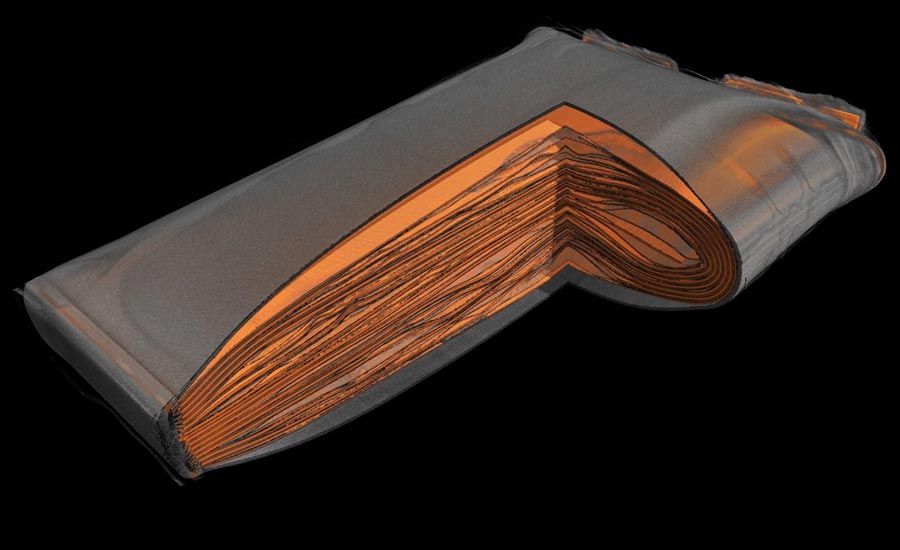
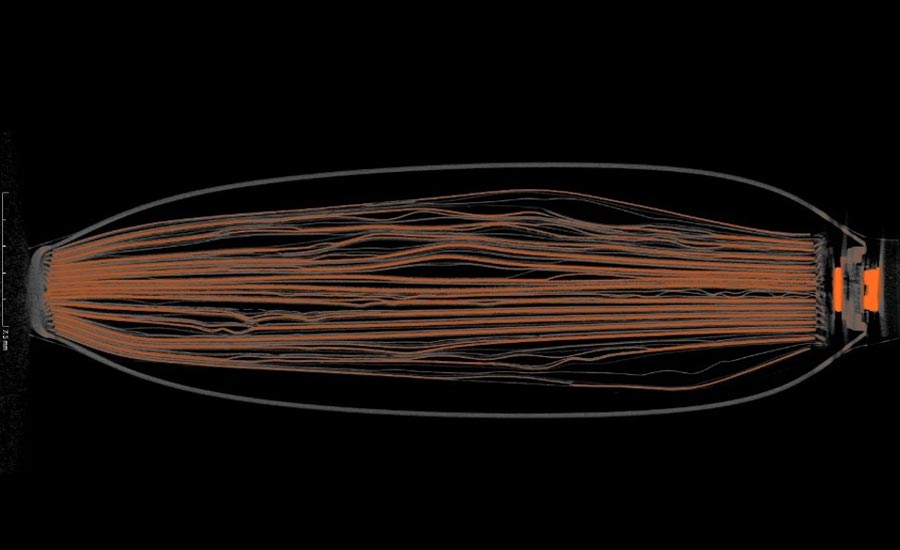
QM 0222 NDT CT 1 CT Scan Cellphone Battery 1 QM 0222 NDT CT 1 CT Scan Cellphone Battery 3

Demonstrating how CT can be used in nondestructive analysis, this scan shows a cellphone battery that experienced a thermal event and inflated significantly. Image source: Nikon Metrology


CT is beneficial in the manufacturing and quality control of parts, but also provides an important first step in failure analysis, giving insight into the specific areas where a failure occurred before any destructive analysis takes place. The CT images, especially when reviewed alongside electrical response or other thermal data, could potentially pinpoint the failure down to a specific cell and guide how the object sample should be taken apart for additional testing. CT allows engineers to create a digital specimen of the failed object, allowing its structural information to be preserved before it is cut apart. This allows them to go back and interrogate the object multiple times throughout the failure analysis, serving as an invaluable resource.

Region of interest scans allow engineers to zoom in on small specific zones and gain higher magnification and resolution. Take the well-known 2017 case of the smartphones that caught fire as an example where the batteries contained a design flaw that made electrodes susceptible to bending. Those bent electrodes then had insufficient insulation which caused excessive heating. With region of interest scans, engineers can increase the resolution enough to where they can visualize some of the separators, identifying potential issues and preventing battery failures that may result in injury.
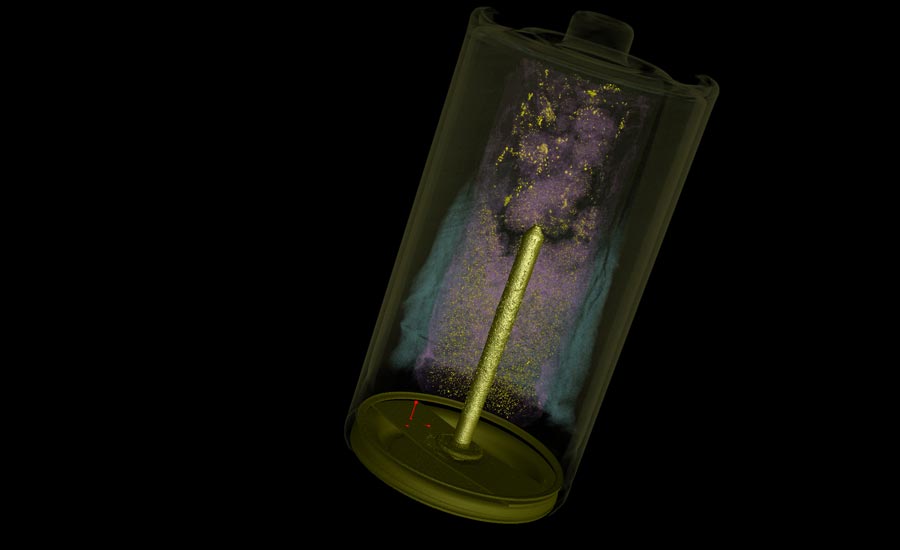
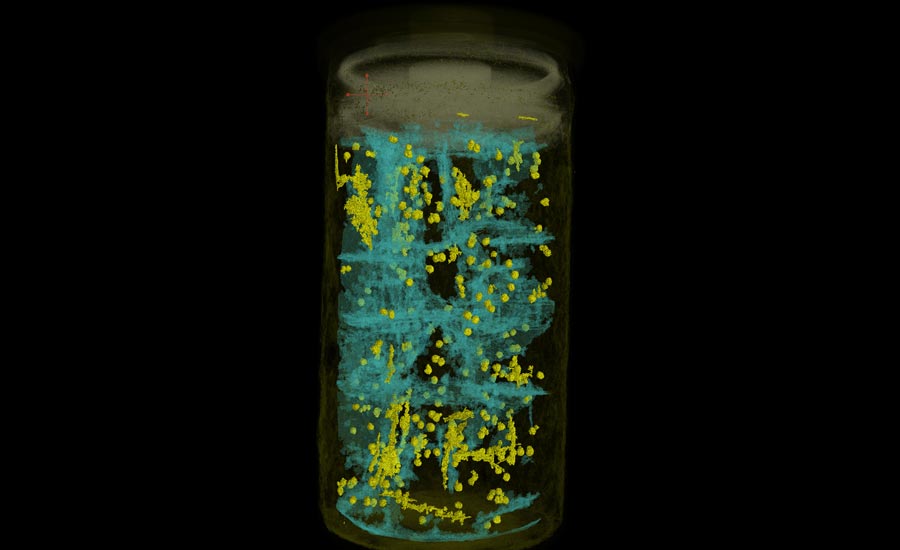
QM 0222 NDT CT 1 CT Scan 1.5v C-Cell Battery 12 2 QM 0222 NDT CT 1 CT Scan 1.5v C-Cell Battery 12 1

CT scan image of a standard C-cell 1.5v battery. Image source: Nikon Metrology


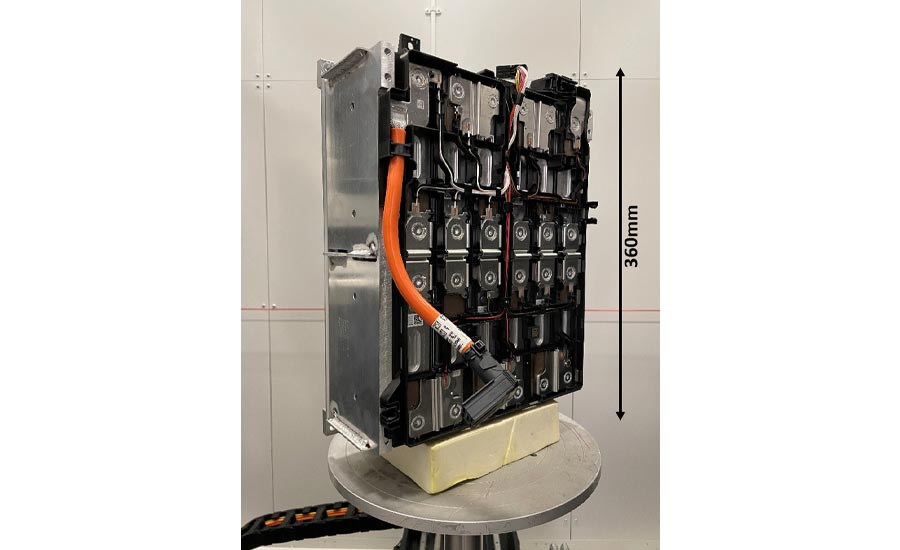
Full battery packs, while larger in form factor, are still very complex in structure and due to their size create a larger threat when quality is an issue. In 2013, batteries in several large, commercial aircraft reportedly experienced thermal events due to a short circuit within one battery cell within one of the plane’s two lithium-ion batteries that led to venting and cell-to-cell propagation causing the battery failure. In one case, a single event failure was said to have spread to multiple adjacent cells, causing smoke to be emitted, in what could have led to a disaster.
QM 0222 NDT CT 1 CT Scan Automotive Battery Module 2
QM 0222 NDT CT 1 CT Scan Automotive Battery Module 1

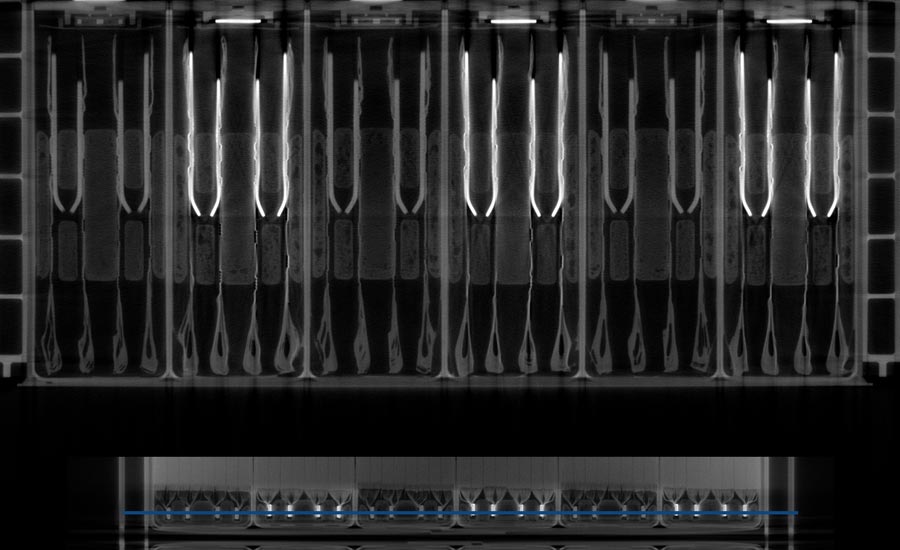
This Offset CT scan shows the central region, including the anode and cathode busbars and the tabs connecting the cells to the busbars of an automotive battery module. Image source: Nikon Metrology


More advanced CT processes can also benefit in the inspection of dense objects, such as metal alloy turbine blades and metal additive manufactured and cast parts. CT systems with a rotating target dissipate heat during the process, allowing a smaller spot size for higher energies and powers, leading to higher resolution, high-contrast images. This allows penetration of high-density parts while achieving micron-accuracy, allowing engineers to visualize, analyze and measure complex geometry, surfaces, and internal components without physical sectioning of the sample. Failure analysis is a critical step in addressing reliability or performance issues within a user’s products. From R&D through production line setup and pre-series trial runs to full production, CT is an indispensable tool that offers many advantages for production applications requiring efficiency, reliability, and accuracy.

CT imaging can assess quality and structural integrity taking into account the multiple connections, anticipated swelling of thermal layers, thermal venting, external insulation, among other things - including ensuring the proper safety structures are in place to prevent a single cell failure from spreading to adjacent cells or modules.

KEYWORDS: Computed Tomography (CT) industrial radiography manufacturing metrology radiography

Share This Story

Looking for a reprint of this article?
From high-res PDFs to custom plaques, order your copy today!

Andrew Ramsey is an X-ray CT consultant for Nikon Metrology Inc. For more information, email him at [email protected] or go to Nikon Metrology Inc..

Recommended Content

JOIN TODAY
to unlock your recommendations.

Already have an account? Sign In

  • 2024 Quality Rookie of the Year Justin Wise 1440x750px banner with "Quality Rookie of the Year" logo inset

    Meet the 2024 Quality Rookie of the Year: Justin Wise

    Justin Wise is an exceptional individual who has been...
    Aerospace
    By: Michelle Bangert
  • Man with umbrella and coat stands outside while it rains at night looking at a building.

    Nondestructive Testing: Is there an ethics problem?

    I was a whistleblower who exposed fraudulent activities...
    NDT
    By: Dale Norwood
  • Unraveling Deflategate: Football stadium with closeup of football on field

    Unraveling the Tom Brady Deflategate

    The Deflategate scandal erupted following the 2014 AFC...
    Measurement
    By: Greg Cenker and Henry Zumbrun
Manage My Account
  • eMagazine Subscriptions
  • Newsletters
  • Online Registration
  • Subscription Customer Service
  • Manage My Preferences

More Videos

Sponsored Content

Sponsored Content is a special paid section where industry companies provide high quality, objective, non-commercial content around topics of interest to the Quality audience. All Sponsored Content is supplied by the advertising company and any opinions expressed in this article are those of the author and not necessarily reflect the views of Quality or its parent company, BNP Media. Interested in participating in our Sponsored Content section? Contact your local rep!

close
  • Key Takeaways for Quality Leaders
    Sponsored byComplianceQuest

    Key Takeaways for Quality Leaders from the 2026 Gartner Magic Quadrant™ for QMS

  • This image shows a person seated next to a Bobcat T66 compact track loader.
    Sponsored byPolyWorks by InnovMetric

    Supercharging Digital Gauging at Bobcat North America

  • Dorsey Calibration Lab photo by Tom LaBarbera Picture this Studios
    Sponsored byDorsey Metrology International

    Ensuring Product Quality in a Competitive Manufacturing Landscape

Popular Stories

This image shows a person seated next to a Bobcat T66 compact track loader.

Supercharging Digital Gauging at Bobcat North America

a professional in the aviation field performing maintenance, repair, and overhaul (MRO) work

Manufacturing Retention: Strategies for Improving Company Culture, Engagement and Skill Development

Dorsey Calibration Lab photo by Tom LaBarbera Picture this Studios

Ensuring Product Quality in a Competitive Manufacturing Landscape

2026 Quality Professional of the Year!

Events

June 22, 2026

Automate 2026

Automate is North America's largest robotics and automation event — and the best place to take your ideas from insight to impact.
 
Our show floor features the world’s leading automation solutions, from AI and robotics to motion control, vision systems, and more. Plus, our educational conference is second to none, led by the brightest minds in automation today.
 
Ready to transform the way you work? Take the next step at Automate.
July 14, 2026

Quality Leaders Forum: Better Communication, Better Quality Data

The Quality Leaders Forum is a quarterly, editor-moderated fireside chat series hosted by Quality Magazine, featuring candid conversations with senior manufacturing and operations executives shaping enterprise-level quality.

View All Submit An Event

Products

Lean Manufacturing and Service Fundamentals, Applications, and Case Studies

Lean Manufacturing and Service Fundamentals, Applications, and Case Studies

See More Products
Quality Podcast Channel Custom Content

Related Articles

  • Various sample images from laboratory CT.

    Computed Tomography: From Laboratory to Shopfloor In-line Applications

    See More
  • Back to Basics: Industrial Computed Tomography

    See More
  • The complete 3D data CT technology captures can be used as a digital twin to deliver key advantages to the aerospace manufacturing industry, including increased speed, repeatability, efficiency, and more accurate defect detection.

    Advancements in Industrial X-Ray Computed Tomography

    See More

Related Products

See More Products
  • louis hannigan.jpg

    The Non-Idiot's Guide to ISO 9001:2015: Understanding and Using the Quality Management System Standard to your benefit

  • Gemba Kaizen: A Commonsense Approach to a Continuous Improvement Strategy 2/E

See More Products
×

Stay in the know with Quality’s comprehensive coverage of
the manufacturing and metrology industries.

Newsletters | Website | eMagazine

JOIN TODAY!
  • RESOURCES
    • Advertise
    • Contact Us
    • Directories
    • Manufacturing Division
    • Store
    • Want More
  • SIGN UP TODAY
    • Create Account
    • eMagazine
    • Newsletters
    • Customer Service
    • Manage Preferences
  • SERVICES
    • Marketing Services
    • Market Research
    • Reprints
    • List Rental
    • Survey/Respondent Access
  • STAY CONNECTED
    • LinkedIn
    • Facebook
    • YouTube
    • X (Twitter)
  • PRIVACY
    • PRIVACY POLICY
    • TERMS & CONDITIONS
    • DO NOT SELL MY PERSONAL INFORMATION
    • PRIVACY REQUEST
    • ACCESSIBILITY

Copyright ©2026. All Rights Reserved BNP Media, Inc. and BNP Media II, LLC.

Design, CMS, Hosting & Web Development :: ePublishing