Guest Column
When Smart Manufacturing Meets Human Intuition
Beyond the Digital Screen: Why Machines Still Need the Human Mind
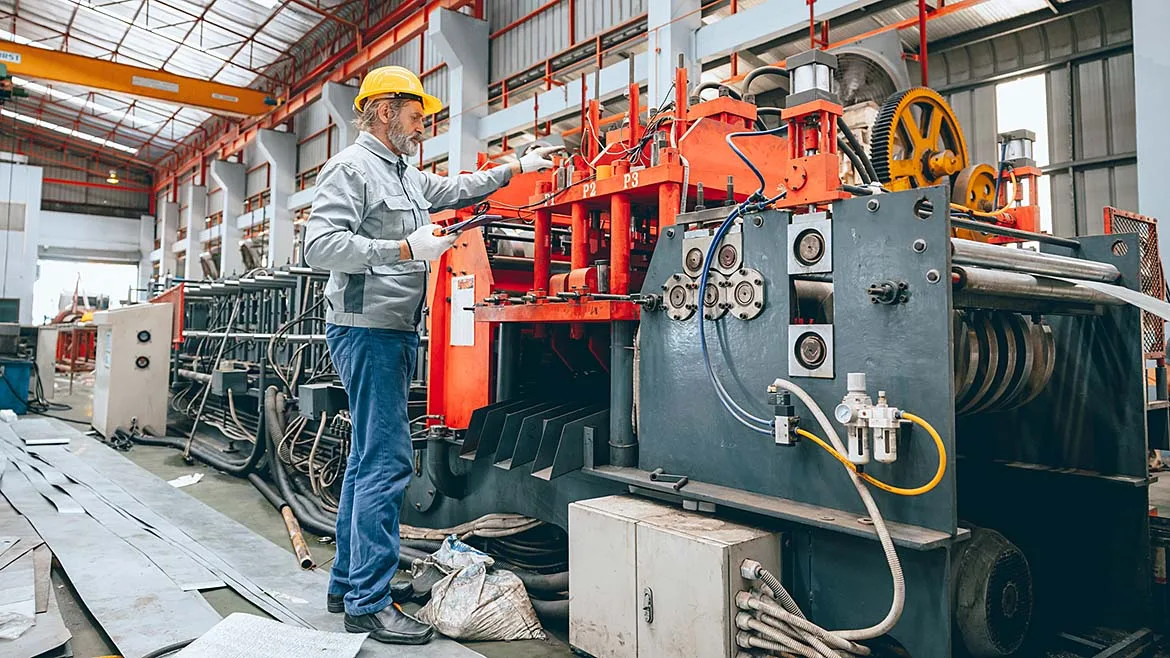
In the era of Smart Manufacturing and IIoT, modern factories are increasingly driven by data.
Sensors continuously monitor temperature, pressure, vibration, and process stability, turning production floors into highly connected environments.
Yet after decades beside injection molding machines, I have learned an important truth: Data can provide facts, but only human intuition can reveal the truth behind them.
Sensors are powerful tools, but they are still only messengers. They transmit signals — not understanding. They can detect abnormalities, but they cannot fully interpret the behavior, history, or “language” of a machine.
And sometimes, machines speak in ways no screen can fully explain.
The Day the Sensor Was Wrong
I still remember a critical production day that challenged complete dependence on automation.
During operation, the machine suddenly displayed a severe hydraulic oil temperature alarm: 105°C. In any manufacturing environment, this is considered a dangerous condition. A senior operator immediately stopped the machine to prevent possible hydraulic failure or system damage.
According to the digital display, the decision appeared completely correct.
But standing beside the machine, something felt wrong to me.
The machine was running smoothly.
The hydraulic unit showed no signs of excessive heat.
There was no burnt oil smell.
The vibration pattern remained stable and rhythmic.
Most importantly, our system had a built-in safety interlock configured to automatically shut down the machine if the oil temperature exceeded 55°C.
That raised a simple but critical question in my mind: “If the actual temperature is truly 105°C, why did the safety interlock not activate?”
At that moment, experience became more important than the screen.
After physical verification, we discovered the real hydraulic oil temperature was only 43°C. The machine itself was healthy. The actual problem was a faulty sensor transmitting false data.
Had we relied only on the digital reading, we would have wasted valuable production time, unnecessary maintenance effort, and significant operational cost.
Instead, by understanding the machine beyond the numbers, the issue was identified within minutes and production continued normally.
The Human Interlock
That experience reinforced a lesson I deeply believe: The most advanced sensor inside a factory is still the experienced human mind.
Sensors can tell us what is happening.
Human intuition helps us understand why it is happening.
True manufacturing expertise is built not only through manuals, alarms, or software systems, but through years of observing patterns, listening to machine behavior, and understanding process character under real production conditions.
Experienced technicians often recognize problems long before a system generates an alarm.
They listen to vibration changes, monitor subtle sound variations, observe pressure behavior, and sense process instability through experience that no algorithm can fully replicate.
This silent communication between human and machine is something modern industry should never underestimate.
The Future of Manufacturing
As factories move toward AI-driven automation and fully connected systems, technology will continue to evolve rapidly. Smart systems will become faster, more predictive, and more efficient.
But even in the age of automation, manufacturing should never lose the human ability to observe, question, and understand beyond the screen.
Technology should support human expertise — not replace human judgment.
Because in the end, manufacturing is not only about production cycles, sensors, or machine outputs.
It is a living symphony of process, experience, and decision-making.
And to truly lead that symphony, one must still be able to hear the notes that sensors sometimes miss.
Looking for a reprint of this article?
From high-res PDFs to custom plaques, order your copy today!