Electromobility is currently one of the most significant trends worldwide, and it is destined to change the way people purchase vehicles, travel and enjoy their leisure time.
Leak testing is a method of product quality control that identifies manufacturing inconsistencies by porosity testing a manufactured part or system leaks.
For a broad range of automotive, medical and other products, leak testing requirements before products are released to the marketplace have not changed. What has changed in recent years is several new technologies—some related to data handling and the Industrial Internet of Things and others relating to test techniques—that now change the calculus of determining best-match solutions for leak testing.
Leboucher is based in the Livonia, MI office and is responsible for overseeing sales, marketing and operations for all three ATEQ divisions: leak testing, TPMS, and aviation. He will work with managers from all ATEQ North America locations (U.S., Canada and Mexico).
Finding and fixing leaks at their source is not only crucial for initial vehicle quality, but also for overall product lifecycle quality and longevity.
When it comes to the production of automobiles, trucks, heavy-duty equipment, off-road vehicles and farm equipment, early detection and resolution of even the smallest leaks are key to minimizing recall-related expenses.
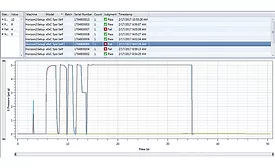
Turn Gage R into a tool for continuous quality improvement.
October 10, 2017
Many quality engineers don’t know the Gage Repeatability and Reproducibility, or Gage R&R, of their leak test. Many, frankly, don’t want to know because they fear how poor it may be.