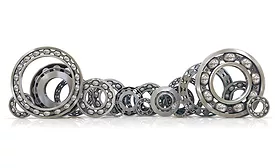
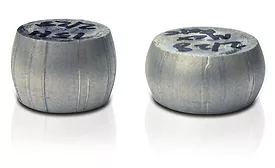
As one of the most common mechanical components in the world, roller elements are of critical importance. It is necessary for bearings and raceways to be carefully engineered and manufactured so that the machines which use them are as safe and stable as possible.
The pervasiveness of rubber and plastic products is hard to overstate. They are everywhere, and they have been around for a while. In the case of rubber, it’s been in use since the early 1800s. While rubber and elastomers (from “elastic polymers”) previously had slightly different meanings, today for all practical purposes they are synonymous.
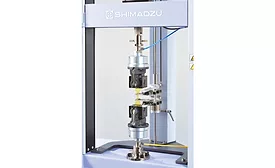
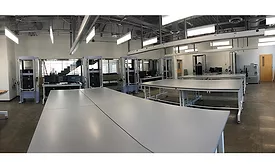
Equipped with a collection of Shimadzu’s materials testing instruments, this lab space will reportedly allow students to characterize materials with an array of scientific techniques.
February 20, 2019
Shimadzu Scientific Instruments and Oklahoma State University (OSU) have joined forces to help establish The College of Engineering, Architecture and Technology’s (CEAT) Mechanical and Physical Properties Testing Lab.
Why conduct these tests? There are many reasons to perform materials tests. Data from testing can be used by engineers, scientists, designers, and managers.
In automotive and other safety-critical industries, impact testing is an important measure of a material’s failure properties. Properly testing both raw materials and molded components for their strength and durability can help engineers prevent failures, design lasting goods, and save lives.
MTC is a Nadcap-accredited special processor, providing a complete range of NDT testing services and related chemical processing, with a unique niche service focused on titanium critical rotating parts.
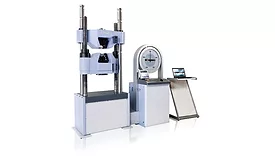
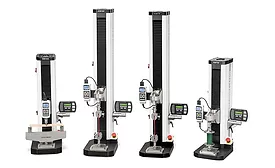
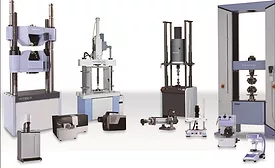
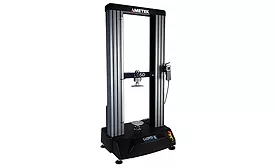
Whether it’s called a compression tester, tensile tester, dual-column tester or twin-column tester, material testing machines go by many names. So, when users need to find the best machine to test their products, the market can appear to be a difficult one to navigate.
MTC is a Nadcap accredited special processor, providing a complete range of NDT testing services and related chemical processing, primarily servicing the aerospace industry, with a unique niche service focused on titanium critical rotating parts.
Not long ago, a manufacturer of needles for medical syringes was in the middle of another shift of quality assurance testing. The test involved three individuals side-by-side, with each grabbing the needles off the line and physically inserting them into a drill “chuck,” piercing a rubber slab to simulate the piercing of human skin.