"Data is the new oil!” Clive Humby said over a decade ago, and his words seem even more apropos today. The allure of data is all-consuming—open any newspaper on any day of the week and at least half a dozen articles will speak about data.
The event will focus on the industrial applications of AM for making functional components and end-use production parts. Attendees will gain practical knowledge on AM adoption and implementation and can network with AM industry leaders.
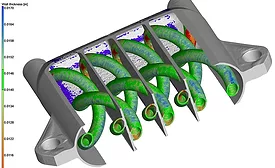
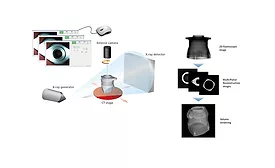
A leading technology in the medical field since the 1970s, CT scanning is now taking its rightful place as a powerful observational tool in the industrial realm. A CT scan is a three-dimensional density map of any object that can be penetrated by the beam.
Every day additively manufactured (AM) parts are being used in new applications as the industry rapidly matures. As additive parts become more economical for small productions runs and move beyond use solely in tooling and prototyping, the need to nondestructively inspect parts for quality increases as well.
Industrial inspection equipment doesn’t appear in mainstream news on a regular basis. But that’s what happened when Samsung found itself in the unenviable position of determining why its Note 7 smart phones had turned pyrotechnic.
Medical device manufacturing poses unique challenges for maintaining quality and consistency. Medical devices must be built to exacting standards and their failure is simply not an option.
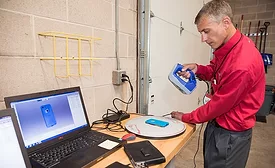
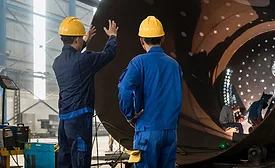
Virtually every manufacturer must perform some kind of testing or inspection to ensure their products meet their own internal quality standards, governmental requirements or the standards their customers set.