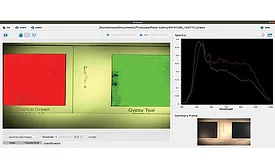
The automotive industry depends on consistency and predictability. From the color of the paint to the stiffness of the brake, car manufacturers devote significant amounts of time and money into making sure their products look immaculate and feel safe to drive.
Three-dimensional (3D) imaging applications are used in many different industries ranging from both industrial pick and place, palletization/depalletization, warehouse, robotics and metrology applications to consumer-based products such as drones, safety and security, and patient monitoring applications.
IDS Imaging Development Systems GmbH is expanding its USB3 Vision camera range by more than 100 models in the coming weeks. The company integrates the entire range of Sony sensors in several camera families, which it currently already offers with a GigE Vision interface.
With more than a billion bicycles thought to be in existence (more than double the number of automobiles), it’s safe to say that a lot of people enjoy cycling.
According to the Compressed Air and Gas Institute (CAGI), the average compressed air system loses 30 percent of its air through leaks but locating those leaks has been a time-consuming and te-dious process.
The Merkur camera series combines a line scan camera with a smart camera and makes it a high-speed system for the inspection of endless material, printing material, paper web and steel band, in the printing industry and textile production.
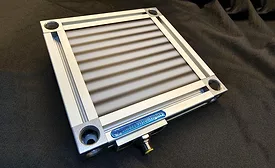
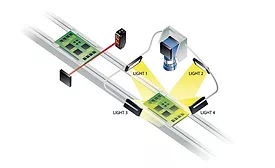
Lighting selection and setup play a critical role in the success of a machine vision application. Vision systems rely on specific types of lighting to optimize contrast or to highlight a specific feature of interest.
Due to the vast number of imaging lenses that are available on the market, actually choosing a lens for a given application can be a daunting task. Part one of this article covered the most common types of lenses used for machine vision.
When several devices need to be accurately sequenced in a machine vision system, the usual solution was to program a PLC to generate the necessary signals. However, a PLC is a significant investment and requires specialist knowledge to program the Relay Ladder Logic.