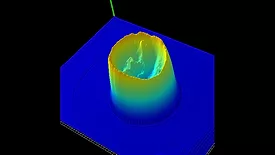
While machine vision applications have been highly successful for decades using "analytical" vision tools, deep learning is able to successfully solve very complex classification and object detection problems with ease.
Product packaging - in an extremely broad range of markets from food to pharma - frequently incorporates an extremely important sealing technology called “tamper evident” seals.
This (PM)2 method can be applied to any organization, public or private, and contributes to the better management of a country as described by the authors in our SAC-Model.
Dawn Brusseau, product marketing manager, Plex Systems Inc., says ERP software “provides a single source of truth for an organization” by keeping every member of an organization aware of current operations and creating traceability and a monitoring process.
When Donald Engineering sales manager Jim Kortman describes his aluminum extruder client of 28 years, he reaches for a deceptively simple analogy: the Play-Doh Fun Factory.
Over the last few years, collaborative robotics has come to the fore as a way to increase manufacturing flexibility and improve ROI. When considering a human-robot collaborative workcell, we explicitly incorporate and expect humans to be safely working close to and/or interacting with the robot during operation.
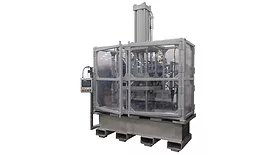
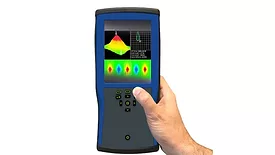
Nondestructive testing methods range from simple manual and visual techniques to sophisticated eddy current and ultrasound technologies that can be used for spot-checks or incorporated right into the production line.
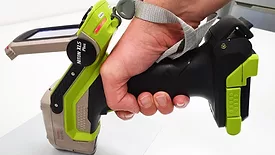
X-ray fluorescence (XRF) spectrometry is a useful technology to measure the thickness of metal layers. Handheld XRF is an indispensable tool in quality assurance.
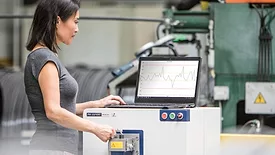
As international quality standards become increasingly demanding, you need to be confident in your QC analysis results – whether you are using an XRF, LIBS or OES analyzer. Without an accurate error margin, you simply cannot be sure that your parts meet specifications.
The global contribution of the automotive industry to the world economy is approximately $3.4 trillion (2021 – Mc Kinsey). Yet very little is communicated about the nondestructive testing (NDT) techniques used for industrial inspection to meet those often mutually opposed pressures of productivity and quality.