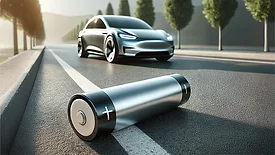
Manufacturers today face a paradox: quality expectations continue to rise, yet the labor available to perform consistent, repeatable inspection continues to shrink.
Conveyance has always been central to automotive production. Every vehicle component, from a small subassembly to a complete powertrain, depends on reliable movement through the factory.
Victor Taylor is the vice president of manufacturing at the award-winning Nissan Canton vehicle assembly plant with more than 20 years of engineering and manufacturing expertise.
EoL Noise and Vibration (NVH) testing is essential in automotive manufacturing, especially for electric vehicles. Advanced sensors enhance product quality by detecting anomalies, reducing warranty claims, and improving customer experience across various industries.
As we continue to move towards the ultimate phasing out of Internal Combustion Engine (ICE)-powered cars, and Electric Vehicles (EVs) become the dominant technology, more manufacturers are expected to invest in gigacasting equipment.
Gigacasting, or megacasting, is revolutionizing automotive manufacturing by providing substantial cost and efficiency benefits. When combined with a high percentage of recycled feedstock, gigacasting can support circular economy goals by increasing recycled content in vehicles.
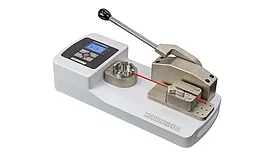
One force measurement application gaining popularity is wire terminal testing, where a controlled pull on a crimped connection is used to measure force, assessing its integrity and quality.
SAE International’s Battery Standards Testing Committee recently issued a recommended practice that established nondestructive in-line production test methods for evaluating water leak tightness for propulsion battery packs.
In 2023, SAE International’s Battery Standards Testing Committee, consisting of over 20 companies in EV battery manufacturing and testing, was tasked with recommending practices for evaluating liquid leak-tightness in battery packs.
General Motors announced plans to invest about $4 billion over the next two years in its domestic manufacturing plants to increase U.S. production of both gas and electric vehicles.
As demand for electric vehicles rises, the automotive industry must prioritize battery component quality. This article explores the critical role of how materials used in automotive battery manufacturing undergo rigorous mechanical testing to verify their quality and to maintain industry standards.
Batteries are key to electrification, demanding high-quality control and efficient production. The use of Automated Defect Recognition (ADR) and other technologies is critical as the industry aims to scale up to meet the rising demand from electronics, electric vehicles, and energy storage sectors, while also minimizing environmental impacts.


.webp?height=168&t=1751233044&width=275 "Battery-pack failure modes")