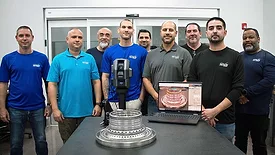

In the manufacturing landscape, the disconnect between design, production, and quality is a growing challenge. As OEMs embrace Model Based Definition (MBD) and Product Manufacturing Information (PMI), suppliers must adapt quickly. Discover how innovative solutions are bridging these gaps, streamlining the journey from 3D design to inspection, and driving a more efficient future in manufacturing.
In 2025, the U.S. manufacturing sector faces mounting challenges from rising tariffs and investment hesitancy. Explore how leaders are shifting to proactive strategies and embracing innovation to navigate uncertainty and drive future success.
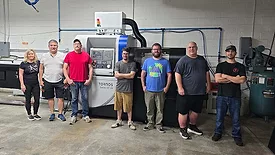
Operational excellence is crucial for success in a dynamic industrial landscape. At Waygate Technologies, our Kaizen journey has transformed our efficiency and collaboration, turning challenges into victories. As we near 2025, the lessons learned emphasize a future of continuous improvement, empowering every team member to drive change and cultivate a culture of shared responsibility.
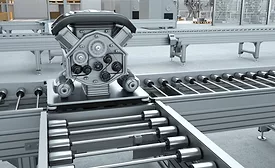
To tackle a workforce crisis, the manufacturing sector is embracing digital twins and AI-driven simulations to attract new talent and enhance skills. Companies like Ford and Boeing are leading this shift, using innovative training tools to improve efficiency and close the skills gap.
You’re already a superstar in quality control, but are you also a bit of a wordsmith? Can you unleash a wicked pun, or do you just like a good laugh? Join our caption contest and show your wit and creativity!
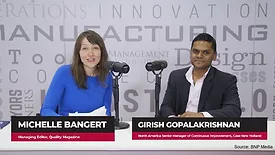
Continual improvement is a challenging journey, often hindered by a misunderstanding of processes. With decades of experience, I’ve seen how reframing questions can unlock meaningful change. Remember, improvement is a marathon, not a sprint.
Challenges can arise after implementing a vision system, leading to frustration from inconsistent performance and hidden costs. Early planning and involving integration teams can help organizations fully leverage vision systems for quality improvement.
Hyperspectral and multispectral imaging are transforming manufacturing by providing deeper material insights that enhance quality assurance, predictive maintenance, and safety. These technologies enable defect detection and equipment monitoring, allowing manufacturers to improve processes and reduce costs.
Configuration management refers to maintaining consistency in a product’s functionality, performance, and physical characteristics by managing its design, operational data, and requirements throughout its lifecycle.
The upcoming revision of ISO 10017: 2017 focuses on "Quality management — Guidelines for configuration management," aimed at maintaining consistency in a product’s functionality and characteristics throughout its lifecycle. The configuration management process includes five steps.