As newly elected Fellows, you join an elite cadre of over 500 peers dedicated to fostering operational excellence, ethical standards, and collaborative progress.
In the ever-evolving landscape of quality management, where innovation meets unwavering commitment, the ASQ Fellows community stands as a beacon of excellence.
What is culture? Culture is the shared beliefs, values, attitudes, and behavior patterns that characterize the members of a family, a community or an organization.
Bob Ferrone specializes in integrating industrial design, engineering, quality, manufacturing and environmental management systems for improving environmental and economic performance.
Previously, I discussed my concerns about organizations not properly managing corrective actions or process variation. While corrective actions were covered before, this piece focuses on variation.
Was there a spark that ignited your professional journey? Maybe it was a person, an experience, a moment that set or changed the direction of your career.
The team at Power Plant Services is working hard to keep the lights on. Power plants depend on them—they are known as the emergency room for power plants—and they are available around the clock.
I admit, first things first does make sense to me. In particular, I like it because it places a priority on the basics. You have to crawl before you walk, walk before you run.
I’m fond of the phrase “These words say this. These words don’t.” I first encountered it in the marketing of the company Pig Newton, the production company of comedian Louis C. K.
 RSS
RSS
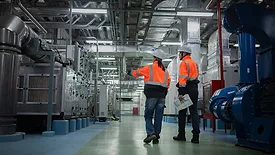
.webp?height=168&t=1770830401&width=275 "The image shows two multi-ethnic workers in a factory setting at a control panel.")