As high-performance industries adopt additive manufacturing (AM), the demand for harmonized standards is growing. This drives organizations and regulatory bodies to develop consistent protocols, moving away from conflicting standards.
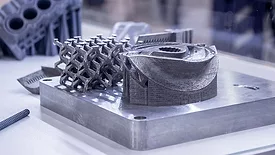
Additive manufacturing (AM) has long intrigued engineers with its design freedom and rapid prototyping. However, as it shifts to full-scale production, quality has become a critical bottleneck. Meeting the consistency, functionality, and cost expectations of conventional manufacturing is essential, making finishing as important as printing.
Dr. Johannes Vrana, author of “The World of NDE 4.0,” has more than 20 years of data science experience and more than 15 years of experience with sensor technology. He is a doctorate in the field of NDT and he's also an ASNT level three.
Continued improvements in artificial intelligence, real-time reconstruction, and system miniaturization will further increase CT’s accessibility and performance
Initially for medical diagnostics, computed tomography (CT) is now essential for nondestructive testing (NDT) in industry. Recent advancements have improved its application for real-time quality control during manufacturing, enabling faster defect detection and greater efficiency while reducing scrap rates.
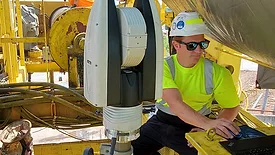
Advanced metrology tools once confined to controlled environments are now becoming portable and fast, enabling high-precision measurements and nondestructive testing in heavy industrial facilities during live operations or tight shutdowns.
From the streets of Jersey City to the Navy to nondestructive testing and his own company, Joe Sorrentino of Lean Quality Systems, passes along the knowledge of what he has excelled at−quality assurance, leadership, and management training. Joe sat down with Michelle Bangert to talk about, in part, his latest article for Quality.
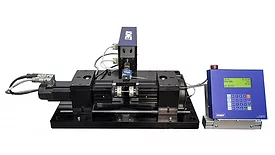
Material fatigue is a critical concern in engineering, with over 90% of failures caused by fatigue stress rather than overloading. As industries push material limits, efficient fatigue testing becomes vital. Rotating beam fatigue testing, dating back to the mid-1800s, provides a cost-effective way for researchers to evaluate material endurance while saving time and money.
As we continue to move towards the ultimate phasing out of Internal Combustion Engine (ICE)-powered cars, and Electric Vehicles (EVs) become the dominant technology, more manufacturers are expected to invest in gigacasting equipment.
Gigacasting, or megacasting, is revolutionizing automotive manufacturing by providing substantial cost and efficiency benefits. When combined with a high percentage of recycled feedstock, gigacasting can support circular economy goals by increasing recycled content in vehicles.
The British Institute of Non-Destructive Testing (BINDT) certifies NDT practitioners through its PCN scheme, ensuring they are properly trained and qualified. This guarantees industry access to skilled personnel for various projects.
 RSS
RSS