Key factors such as gloss, haze, distinctness of image, and orange peel work together to determine the overall total appearance, along with hidden variables that also control your outcome.
A customer's first impression of a product depends largely on its appearance. Issues in formulation or processing can create defects that diminish perceived quality. Key factors like gloss, haze, and distinctness of image (DOI) impact overall appearance, while hidden variables also play a role. Understanding these elements is vital for ensuring consistent quality and customer satisfaction.
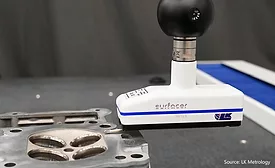
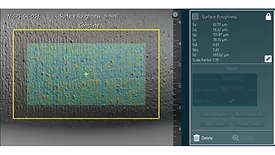
Coordinate measuring machine (CMM) manufacturer LK Metrology, whose manufacturing facility is in Derbyshire, UK, has announced the introduction of the SURFACER SRP.
As 3D printing continues to take off and parts are used in more unique ways to solve complex problems, it’s likely that quality requirements will only become stricter.
3D printing is a revolutionary technology that enables the creation of intricate and complex designs by adding material layer by layer. The final surface roughness of the printed part is critical to its overall performance and can have a major impact on its functionality.
Sight. This basic human sense affects our quality of life, and it can be enhanced or diminished with just a glance. Same is true in manufacturing. A wide range of industries view visual appearance as an important aspect of quality.
The aerospace industry uses nondestructive testing (NDT) methods quite extensively. The structural integrity and safety of nearly all components, especially the most critical ones, needs to be validated and NDT plays a major role. NDT is required in virtually all areas of newly manufactured, serviced, repaired, or overhauled inspections.
Digitalization has changed our world as the internet and modern technology continue to shape the manufacturing industry. For example, the vision of Industry 4.0 shows that production systems and machines are required to be flexible and adapt with continuously changing manufactured products. That means production will be more individualized, flexible, and faster.
Our Introduction to Surface Roughness Measurement guidebook is an excellent initiation to noncontact surface roughness measurement. It offers practical information on various topics to help make roughness measurement easy and efficient.
Zygo Corporation has announced the introduction of its latest generation of ZeGage™ 3D optical profiling instruments providing precise and rapid non-contact measurement of surface topography for enhanced quality and process control.
Combining benchtop mechanical testing of smaller brake material samples with rapid 3D surface metrology makes it possible to analyze results more quickly than ever before.
Researching how different materials influence brake pad performance and durability involves a vast amount of back-and-forth testing and metrology analysis.