Quality Magazine logo
search
cart
facebook twitter linkedin youtube
  • Sign In
  • Create Account
  • Sign Out
  • My Account
Quality Magazine logo
  • NEWS
  • PRODUCTS
    • FEATURED PRODUCTS
    • SUBMIT YOUR PRODUCT
  • CHANNELS
    • AUTOMATION
    • MANAGEMENT
    • MEASUREMENT
    • NDT
    • QUALITY 101
    • SOFTWARE
    • TEST & INSPECTION
    • VISION & SENSORS
  • MARKETS
    • AEROSPACE
    • AUTOMOTIVE
    • ENERGY
    • GREEN MANUFACTURING
    • MEDICAL
  • MEDIA
    • A WORD ON QUALITY PUZZLE
    • EBOOKS
    • PODCASTS
    • VIDEOS
    • WEBINARS
  • EVENTS
    • EVENT CALENDAR
    • IMTS
  • DIRECTORIES
    • BUYERS GUIDE >
      • Supplier Insights
    • NDT SOURCEBOOK
    • VISION & SENSORS
    • TAKE A TOUR
  • INFOCENTERS
    • Digital Quality Management Systems
    • NEXT GENERATION SPC & QUALITY ANALYTICS
  • AWARDS
    • ROOKIE OF THE YEAR
    • PLANT OF THE YEAR
    • PROFESSIONAL OF THE YEAR
  • MORE
    • Expert Columns
    • NEWSLETTERS
    • QUALITY STORE
    • INDUSTRY LINKS
    • SPONSOR INSIGHTS
  • EMAG
    • eMAGAZINE
    • ARCHIVES
    • CONTACT
    • ADVERTISE
  • SIGN UP!
Test & InspectionNDT

Back to Basics: Detecting Heavy Metals Using X-Ray Fluorescence

Beginner tips to understand the role XRF plays in restricting hazardous materials.
By Edward McMenamin
X-Ray Fluorescence Spectrometry
October 2, 2018

X-Ray Fluorescence analysis plays an important role in protecting consumers by detecting possible toxic heavy metals in electronics, automobiles and medical devices before they make it to market.

The potential risks extend beyond components’ useful lives, as toxins can pollute landfills and potentially cause health issues to people having prolonged exposure to such materials. In Europe, the Waste Electrical and Electronic Equipment (WEEE) directive stipulates the treatment, recovery, and recycling of electrical and electronic equipment. But, of course, this process is safer if hazardous materials are restricted in the first place.

Regulations like Europe’s ELV (End-of-Life Vehicle) Directive, and RoHS (Restriction of Hazardous Substances in Electrical and Electronic Equipment), require manufacturers to ensure that parts don’t exceed the maximum levels of the toxic elements. ELV restricts cadmium, lead, mercury, and Hexavalent chromium, as does RoHS, with the addition of two kinds of brominated flame retardants—polybrominated biphenyl (PBB) and polybrominated diphenyl ether (PBDE).

Medical devices and monitoring and control instruments were also later included in the RoHS directive that covers large and small household appliances, IT and telecommunications equipment, consumer equipment, lighting equipment, electrical and electronic tools, toys, leisure and sports equipment, and automatic dispensers.

Levels of each of the restricted materials are capped at 1,000 ppm, with the exception of Cadmium, which is limited to 100 ppm.

The U.S. does not have a parallel, nationwide law, but several states including California, New Jersey, and Minnesota have regulations that mimic the RoHS directive. For instance, certain covered electronic devices, if prohibited in the EU due to an excessive level of a heavy metal, may be prohibited for sale in a specific state. The states vary so reviewing each guideline is important for manufacturers, according to experts at Shimadzu.

In 2015, four phthalate esters—DEHP, DBP, BBP and DIBP—were added to RoHS’s list of restricted materials. Phthalate esters cannot be detected by conventional X-ray fluorescence screening, according to information provided by Shimadzu, “so it is now an urgent necessity to establish screening methods for restricted organic substances and accurate analysis methods for phthalate esters.”

“Later, it will be necessary to pay attention to trends in the creation of test methods, and to conduct fact-finding surveys with respect to procurement items.”

For parts that may contain phthalate esters, Shimadzu offers secondary screening technology, such as Pyrolysis gas chromatography mass spectrometry, to catch the organic matter.

Using XRF to Meet ELV and RoHS Requirements

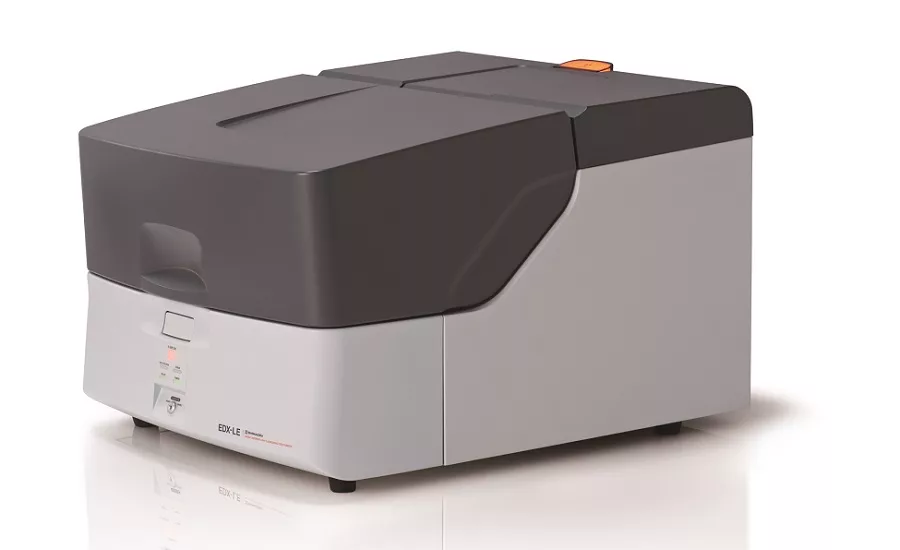
Both benchtop and handheld XRF analyzers are used; however, handheld devices are by far the primary tool for initial screening, according to Shimadzu.

“They can quickly and efficiently screen for banned elements in real time, allowing users to get results instantly,” according to Shimadzu experts. “This saves significant time. However, benchtop analyzers are more accurate and offer greater detection limits. These can be used to confirm handheld screening results, something many manufacturers should consider due to the potential ramifications of producing goods with these hazardous elements in them.”

In a typical analysis scenario, an XRF analyzer screens for the elements—if the item falls within the specified limits, and no additional testing is warranted, the sample conforms and is considered as passing. If it doesn’t pass, more testing is needed. In this instance, analysis techniques used may include benchtop XRF spectrometry, UV-Vis spectroscopy, gas chromatography mass spectrometry (GCMS), and inductively coupled plasma mass spectrometry (ICP-MS). It varies according to the substance being analyzed, such as hexavalent chromium or mercury, and the type of material, such as a polymer or metal, according to Shimadzu.

“The value of appropriate, properly performed testing is that it provides objective, quantitative data showing that the materials, components, or products in question either do or do not contain levels of restricted substances above the regulatory limits,” according to experts at Shimadzu. “Analytical instruments and the specific techniques/methods used (when followed properly) can give assurance to manufacturers that their products—and their business—will not be affected by the directive. If nothing else, the testing and appropriate record keeping ensures that ‘due diligence’ was followed.”

General XRF Principles

In X-Ray Fluorescence Spectrometry, a sample is irradiated with x-rays. The energy level and intensity of second-order x-rays (x-ray fluorescence) generated from the samples are measured, according to Shimadzu. This allows non-destructive measuring of the constituent elements (qualitative analysis) and their respective concentration levels (quantitative analysis). “Since no chemical pretreatment is required and multiple elements can be analyzed simultaneously, analysis can be performed rapidly, which is a major benefit of x-ray fluorescence,” according to information provided by Shimadzu. “In addition, systems are compact, require minimal maintenance, and are able to measure samples of any shape by simply placing them in the measurement chamber. Consequently, EDX systems are ideal for acceptance inspection, production screening analysis and defect analysis.”

KEYWORDS: metals spectrometry x-ray fluorescence XRF analysis

Share This Story

Looking for a reprint of this article?
From high-res PDFs to custom plaques, order your copy today!

Ed McMenamin is a former editor of Quality Magazine.

Recommended Content

JOIN TODAY
to unlock your recommendations.

Already have an account? Sign In

  • 2024 Quality Rookie of the Year Justin Wise 1440x750px banner with "Quality Rookie of the Year" logo inset

    Meet the 2024 Quality Rookie of the Year: Justin Wise

    Justin Wise is an exceptional individual who has been...
    Aerospace
    By: Michelle Bangert
  • Man with umbrella and coat stands outside while it rains at night looking at a building.

    Nondestructive Testing: Is there an ethics problem?

    I was a whistleblower who exposed fraudulent activities...
    NDT
    By: Dale Norwood
  • Unraveling Deflategate: Football stadium with closeup of football on field

    Unraveling the Tom Brady Deflategate

    The Deflategate scandal erupted following the 2014 AFC...
    Measurement
    By: Greg Cenker and Henry Zumbrun
Manage My Account
  • eMagazine Subscriptions
  • Newsletters
  • Online Registration
  • Subscription Customer Service
  • Manage My Preferences

More Videos

Sponsored Content

Sponsored Content is a special paid section where industry companies provide high quality, objective, non-commercial content around topics of interest to the Quality audience. All Sponsored Content is supplied by the advertising company and any opinions expressed in this article are those of the author and not necessarily reflect the views of Quality or its parent company, BNP Media. Interested in participating in our Sponsored Content section? Contact your local rep!

close
  • Key Takeaways for Quality Leaders
    Sponsored byComplianceQuest

    Key Takeaways for Quality Leaders from the 2026 Gartner Magic Quadrant™ for QMS

  • This image shows a person seated next to a Bobcat T66 compact track loader.
    Sponsored byPolyWorks by InnovMetric

    Supercharging Digital Gauging at Bobcat North America

  • Dorsey Calibration Lab photo by Tom LaBarbera Picture this Studios
    Sponsored byDorsey Metrology International

    Ensuring Product Quality in a Competitive Manufacturing Landscape

Popular Stories

iStock-1352825159-jpg.jpg

U.S. Should Substantially Boost Support for Manufacturing USA Program, Issue National Industrial Manufacturing Strategy, Says New Report

a factory floor during what appears to be a training session or a daily briefing

The Root Cause of Defects We Rarely Name or Address

Dorsey Calibration Lab photo by Tom LaBarbera Picture this Studios

Ensuring Product Quality in a Competitive Manufacturing Landscape

2026 Quality Professional of the Year!

Events

June 22, 2026

Automate 2026

Automate is North America's largest robotics and automation event — and the best place to take your ideas from insight to impact.
 
Our show floor features the world’s leading automation solutions, from AI and robotics to motion control, vision systems, and more. Plus, our educational conference is second to none, led by the brightest minds in automation today.
 
Ready to transform the way you work? Take the next step at Automate.
July 14, 2026

Quality Leaders Forum: Better Communication, Better Quality Data

The Quality Leaders Forum is a quarterly, editor-moderated fireside chat series hosted by Quality Magazine, featuring candid conversations with senior manufacturing and operations executives shaping enterprise-level quality.

View All Submit An Event

Products

Lean Manufacturing and Service Fundamentals, Applications, and Case Studies

Lean Manufacturing and Service Fundamentals, Applications, and Case Studies

See More Products
Rookie of the Year Custom Content

Related Articles

  • QM 0222 NDT XRF XL5 Plus Galvanized Steel Plates Feature

    How to Measure Metal Coating Thickness Using Handheld X-ray Fluorescence Analyzers

    See More
  • Back to Basics: Alloy Analysis with X-ray Spectrometry

    See More
  • Inspection Using High-Speed Video Cameras

    Back to Basics: Inspection Using High-Speed Video Cameras

    See More

Related Products

See More Products
  • louis hannigan.jpg

    The Non-Idiot's Guide to ISO 9001:2015: Understanding and Using the Quality Management System Standard to your benefit

  • Lean Six Sigma Using SigmaXL and Minitab

See More Products
×

Stay in the know with Quality’s comprehensive coverage of
the manufacturing and metrology industries.

Newsletters | Website | eMagazine

JOIN TODAY!
  • RESOURCES
    • Advertise
    • Contact Us
    • Directories
    • Manufacturing Division
    • Store
    • Want More
  • SIGN UP TODAY
    • Create Account
    • eMagazine
    • Newsletters
    • Customer Service
    • Manage Preferences
  • SERVICES
    • Marketing Services
    • Market Research
    • Reprints
    • List Rental
    • Survey/Respondent Access
  • STAY CONNECTED
    • LinkedIn
    • Facebook
    • YouTube
    • X (Twitter)
  • PRIVACY
    • PRIVACY POLICY
    • TERMS & CONDITIONS
    • DO NOT SELL MY PERSONAL INFORMATION
    • PRIVACY REQUEST
    • ACCESSIBILITY

Copyright ©2026. All Rights Reserved BNP Media, Inc. and BNP Media II, LLC.

Design, CMS, Hosting & Web Development :: ePublishing