Measurement
Metrology Trends: Role of Sublimating Scanning Sprays for Efficient Measurement Processes
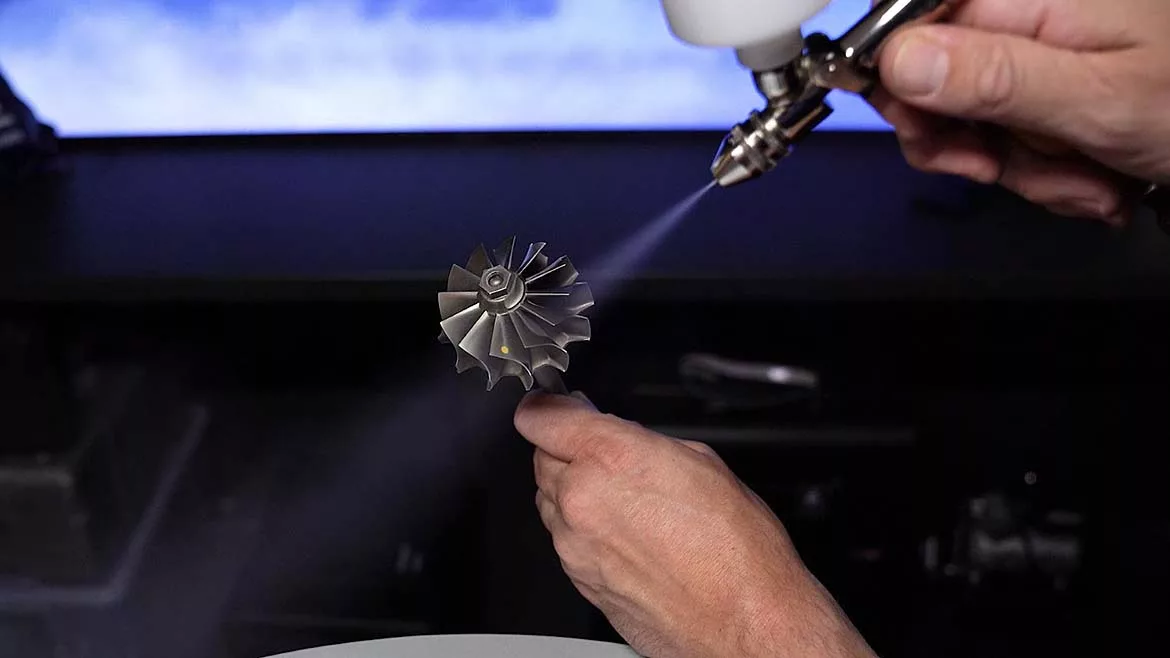
Airbrush for challenging scanning work. The airbrush and scanning spray are particularly suitable for situations in which fine details need to be captured.
3D measurement technology has developed rapidly in recent years, particularly in the areas of digitization and automation. With new scanning equipment and increasingly powerful evaluation tools, even complex measurement tasks can be handled quickly and accurately. However, it is not only devices and software that contribute to this development; measurement accessories also play a decisive role: sublimating scanning sprays and reference points, for example, significantly support efficient and reproducible measurement results.
Performance enhancement in 3D measurement technology
Modern optical and tactile measurement systems achieve resolutions in the micrometer range, capture millions of points per second, and can be flexibly integrated into production lines. The current trend is clearly moving toward
- higher measurement speeds with consistent or higher precision
- automation through robot-assisted positioning and AI-based evaluations
In practice, measurement systems are crucial for the quality of measurements. However, accessories and well-thought-out preparation are also playing an increasingly important role today when it comes to exploiting the potential of modern and cost-intensive 3D measurement systems.
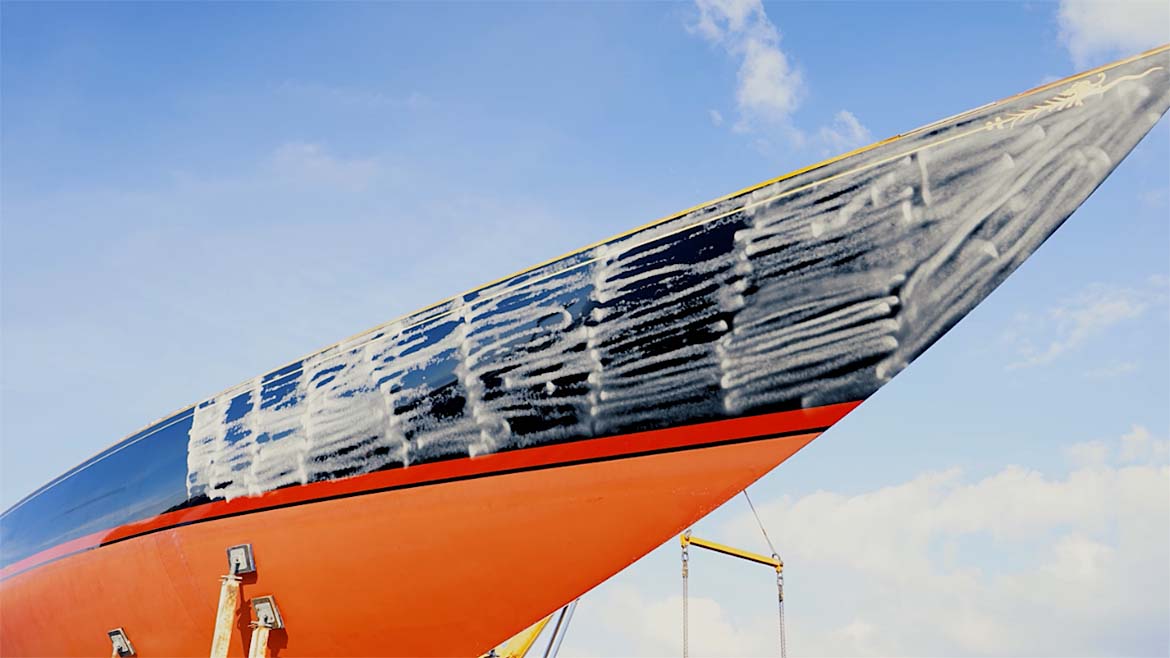
Accessories: The important role of scanning sprays
Reflective, transparent, or very dark surfaces can lead to significant measurement errors, especially in optical measurement processes. Scanning sprays have become the standard solution for quickly matting the surfaces to be measured in these scanning situations.
Currently, self-evaporating scanning sprays are particularly in focus. These offer the following advantages in particular:
- No residue – the component and the measuring environment do not need to be cleaned after the measurement
- Time savings – the entire measuring process is significantly accelerated
- More precise measurement results – transparent and shiny parts are easily captured
- Material protection – since the sprays sublimate completely, they are ideally suited for use with sensitive materials and delicate components
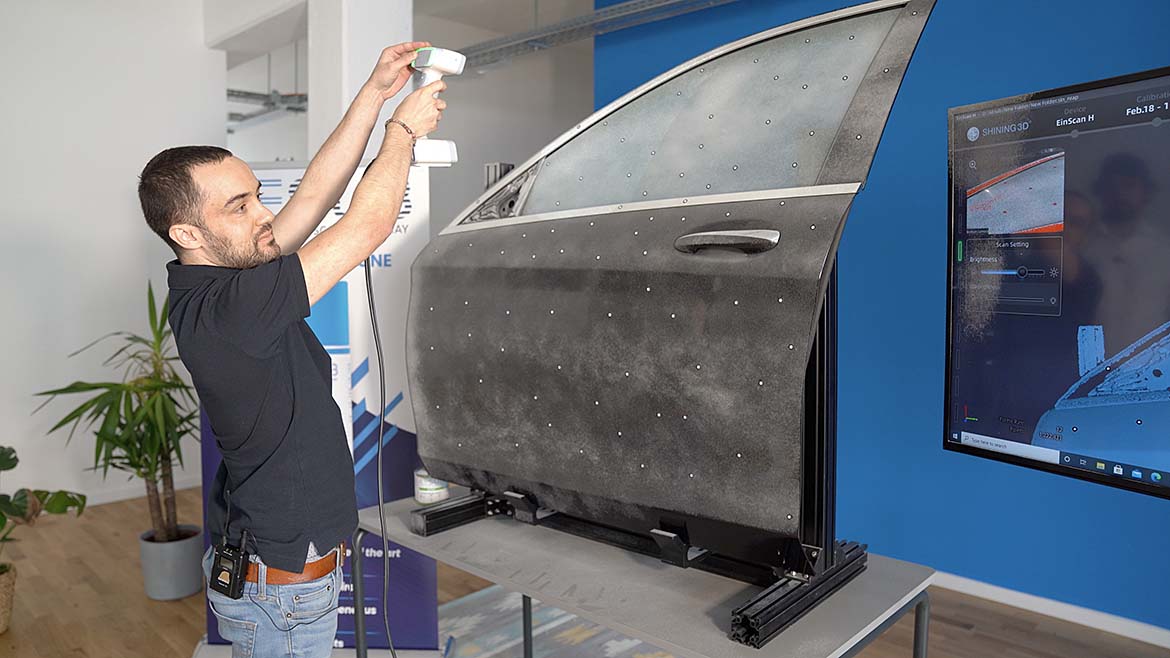
Spray variants
The main function of scanning sprays is to create a matte, non-reflective layer on the surface to be scanned. This layer is crucial for improving scanning accuracy on shiny, transparent, or dark surfaces. Scanning sprays also help to better capture areas that are difficult to see on complexly shaped objects.
With self-evaporating scanning sprays, parts can be sprayed directly in the measuring area. Within a few seconds, a thin, white layer creates high contrast values on the surface that the scanner can easily capture. Depending on the spray variant, the layer thicknesses can vary between 1µ and 15µm. The matting layer should be non-slip so that the parts can be handled and repositioned during the scanning process. It should also be possible to place reference points directly on the layer.
Scanning sprays have now become established worldwide in many areas of industrial measurement technology.
What makes this product range so successful?
The sprays have established themselves due to their homogeneous spray layers, ease of use, and reliable sublimation. The range is continuously being developed in line with user requirements. The sprays vary in terms of layer thickness, standing and sublimation times, so that a wide range of application requirements can be met. Complete sublimation guarantees that no traces remain on the surface. This greatly simplifies post-processing and does not impair the quality of the scanned component.
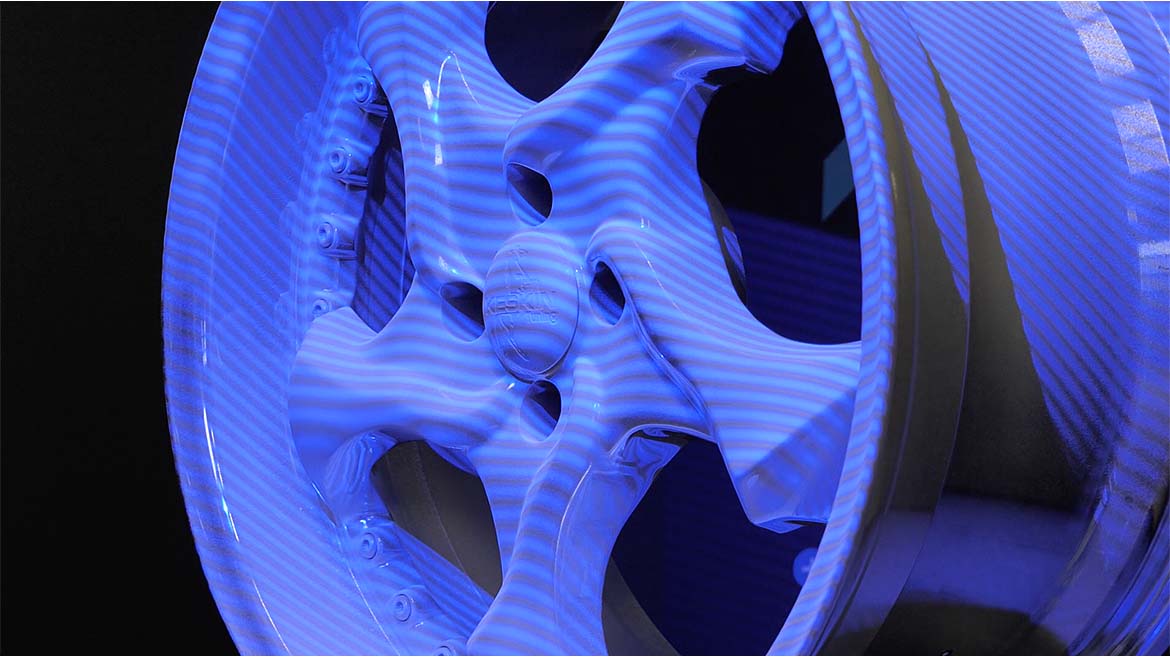
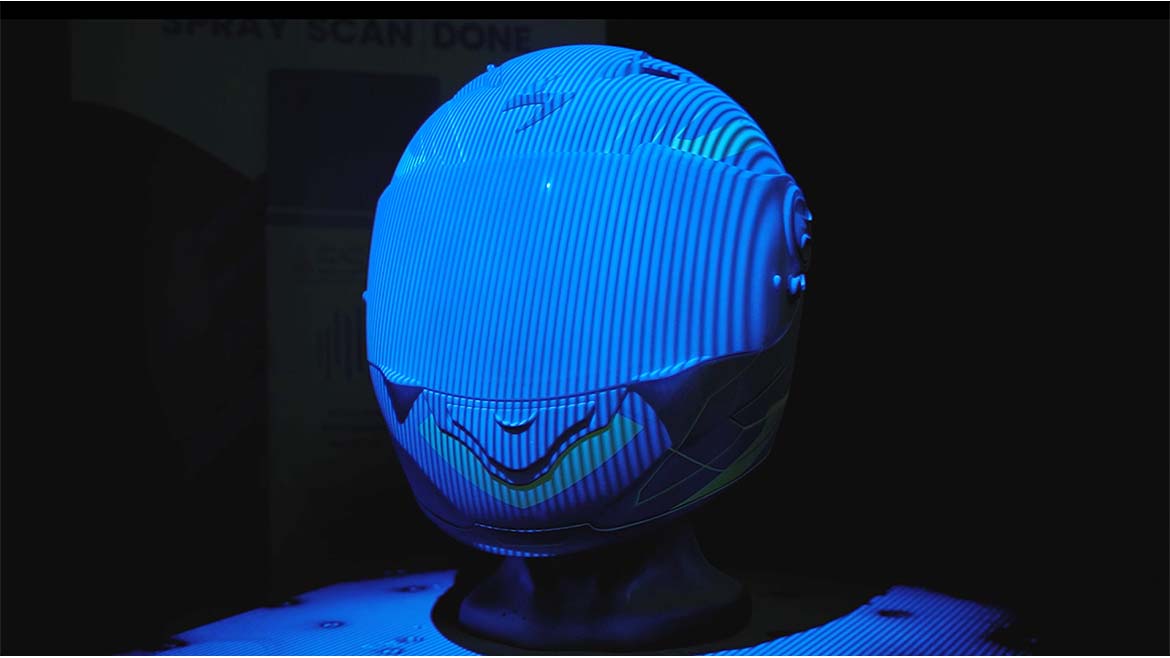
Choosing the right spray for every application
One important factor to consider is the sublimation time. For short scanning tasks lasting only a few minutes, sprays with very brief sublimation times are ideal. These type soften feature extremely thin coatings, typically under 2 micrometers, making them particularly suitable for delicate and small components. Full sublimation in such cases generally occurs within about 30 minutes.
For more extended scanning sessions, such as those lasting several hours, sprays with longer sublimation times are available. These offer thicker coatings in the range of 2 – 6 micrometers and allow scanning durations of up to eight hours. The complete sublimation of the applied layer typically occurs within 24 hours, eliminating the need for cleaning after the process is finished.
The current range of scanning sprays on the market includes several sublimating options, each designed with different layer thicknesses and working times to match various technical needs. Additionally, for large-scale applications involving oversized components like ship hulls or aircraft sections, certain formulations can be supplied in bulk containers. They are applied using spray guns, allowing for fast and uniform coverage of large surface areas.
Selecting the right scanning spray not only improves scan accuracy but also contributes to more efficient workflows and reduced post-processing.

Capturing geometry and color values
If, in addition to the geometry, the color values of a component also need to be captured, the manufacturer provides a special spray that creates a transparent, matting layer on the surface of the component. This layer ensures that the surface is clearly visible to the scanner without distorting the natural color and surface characteristics of the object. This allows both geometric data and precise color values to be captured. The transparent spray is suitable for applications where exact color digitization is required, such as in art or monument preservation or when testing prototypes or end products. The matte texture ensures that no distracting reflections impair the scanning quality.
The ability to precisely control scanning and sublimation times by selecting the appropriate spray contributes to better planning and optimization of workflows. Especially in industrial manufacturing, where precision and efficiency are required, companies can benefit from a significant reduction in measurement times without compromising the quality of the measurement data. Since sublimation eliminates the need to clean the measurement environment and components, working hours and measurement centers are used more efficiently and the entire measurement process is significantly accelerated.
Reference points – small but crucial
Another important accessory are reference points. They are essential for referencing three-dimensional objects during digitization. Reference points enable accurate, reproducible, and comparable capture of component data. They are available in numerous variants. The requirements and the respective scanning system influence the choice of reference point types. The measurement method, accuracy requirements, component type and component size to be measured are decisive factors here. In addition to the standard self-adhesive reference points, reference point nets, cubes or frames are also used.
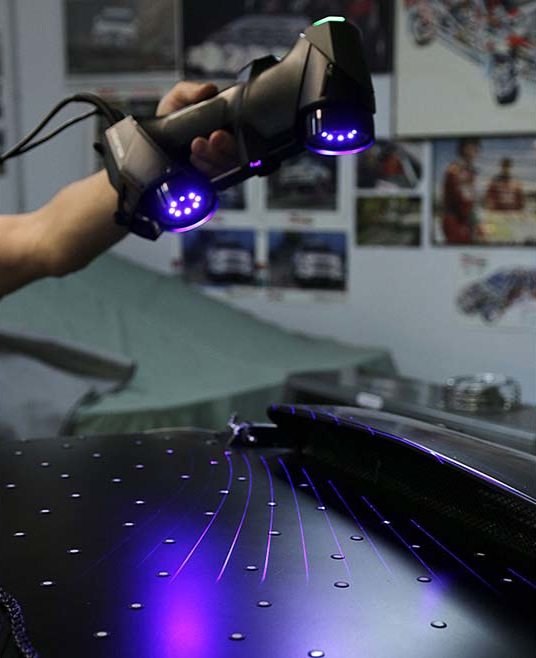
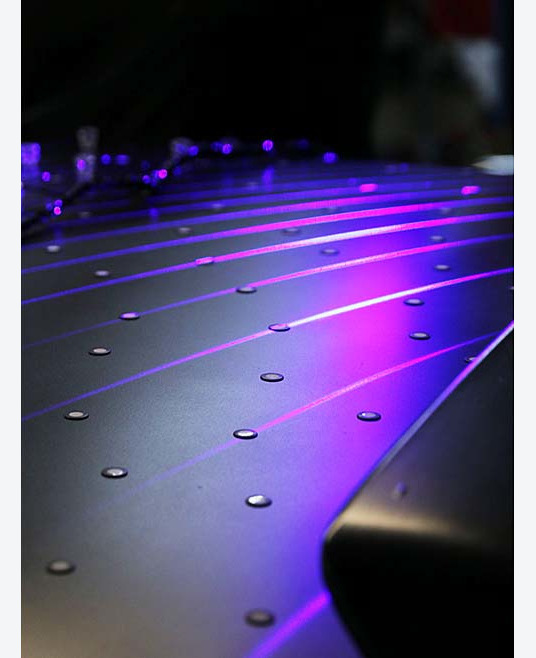
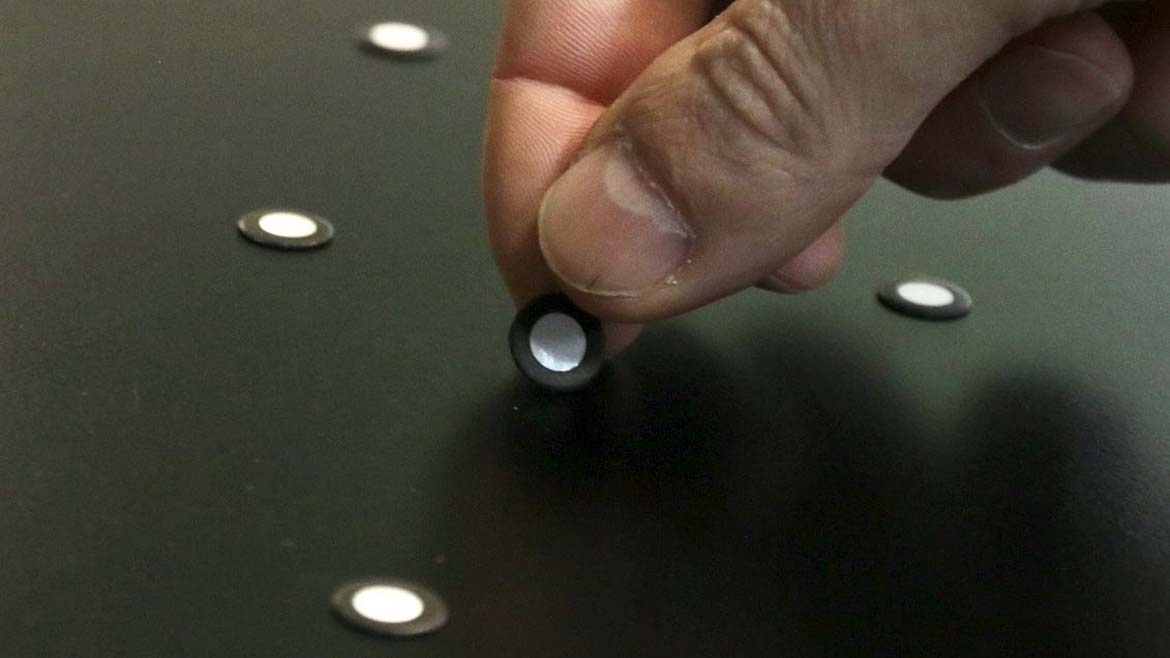
Trending: Magnetic retro-reflective reference points
Magnetic retro-reflective targets have become particularly popular for 3D scanning of metallic components with laser light. These can be quickly and easily placed on the metal surface to be scanned and removed just as quickly after scanning – in contrast to adhesive reference points, which are time-consuming and very laborious to remove. Magnetic reference points are reusable indefinitely and, unlike many conventional reference points, leave no adhesive residue on the components.
The retro-reflective surface guarantees high accuracy and stable detection by the scanner, even in difficult lighting conditions and on dark surfaces. The magnetic backing ensures secure placement on any magnetic surface.
The key advantages of the new reference points are their reusability and the resulting long-term cost efficiency. After scanning, the magnetic reference points can be easily removed from the surface and used for other applications – without leaving any residue or causing any damage. This accessory significantly reduce material costs compared to disposable reference points. Magnetic reference points are available with diameters of six and three millimeters.
Conclusion and outlook
The progress made in measurement technology is obvious: more powerful devices, shorter cycle times, and higher accuracy are bringing about lasting changes in quality control. The current trend clearly shows that not only the measurement system itself, but also the appropriate additional components, play a decisive role in determining efficiency, precision, and reproducibility in the application. Self-evaporating scanning sprays and high-precision reference points make a significant contribution to measurement quality.
The growing importance of sublimating scanning sprays and retro-reflective reference points is not a temporary phenomenon. They are important tools for higher precision and faster measurement processes. The trend for measuring accessories is likely to continue in the coming years.
In recent years, there has been a consistent increase in demand for sublimating scanning sprays and reference points. This growth is driven by the need for solutions that simplify, improve and accelerate measurement processes. As user requirements evolve, new products are continually being developed to meet these needs and enhance the efficiency of scanning and measurement workflows.
Looking for a reprint of this article?
From high-res PDFs to custom plaques, order your copy today!



three_scanners_scanning_sequentially.webp?height=200&t=1756889042&width=200 "System with three scanners scanning sequentially")