Measurement
How Universal Shaft Machines are Redefining Shop Floor Measurement
The complex geometries found in modern shafts, such as splines, tapers, grooves, cams, gears, threads, and 3D contours, require more than straightforward diameter checks.
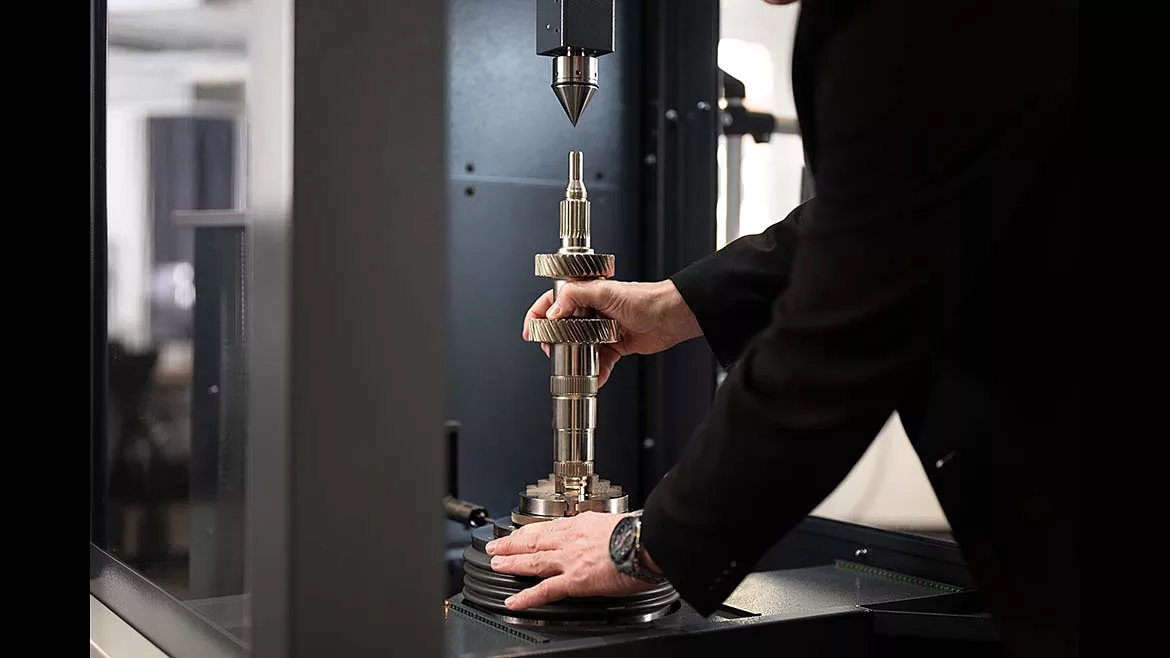
Ergonomic table and machine enclosure facilitates part loading and robust measurement process.
Although shafts are a foundational component in numerous mechanical systems, including power transmission in automotive and aerospace drivetrains, actuation in hydraulics, micro-rotors in medical devices, and many other variations of turned components in industrial machinery, advances in design and manufacturing have made them increasingly difficult to measure.
The complex geometries found in modern shafts, such as splines, tapers, grooves, cams, gears, threads, and 3D contours, require more than straightforward diameter checks. They demand precision measurement technologies that keep pace with tighter tolerances, faster throughput, and more automated production environments, driving the need for advanced shaft measurement technologies that balance high accuracy with efficiency to control costs without compromising quality.
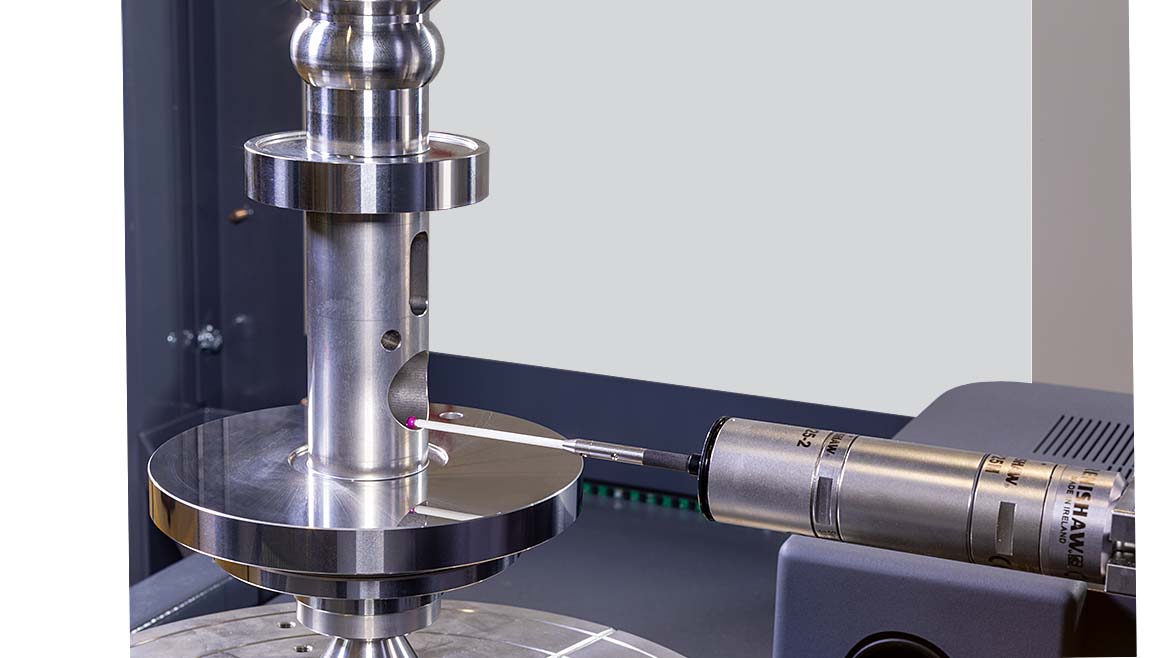
This has led to the development of a new generation of universal shaft measurement instruments with expanded capabilities beyond traditional diameter and distance functions. These precision measurement machines measure form, roughness, contour, and gear characteristics on a single machine, combining CMM technologies with other metrology systems and thus providing a versatile solution for measuring a wide range of rotationally symmetrical workpieces in the production environment.
Where Traditional Measurement Systems Fall Short
Traditional shaft measurement technologies have posed several challenges for manufacturers, such as:
- Trade-offs Between Speed and Complexity: Optical systems offer rapid results but struggle with complex features. CMMs that use tactile probing provide precision but are slow and are often impractical for in-line inspection.
- Production Environment Limitations: Lacking robust construction, many precision measurement tools are still confined to climate-controlled metrology labs, creating bottlenecks in the production process.
- Consistent Part Fixturing: Shafts without centers or with asymmetrical features are difficult to align properly for spindle-based measurement.
- Data Integration: Connecting measurement data to production processes for real-time adjustments can be a manual, time-consuming process.
Time lost due to these factors translates into higher costs and delays in delivery.
Universal Shaft Measurement Technologies Expand Capabilities Beyond the Basics
A new generation of shaft measurement systems has emerged to address these challenges, specifically designed to meet the demands of quality engineering in high-throughput environments. These systems integrate optical and tactile sensors, automated alignment, and advanced software to deliver comprehensive, high-speed inspection directly on the shop floor.
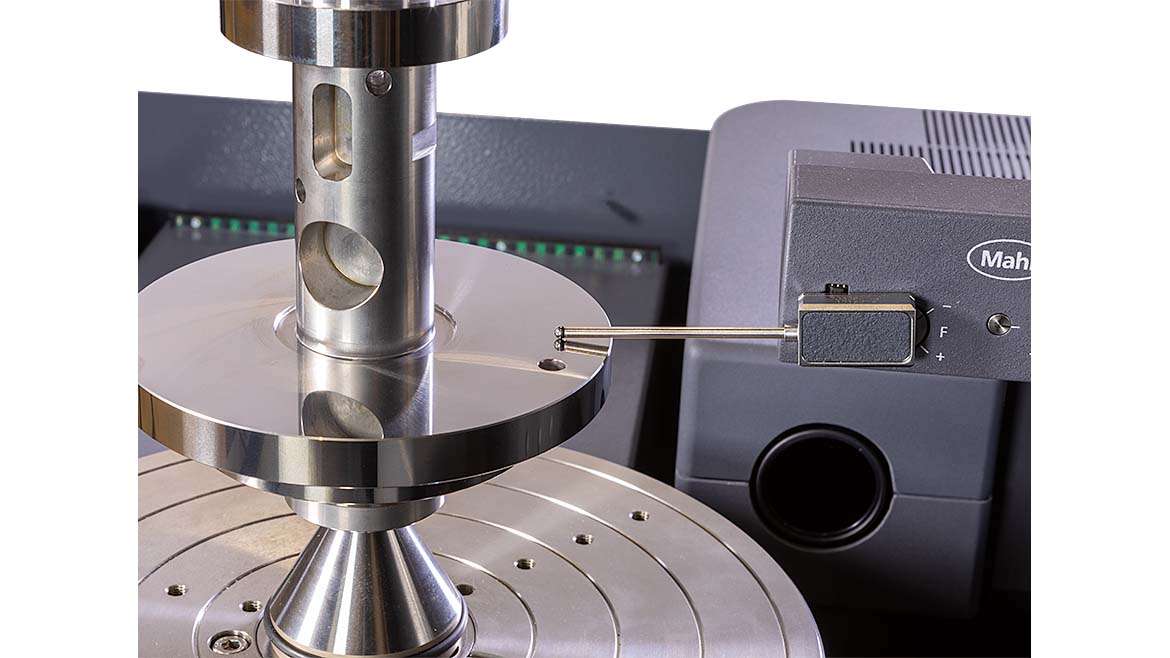
At the core of these machines, of course, is optical shaft measurement, i.e., an ability to quickly perform noncontact measurements by analyzing the part’s outline, thus cleverly leveraging the fundamental rotational symmetry of a cylindrical workpiece. Digital images obtained using high-resolution matrix array or CCD (charge-coupled device) cameras ensure stable, precise, and accurate noncontact measurements of outer diameters and other external features at high speeds, much more quickly than traditional CMMs, which employ stylus-based surface detection. This concept traces its roots back to the optical comparator, with sophisticated edge detection algorithms doing the work instead of the naked eye.
However, optical measurement has limitations when it comes to features that can’t be seen in silhouette, such as slots, keyways, and internal contours. To address this limitation, tactile probes can now be incorporated into universal shaft measurement systems, enabling three-dimensional scanning of complex geometries and measurement of internal features invisible to optical systems, characterizing their position, orientation, and size relative to the cylindrical workpiece. Because they are an integral part of the system, such measurements consume a fraction of the time that a completely stylus-based system would use.
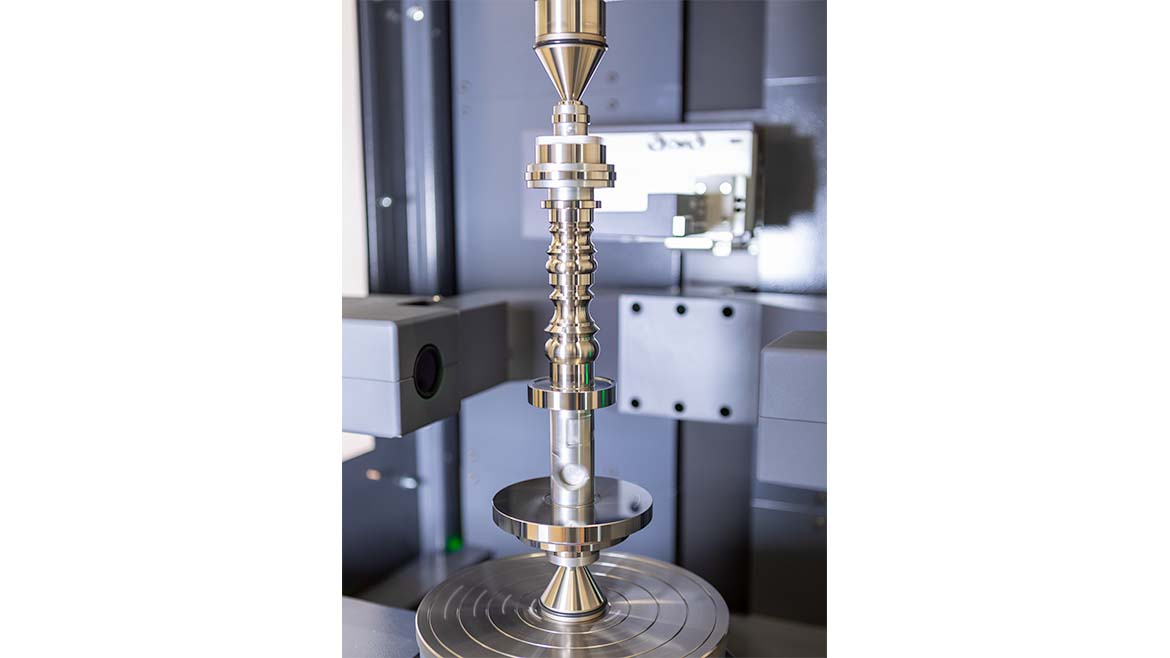
Also, by combining multiple measurement capabilities into a single system, manufacturers can ultimately reduce the number of specialized machines required, minimize operator training time, and lower maintenance costs, while accelerating inspections to keep production lines moving.
Robust Design for Shop Floor Use
Production volumes and tight delivery times demand measurement systems that provide reliable results in seconds. As a result, manufacturers are increasingly interested in integrating precision measurement machines directly into the production line, rather than in a separate gage lab. This also reflects the need for feedback loops and real-time adjustments to maintain quality and efficiency, as well as reduced scrap and rework.
The robust design and features of modern universal shaft measuring machines make them ideal for use directly in production environments, including:
- Sophisticated thermal compensation systems
- Vibration-dampening technologies
- Sealed enclosures to protect against contaminants
These allow for reliable, accurate measurements to be taken right next to CNC machining centers and other production equipment.
Overcoming Alignment Challenges with Centering and Tilting Tables
Another significant innovation is the integration of a centering and tilting table. Traditional shaft machines are designed for parts that can be held and aligned between centers. However, many parts lack centers, which can lead to misalignment, measurement errors, and increased process time and complexity. A typical piston serves as a prime example of this type of application.
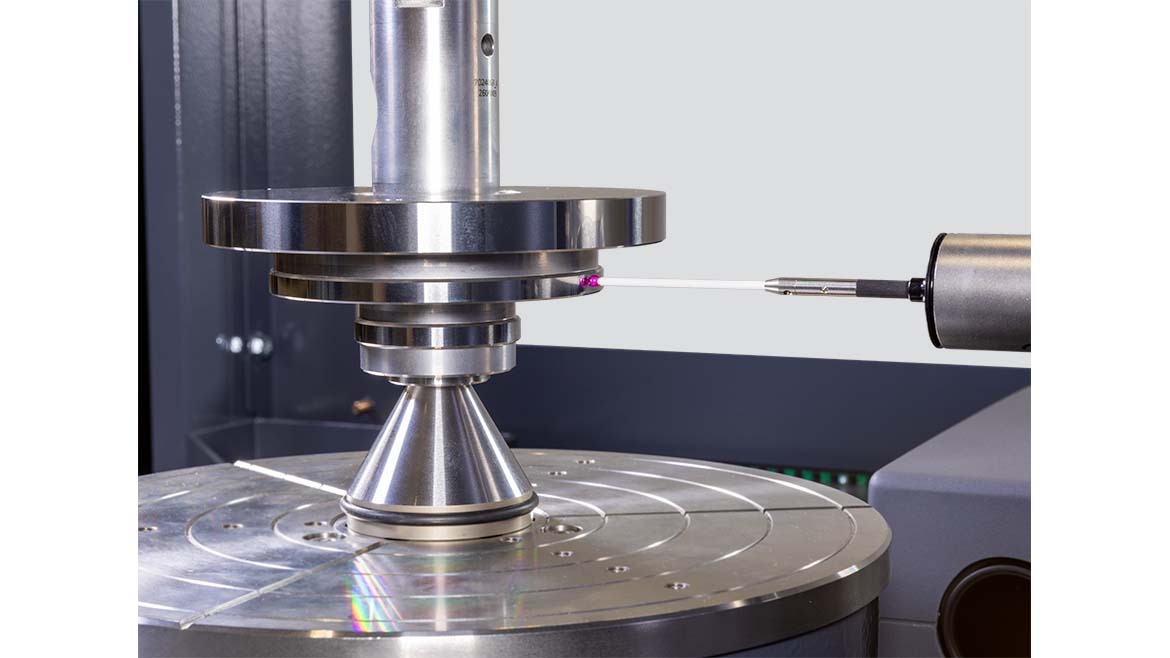
Centering and tilting technology, typically found in dedicated form machines, enables the measurement of parts without center points with greater accuracy and tighter tolerances, and allows for:
- Fully automated, CNC-controlled alignment of parts without traditional centers
- Correction of workpiece alignment errors
- Precise measurement of asymmetrical or off-center features
By incorporating centering and tilting technology, workpieces can be positioned to align the mechanical axis of the part with the machine’s axis of rotation. This ensures optimal measurement accuracy, whether using optical or tactile methods, significantly expanding the range of parts that can be measured, including those previously unmeasurable with traditional shaft machines.
Process Stability and Automation
Features such as a motorized tailstock with clamping force and slip monitoring ensure fast fixing and alignment of workpieces without operator influence. This provides process stability and consistent measurement results.
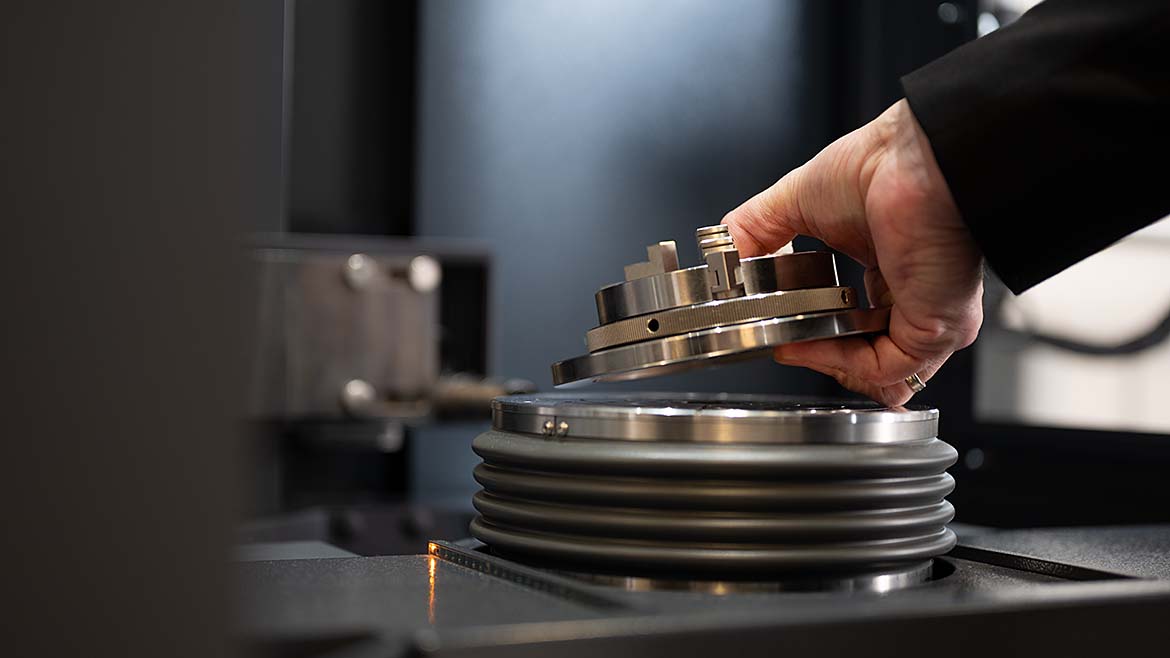
Rapid and consistent part loading/unloading also helps meet increasing automation and smart manufacturing initiatives, while assisting with robot-compatible part handling interfaces for fully automated inspection.
These automation features reduce operator influence and human error, while also lowering labor costs, shortening inspection cycles, and supporting higher throughput. The result is fewer delays and greater consistency, helping manufacturers meet tighter customer delivery schedules.
Data-Driven Quality Improvements and Integration with Enhanced Software Capabilities
Real-time data processing and adaptive measurement solutions promise to reduce cycle times and enhance precision while providing insights into the critical points in the manufacturing process. Universal shaft measurement systems offer direct communication with CNC and other machine tools for real-time offset adjustments based on measurement data and integration with factory-wide data systems for process control. This closed-loop feedback system enables continuous correction of cutting tools, ensuring that parts remain within tolerance.
Additionally, as advanced shaft measurement systems generate extensive datasets, managing and analyzing this information becomes critical. Manufacturers are increasingly relying on sophisticated software tools and algorithms for data analysis that provide:
- Intuitive programming interfaces for rapid setup of new part inspections
- Comprehensive analysis tools for complex geometries
- Customizable reporting functions
- Integration with statistical process control (SPC) systems
Together, these features enable manufacturers to achieve faster inspections, higher accuracy, and seamless integration into automated production lines. By combining mechanical robustness with advanced optical and tactile technologies, modern shaft measurement systems not only overcome the limitations of traditional methods but also set a new standard for flexibility, reliability, and process efficiency.
Conclusion
Today’s highly competitive manufacturing environment requires precision measurement systems that drive productivity, cost efficiency, and seamless integration with automated workflows. Universal shaft measurement systems address these demands by combining optical and tactile technologies, robust mechanical design, and advanced software integration into a single platform.
By reducing reliance on multiple specialized machines and moving inspection directly onto the shop floor, these systems close the gap between machining and quality control. The result is faster feedback loops, greater process stability, and significant gains in productivity and cost efficiency.
As manufacturers continue to push the limits of precision and throughput, universal shaft measurement machines offer a transformative solution. By ensuring quality, enabling greater automation, universal shaft measurement systems are shaping the future of how rotationally symmetrical parts are measured, empowering manufacturers to deliver higher-quality products at lower cost, with faster time-to-market.
Looking for a reprint of this article?
From high-res PDFs to custom plaques, order your copy today!