Measurement
Practical Color Management With Recycled Plastics
Although digital tools can offer significant advantages, they’ll only deliver results when supported by trained color experts.
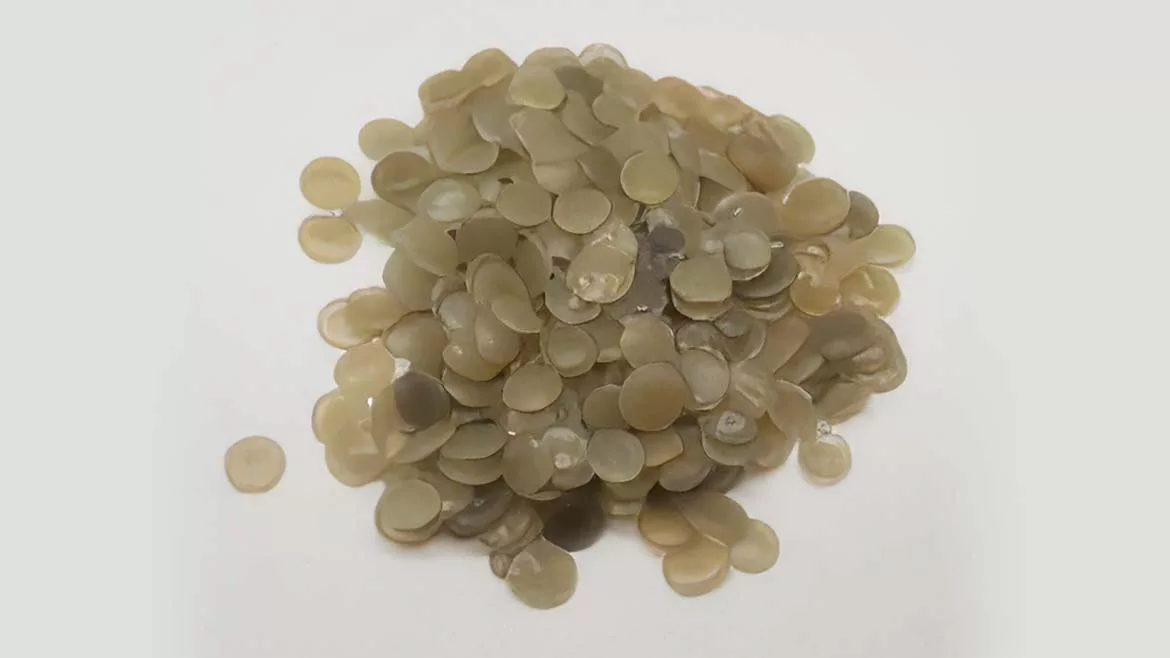
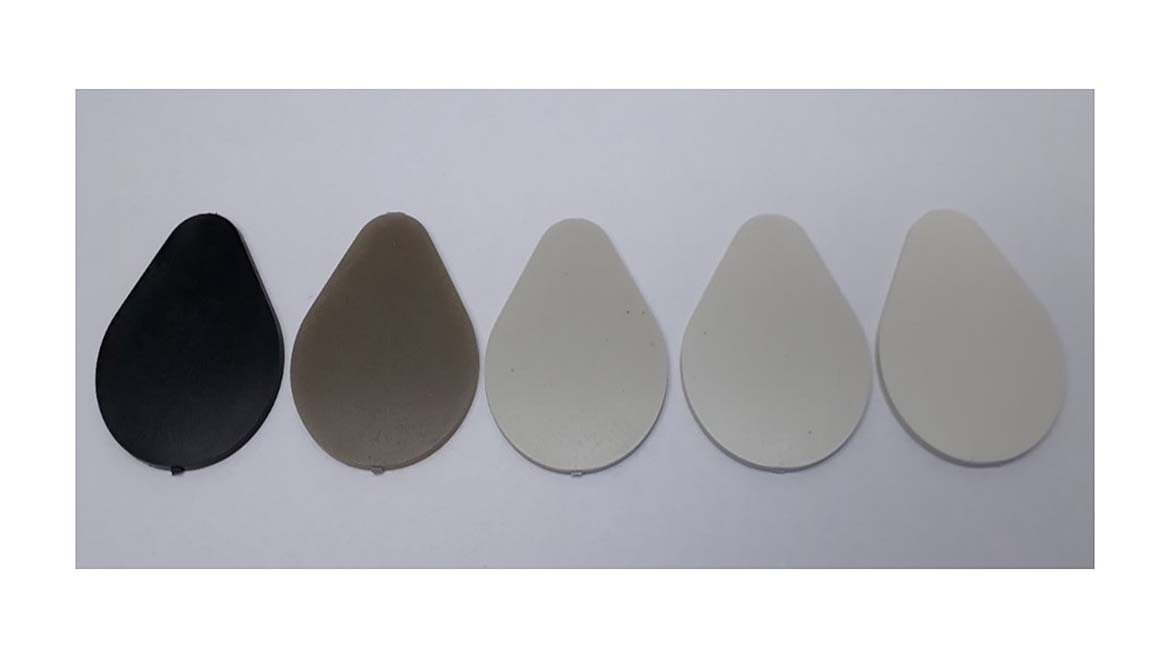
Figure 1: Additional processing steps can “age” recycled plastic, causing it to yellow.
Color is central to how and why we purchase products, and not just for cosmetic reasons. According to global trend forecaster WGSN, 98% of customers say their purchasing decisions are influenced by color. Appearance can literally make or break how a product is received.
This makes color a business-critical priority for many products, but that’s not always simple when recycled materials are involved. Technical and economic pressures often collide with sustainability targets and regulatory requirements, especially from a color management perspective.
“We need to use more recycled materials to meet government requirements and sustainability needs, but we still want the same color consistency that we have with virgin materials,” said Linda Mittelberg, a plastics expert from SKZ, a German plastics institute. “If the color of your product doesn’t match expectations, customers won’t buy it.”
“The usual color recipes based on virgin material aren’t usable if you use recycled plastics instead,” said Jutta Albertin, a solution architect at Datacolor. “Recipes must be redeveloped, and knowing that recycled material often can’t be delivered with the same color quality, checks and corrections are necessary each time the material changes.”
Although working with recycled plastics often requires trade-offs, digital color management tools are making these decisions easier. Modern color-matching systems can help you judge if a color can be achieved with a certain recycled plastic while compensating for variability between batches. In addition, the process of color-matching mixtures of virgin and recycled materials, and determining the ideal proportions for cost-effective color matches, can be significantly streamlined.
The Tough Realities of Recycled Plastics
Post-consumer recycled materials (PCRs) are frequently mixed when melted down. The resulting polymer is often some shade of gray, which can vary considerably between batches. This makes it difficult to create brilliant colors such as bright blues or reds, and it’s challenging to reproduce most colors consistently.
“Plastic waste from your household comes in almost every color you can imagine, including fluorescent and sparkling. Every sorting step is a matter of time and money, so the material isn’t usually sorted by color,” Mittelberg explained.
As a result, time and effort are typically taken only to separate white, transparent and natural materials, which are in greater demand for reuse. The grayish mix that results from the remaining unsorted items is usually only suitable for matching darker colors.
“Even if you have color-sorted feedstock, every additional processing step ages recycled plastic and can change its color. For example, white and transparent material can take on a yellowy appearance,” Mittelberg said.
In addition to inconsistent feedstocks, recycled materials often limit color possibilities. Figure 2 shows the available color options different materials offer when matching a Natural Color System (NCS) catalog of nearly 2,000 shades. The first set of matches was calculated for a transparent virgin material, represented by the green points in the gamut chart. With this material, 1,857 colors could be matched, about 95%.
When the same matches were attempted with gray PCR, represented by the red points, only 759 of the colors could be achieved. This significant gamut reduction clearly illustrates the challenges of color matching with mixed PCR.
Finally, the gamut was run a third time with a 50/50 mix of those two materials. The results were similar to the virgin material: 1,857 colors could be matched.
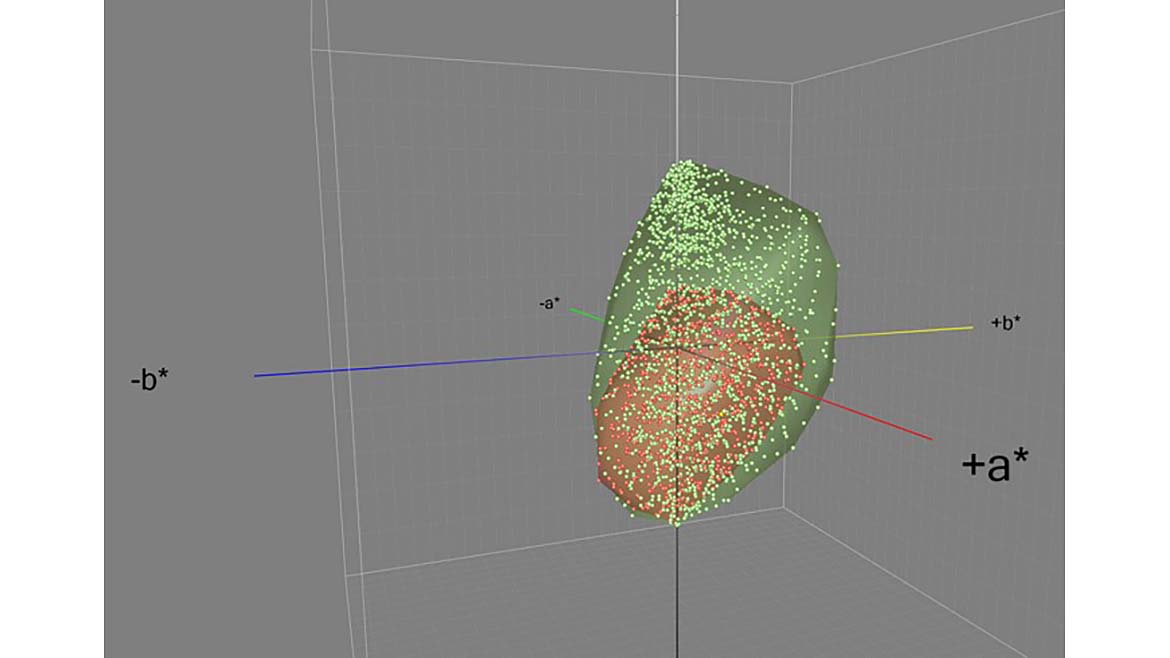
Each color has different considerations and will require its own set of decisions. Gamut matching can help you decide if a color can be attempted with PCR content, which PCR can be used, and in what percentage. Brilliant colors, for example, might only be achieved with 100% virgin material, or it might be cost-prohibitive to incorporate PCR.
“It may not be possible to match certain colors with consistent quality. Ultimately, a human needs to make the final decision, even if there are digital tools to support the user,” Albertin said.
Some packaging companies are addressing this problem with two-layer materials: an outer layer of virgin material that can be formulated in any color and an inner layer of PCR, for which the precise color doesn’t matter.
What’s Working Today?
To find a balance among economic, regulatory and technical challenges, it’s essential to minimize trial and error. Training in color expertise remains as important as ever, if not more so. But experts who use digital color management tools have an edge when it comes to managing the complexities of PCR.
“Although there are solutions for improving color matching, very few people understand the process and many distrust solutions that could help them,” Mittelberg said.
Digital color-matching systems are widely used and trusted in industries like textiles, printing and paint formulation. But effectively applying the same technology to plastics in general, and recycled plastics in particular, involves more variables.
“The challenge of color matching with PCR is that the software needs to know the optical properties of each ingredient in the product. A lot of software programs can’t handle translucent material. Some don’t even take the polymer — which is always more or less translucent — into account, making it difficult to handle PCR,” Albertin explained.
Despite the additional challenges, color management systems capable of accounting for all these properties have been available since the late 2000s. Since many color recipes need to be redeveloped when using PCR, a key value of these systems is their ability to reach color-matching targets with just one or two corrections.
Real-World Examples of Color Matching
Three recent case studies demonstrate the color-matching possibilities of systems capable of handling PCR. All were performed with a modular software platform used for comprehensive color management in industrial, design and production settings.
Figure 3 shows how a translucent, beige-brownish PCR was used to match a green shampoo bottle cap. The PCR was calibrated with only three samples: one white mixture, one black mixture and one pure PCR sample. With only one correction, the software was able to reach a ∆E of 0.54, an excellent match.
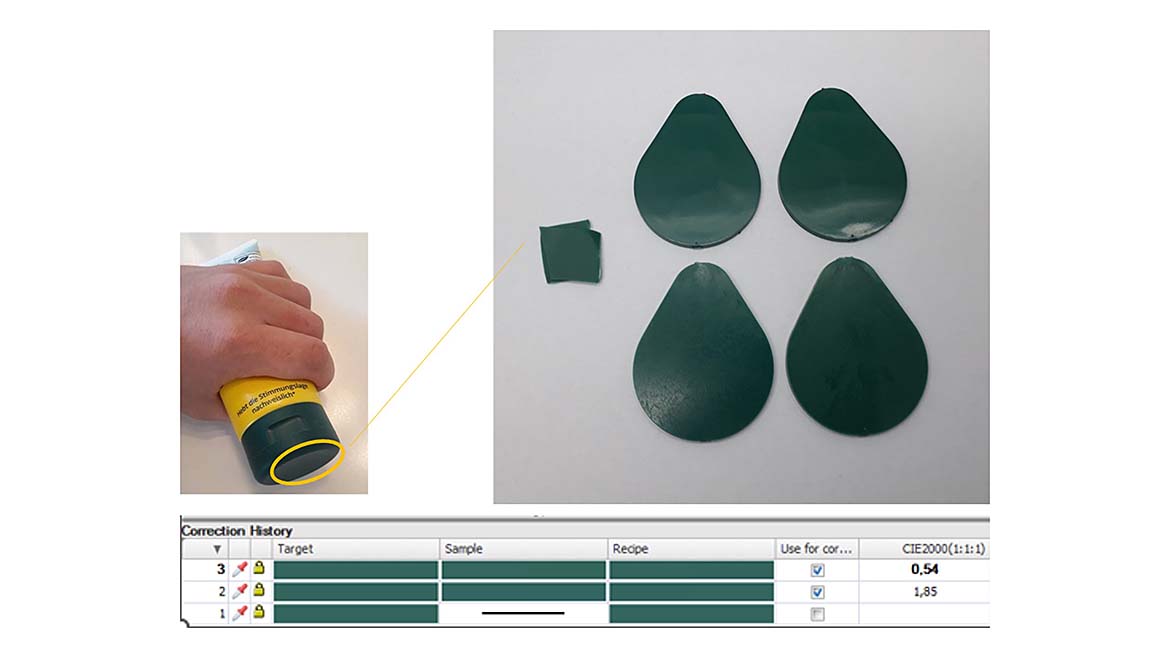
“Correction quality is very important because the first-shot Delta E will almost always be a bit worse than with virgin material. If you don’t have a good correction algorithm, it will take you more steps to get the color right,” Albertin added.
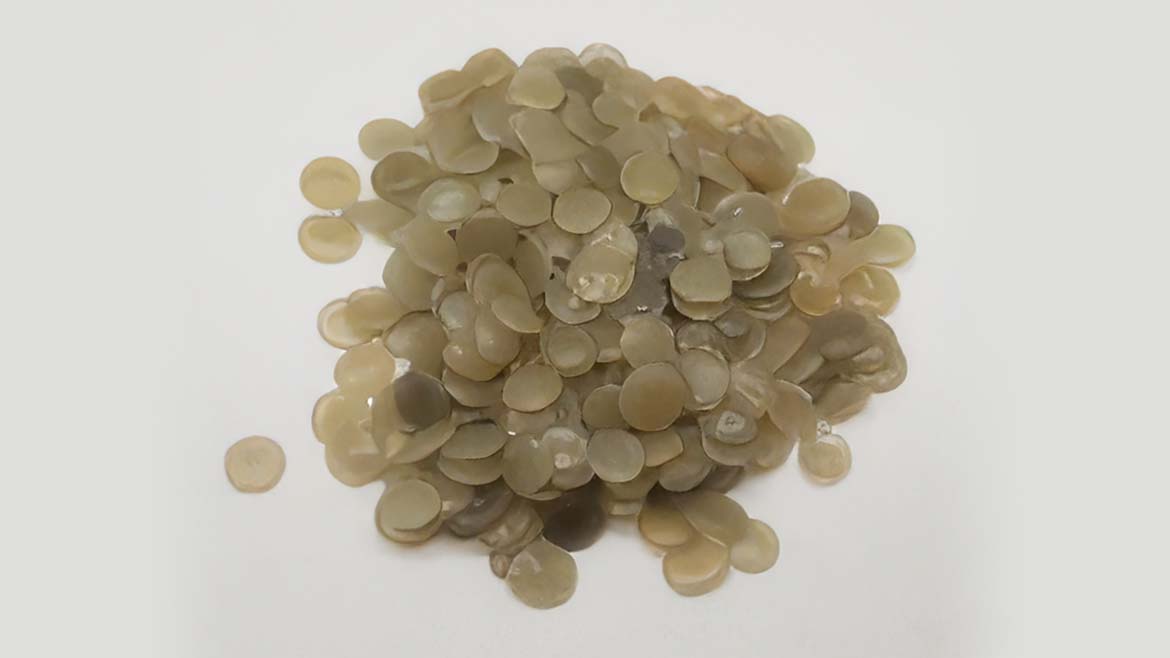
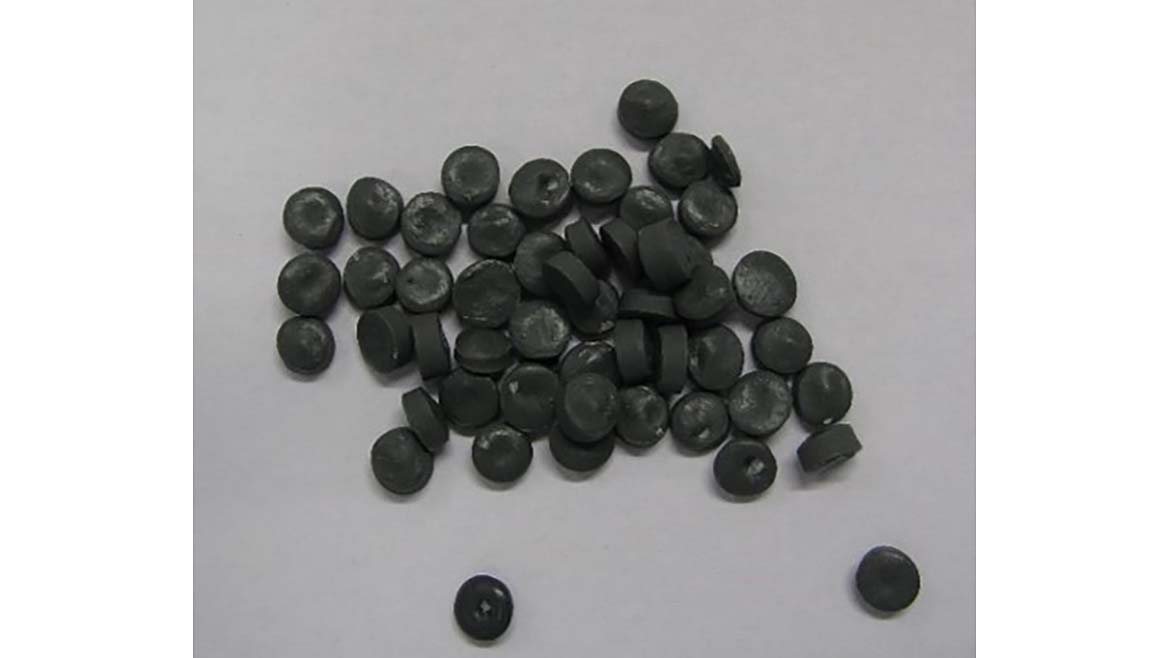
Figure 4 shows how the same technology can be applied to a mixture of two different PCRs: “Pigeon blue” (RAL 5014) was matched using a translucent mid-brown PCR and an opaque darker gray PCR. With both, the software was able to reach a suitable ∆E with only one correction.
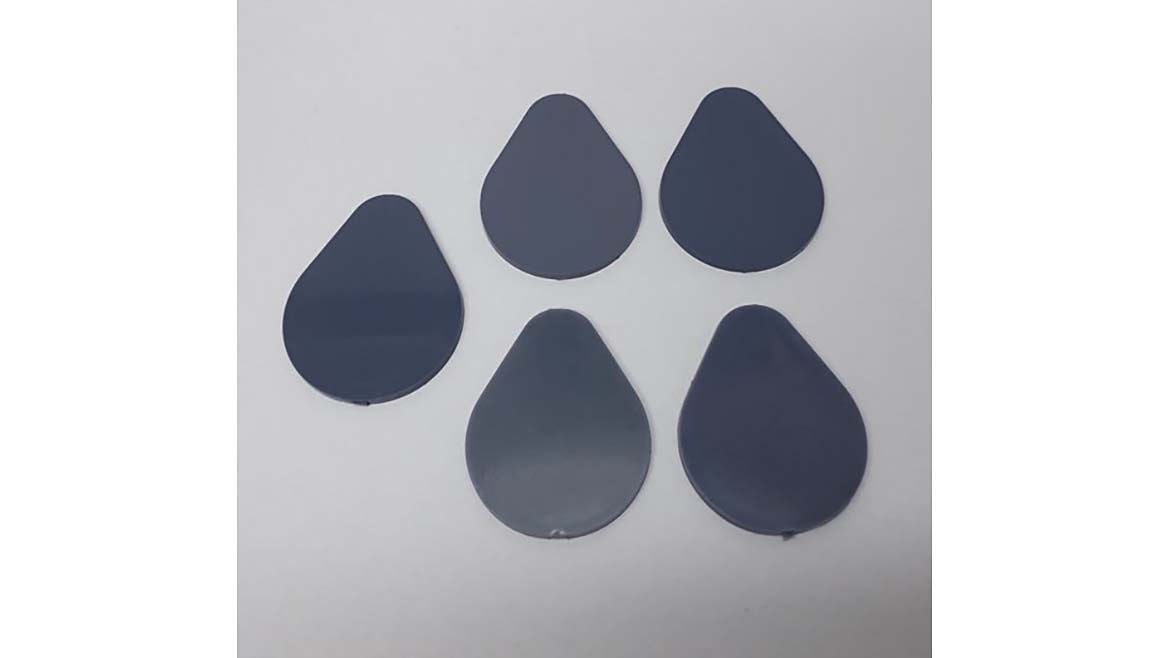
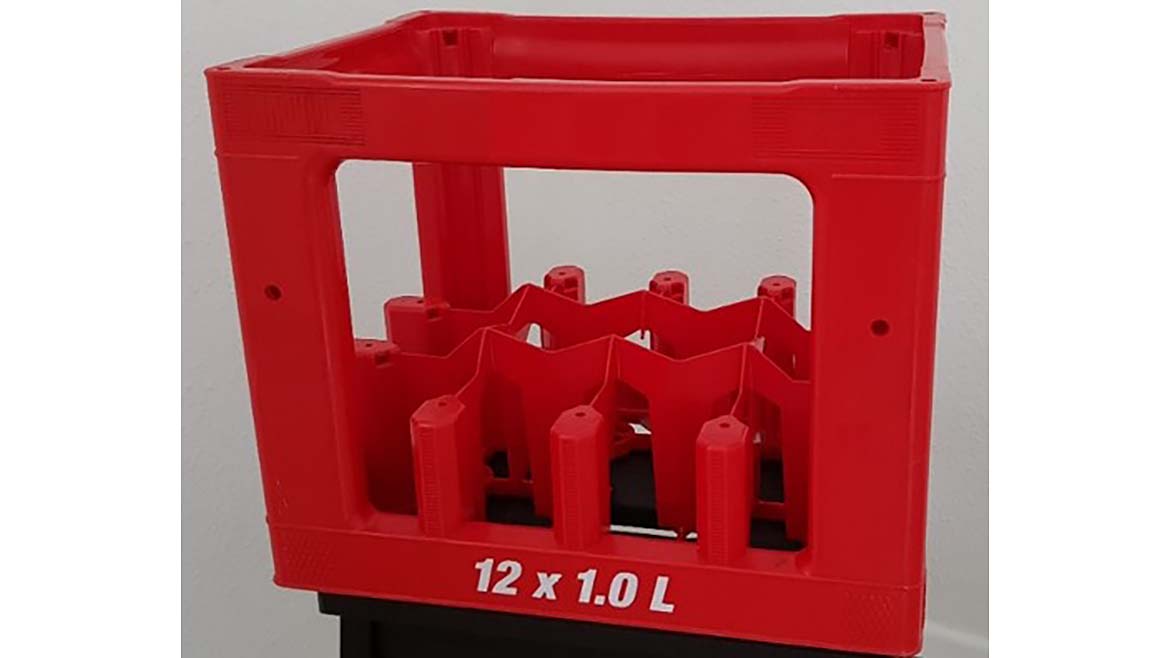
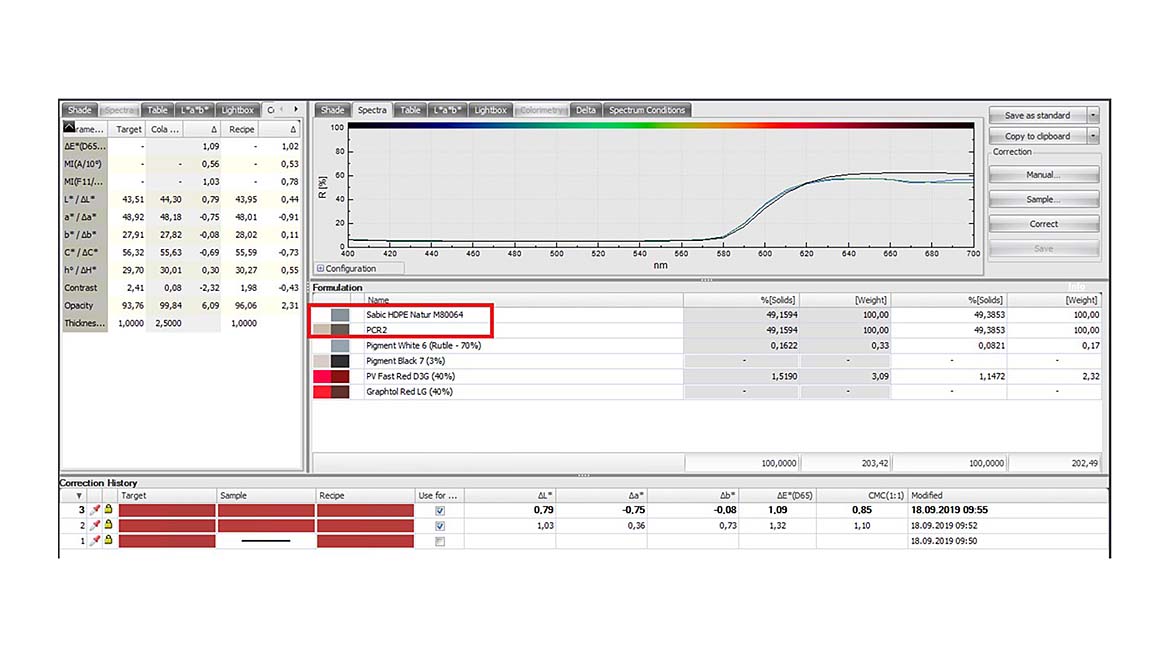
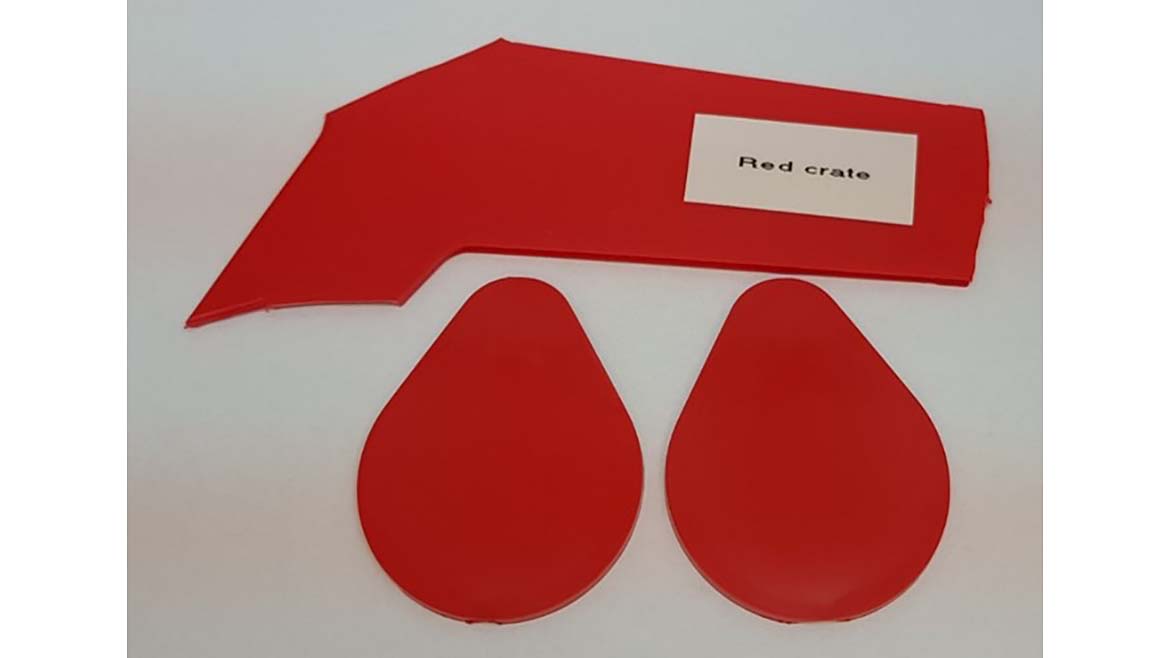
Brilliant colors like bright red are often difficult to achieve. Figure 5 shows how brown translucent PCR was “virtually mixed” with virgin material by the software. Such virtual mixes save a lot of time; otherwise, for each mix of virgin material with a PCR, calibration samples would have to be prepared first.
In that case, a single correction was all that was needed to achieve a ∆E within the needed range using a 50/50 blend of the two materials. A similar result might have been achieved with a percentage of color-sorted PCR, but at a higher cost with today’s sortation options.
High-quality color correction capabilities also offer the easiest and most efficient way to overcome the batch-to-batch variability of recycled plastics. Once you have an existing recipe for a specific polymer, a good color-matching system can often compensate for the difference with just one correction.
Technology Won’t Replace Training
Although digital tools can offer significant advantages, they’ll only deliver results when supported by trained color experts.
“Experienced users shouldn’t be afraid of losing their jobs to digital tools. The software needs data from knowledgeable humans. If you feed it the wrong information, the results will be bad. If your processes aren’t reproducible, the software can’t compensate for that,” Albertin said.
“You need to practice, even with digital tools. And you need at least a basic understanding of what’s going on so you can question and discuss the results the software is giving you,” Mittelberg added.
A More Sustainable Future Can Still Be Colorful
In addition to regulations in many countries, major consumer product manufacturers like Procter & Gamble, Unilever, L’Oréal and Adidas are increasing their commitments to recycled materials. These will inevitably create trickle-down effects that will impact the whole supply chain.
As demand for recycled plastics continues to grow, the industry will evolve to reduce color-matching challenges and reuse even more material. There are promising signs that sortation technologies will improve in the next 5 to 10 years, reducing inconsistencies in raw materials and economic barriers to color sorting.
A greater openness to digital color management is also anticipated in the plastics industry as the expanding use of PCR gives the technology growing opportunities to demonstrate its economic, technical and time-saving values.
Looking for a reprint of this article?
From high-res PDFs to custom plaques, order your copy today!