Aerospace
Solving Inspection Bottlenecks in Aerospace Manufacturing
Earlier detection through CT scanning prevents downstream rework, reduces material waste, and protects production capacity while also enabling traceability.
Ask any aerospace manufacturer about their biggest challenge, and one word comes up again and again: speed. For quality, this is in constant tension between maintaining uncompromising precision and meeting production demands.
Historically, inspection has been a major bottleneck in aerospace manufacturing. In fact, the 2025 ZEISS Manufacturing Insights Report revealed that 47 percent of manufacturers identify time-consuming inspection processes as their top challenge.
The good news is that modern metrology technologies have the potential to change this. What was once a time-consuming process is becoming a source of acceleration, allowing manufacturers to move through critical inspection stages with speed, precision, and the insight needed to prevent costly delays later in production. As a result, quality is no longer a checkpoint at the end of production; it has become a strategic advantage.
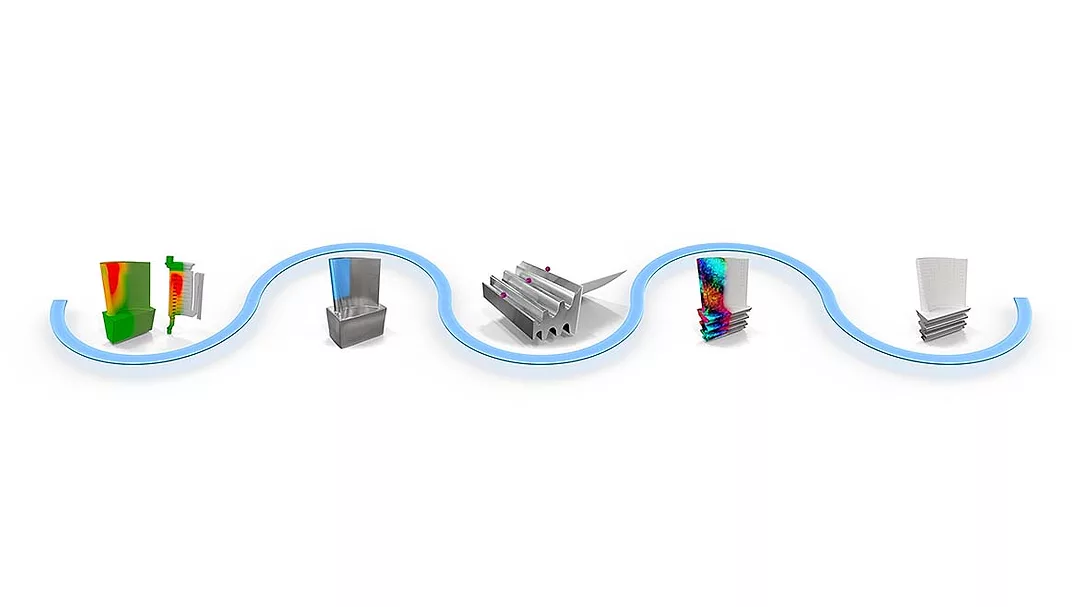
Advancements in automated and digital inspection integrate quality verification directly into the production process rather than treating it as a separate step. With continuous data captured across each stage, downstream operations are informed in real time, reducing variability, minimizing rework, and improving process control. A clear example of how this shift is taking shape can be seen with the lifecycle of a turbine blade.
Detecting Risk Before Value Is Added
After casting, turbine blades contain complex internal features, such as cooling channels, that are critical to performance. Traditionally, destructive testing has often been used to validate these features, requiring trade-offs among inspection depth, time, and cost.
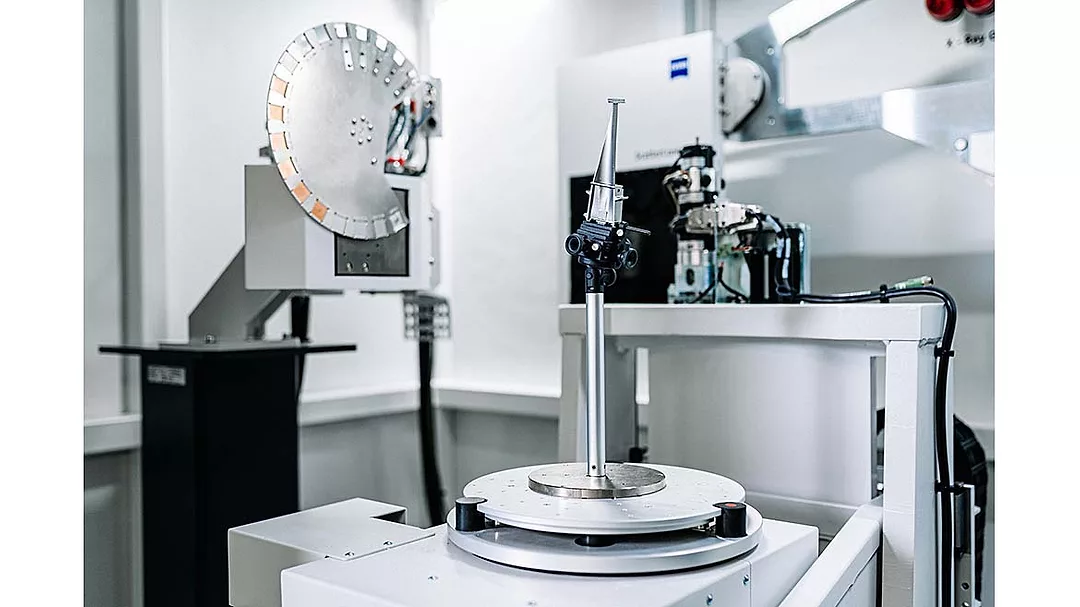
CT scanning eliminates those trade-offs by allowing manufacturers to complete full volumetric inspection at the beginning of the process. Internal geometries, material integrity, and defects, such as voids, can be evaluated nondestructively for early-stage validation.
Earlier detection of these issues through CT scanning prevents downstream rework, reduces material waste, and protects production capacity while also laying the foundation for a digital twin that enables traceability and data continuity throughout the entire manufacturing lifecycle.
Replacing Sampling with Complete Visibility
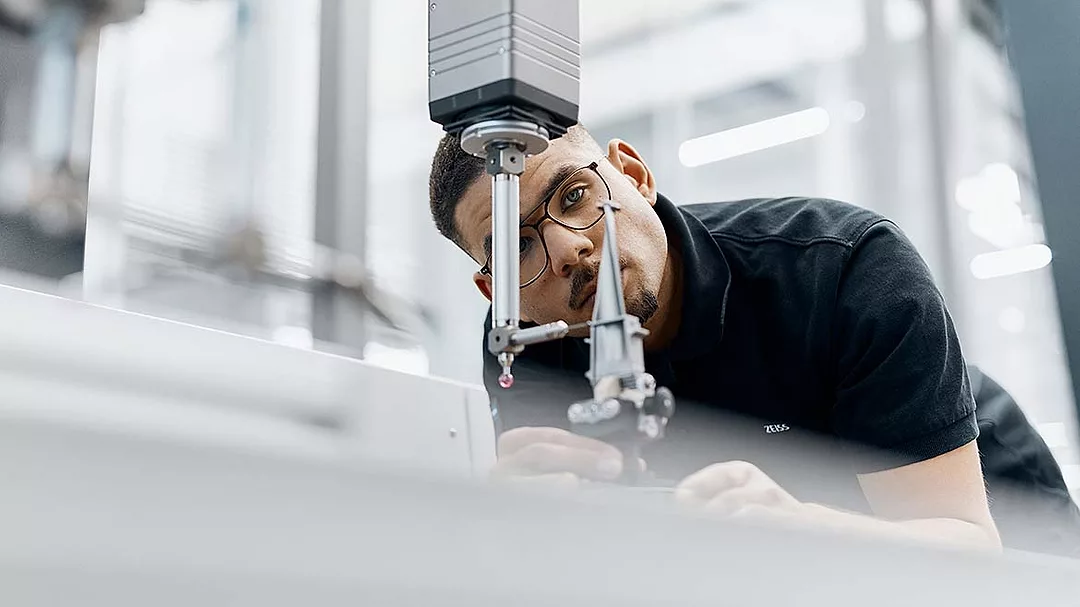
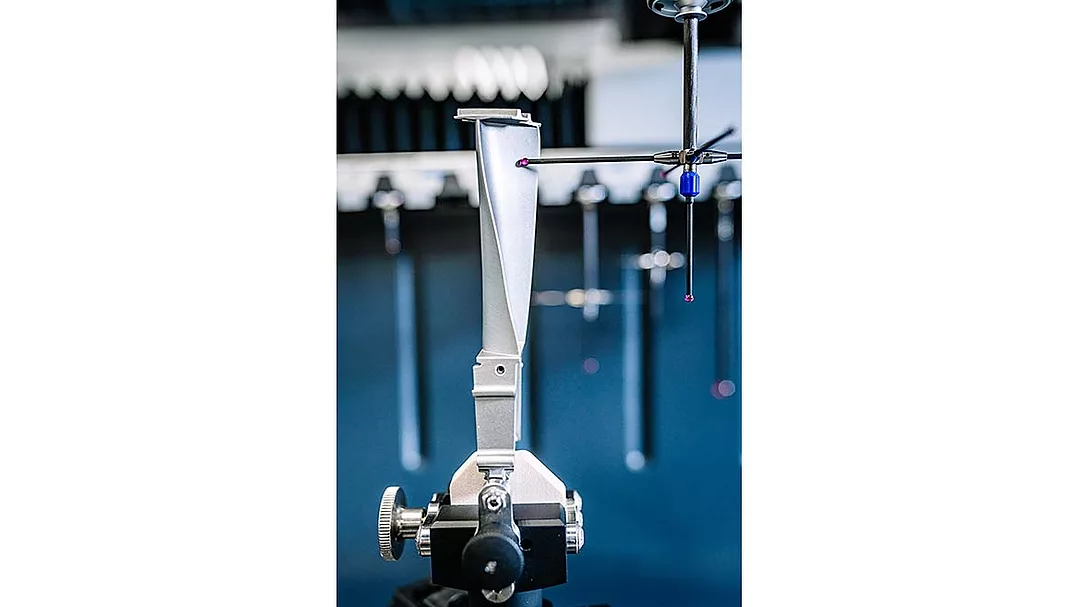
Once the blade has been machined to its general shape, its external geometry and surface features are validated. Due to time constraints, manufacturers often sample a few blades for manual measurement or use a coordinate measuring machine (CMM) to check a few critical features. While this method is precise, it has been slow historically and leaves many areas unchecked.
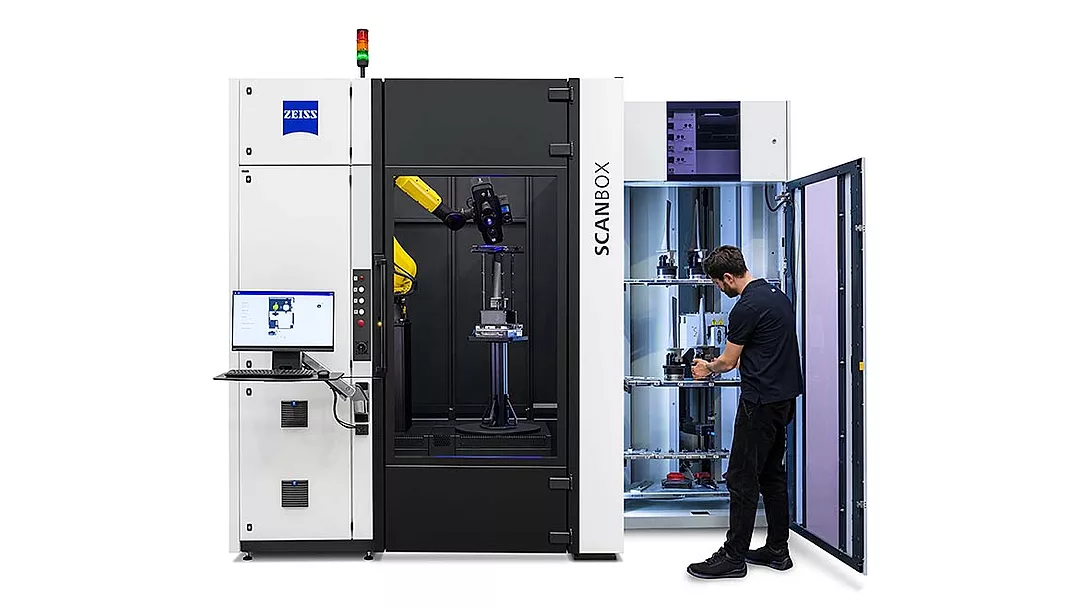
Today, blue light 3D scanning technology captures millions of accurate data points per second, resulting in a digital twin of each blade’s external geometry. Instead of inspecting select cross-sections or points, these non-contact 3D scanning systems provide the complete, accurate data needed to compare every surface and contour against the computer-aided design (CAD) model. The result is full geometric coverage in a fraction of the time required by other methods.
Configuring these accurate 3D scanners with robotics increases speed and repeatability. Dozens of blades can be loaded into an accompanying cabinet, and a robotic arm automatically transfers each one into the scanning cell for fast, repeatable measurement with minimal human intervention. This batch processing approach frees up operators to oversee multiple machines simultaneously, effectively multiplying their productivity.
The shift from slow sample inspection to rapid 100 percent inspection dramatically reduces uncertainty in the production line. Issues like profile deviations that might have been caught only at final inspection or missed entirely under a sample-based regimen are now discovered and corrected immediately. This creates the opportunity to catch process issues in real time, preventing nonconforming parts from advancing to the next step and protecting downstream throughput.
By the end of this stage, every blade has a complete digital surface map, and any blades with out-of-tolerance features have been flagged for correction or removal, rather than creating issues at the end of the line.
Transforming Measurement into Manufacturing Intelligence
By digitizing each blade’s as-built condition by the mid-process point, manufacturers accumulate a wealth of measurement data that goes beyond pass/fail inspection. Modern airfoil inspection software tools leverage this 3D scan data to generate deep insights into the manufacturing process. For example, intelligent inspection software can automatically analyze the full-field 3D data to identify patterns of deviation across a blade’s surface and apply statistical process control (SPC) to evaluate process consistency.
The analysis process can be further sped up by applying inspection principles to one blade and then automatically applying them to every blade, including alignments and evaluations. This method removes repetitious manual inspection and standardizes alignments and measurements for high-throughput analysis that reveal process trends and identifies systematic shifts or recurring anomalies.
At this stage, digital analysis helps identify and predict likely upstream root causes. These insights can be applied for clear, actionable improvements. For example, if certain tolerances are consistently exceeded, machining parameters may need to be optimized. Each blade’s digital twin is refined throughout the process, making it a powerful record of its lifecycle.
The digital twin data can be recalled later to virtually inspect any feature of any blade at any time, even after shipping, supporting traceability, future simulations, and analysis of field performance. The cumulative result is a quality process that not only finds defects but yields insight: inspection data actively drives continuous improvement rather than simply cataloging pass/fail results.
Combining Speed with Precision
As the blade moves through finish machining, inspection requirements narrow. The focus shifts from broad geometric validation to high-precision verification of critical features, including root interfaces, attachment geometries, and functional datums, which directly affect assembly and engine performance.
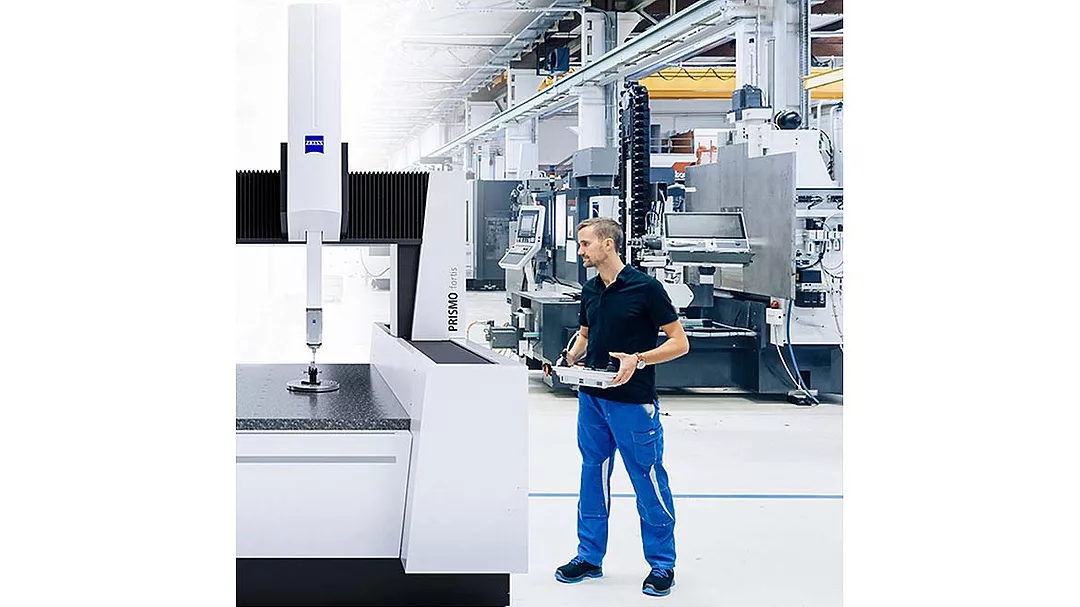
Automated CMMs address these requirements with fast, repeatable, high-accuracy measurement routines. Because earlier inspection stages have already validated overall form and internal integrity, CMM inspection can be targeted and efficient rather than exhaustive.
Modern automated CMMs have significantly reduced the time burden traditionally associated with high-precision measurement. Using efficient part programming, in conjunction with rapid part rotation and effective sensor movement, significant time savings can be achieved. In turbine blade applications, cycle times for critical-feature inspection have been reduced by up to 70 percent while maintaining tight tolerances without reintroducing inspection delays.
Faster Final Validation
As part of the final stage, the blade undergoes confirmation that no defects were introduced during machining. CT X‑ray NDT may be applied again to verify internal integrity, ensuring cooling channels and material structures remain within specification.
Unlike traditional end-of-line inspection, this step no longer represents a discovery phase. By this point, the blade’s internal and external geometry, along with its critical dimensional features, have already been validated. Final inspection is fast because quality is already assured rather than a last-minute risk.
Because the digital record is complete, final validation can be performed efficiently and without disrupting flow. In the rare event that an issue is detected, the full inspection history enables rapid root-cause analysis rather than production-wide disruption.
From Bottleneck to Accelerator
Modernized inspection technologies have evolved quality from a distinct stage that disrupts production into an ongoing process integrated across the entire lifecycle. It now functions concurrently with manufacturing rather than as a subsequent activity.
By minimizing rework and decreasing inspection cycle times, throughput rises and lead times are cut. Digital records of each manufacturing stage help meet increasingly stringent requirements for traceability and certification.
Speed without certainty is not sustainable. Aerospace manufacturers that connect automation, inspection, and data throughout the production lifecycle will move faster with confidence.
By integrating CT X‑ray NDT, automated 3D scanning with robotic batch processing, high-precision CMM inspection, and intelligent analysis into a cohesive workflow, inspection evolves from a necessary constraint into a strategic capability.
The question is no longer how to minimize quality’s impact on production. It’s about using quality to accelerate it.
Looking for a reprint of this article?
From high-res PDFs to custom plaques, order your copy today!