Management
The Meeting Room Is a Quality System. Are You Managing It Like One?
Deming’s principles don’t just apply to production lines. They apply to the rooms where decisions get made every day.
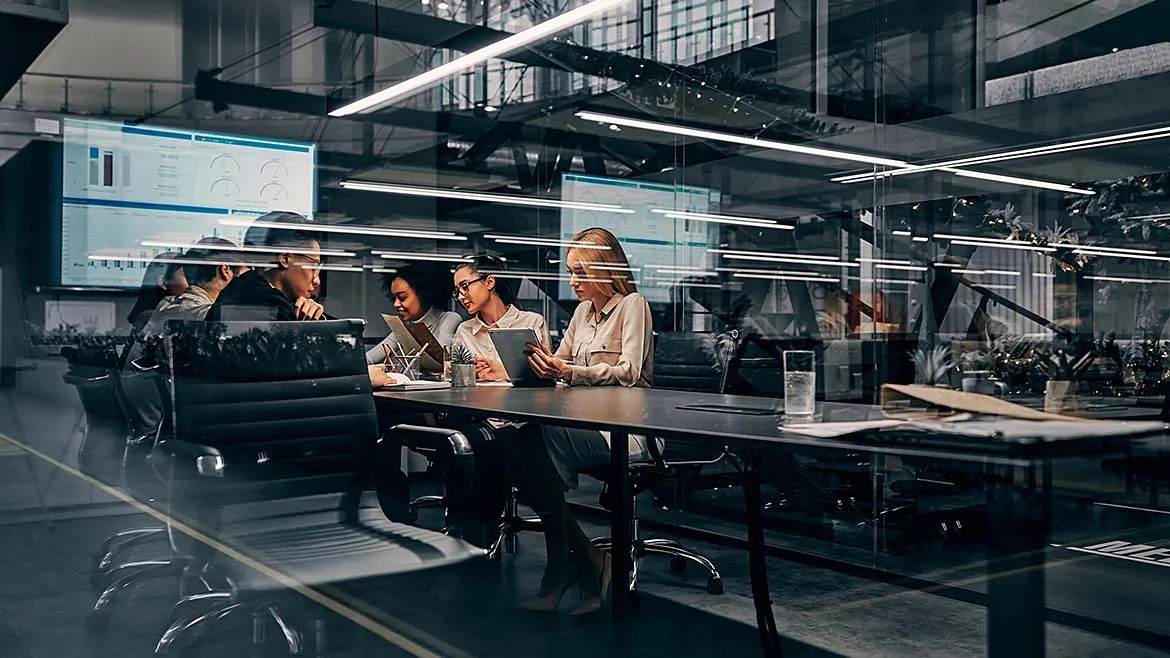
Picture a quality team sitting in their weekly recurring meeting. Same conference room. Same faces. Same problem they discussed last month. Someone pulls up the data. Someone else suggests the same corrective action that didn’t stick the first time. The meeting ends with a commitment to “circle back next week.” Nobody says what everyone already knows: this meeting didn’t solve anything. It just consumed an hour.
Deming would have recognized this scene immediately as a system. Not because he studied meetings, but because he looked at organizations through a systems thinking lens.
A meeting is a system. It has inputs, processes, outputs, and variation. It produces predictable results. When those results are poor, the answer is not to blame the people in the room. The answer is to do what Deming was known to do: examine the system design.
In my previous article for Quality, I explored how Deming’s 14 Points align with modern innovation practices. That was the 30,000-foot view. This article goes to the place where those principles either come to life or quietly collapse: inside the meeting room.
Most organizations treat meetings as calendar events. Looking at it that way would be a fatal system thinking error.
Awakening to the Cultural Challenge of Meetings
Deming’s second point calls on management to “awaken to the challenge, learn their responsibilities, and take on leadership for change.” In most organizations, that awakening has not reached the meeting room.
Here is what I mean. Managers invest enormous energy in strategy, process improvement, and people development. But the primary instrument through which they exercise all three is a recurring meeting they never designed. They don’t think about meetings in terms of outcomes and the value those meeting outcomes create.
The data bears this out. Atlassian surveyed 5,000 knowledge workers across four continents and found that 62 percent frequently attend meetings where the goal is never even stated in the invite (Atlassian, 2024). A study by Dr. Steven Rogelberg at the University of North Carolina Charlotte, in partnership with Otter.ai, found that organizations invest an average of $80,000 per employee per year in meeting time, yet roughly one-third of that investment goes to meetings employees themselves deem unnecessary (Rogelberg & Otter.ai, 2022).
That is not a scheduling problem. That is a management philosophy and system design problem. Deming was asking leaders to see their systems clearly. The meeting room is one of the largest, most expensive, least examined systems in any organization.
Basic Improvements to the Meeting System
Deming’s first point calls for constancy of purpose. His third point tells us to stop depending on inspection to achieve quality and instead build quality into the process from the beginning.
In the meeting room, these two principles belong together. Every meeting should begin with a clear purpose: what are we here to accomplish, and what does a successful outcome look like? That sounds obvious. But Flowtrace’s analysis of meeting data found that 64 percent of recurring meetings lack any agenda at all (Flowtrace, 2025). When there is no stated purpose, participants arrive unprepared, conversations drift, and the meeting produces nothing actionable.
What happens next is pure inspection. Leaders blame poor participation. They complain about low engagement. They schedule follow-up meetings with a rework loop of the first meeting. Atlassian’s same survey found that 77 percent of workers frequently attend meetings where the only outcome is a decision to schedule another meeting (Atlassian, 2024). Deming warned us about this decades ago. Inspection after the fact does not improve the system. And the rework has a real cost to the organization.
The alternative is to design the meeting the way you would design any quality process. Start with the purpose. Identify the right participants. Choose a process that fits the work. Define the product you expect to walk out with. When you build quality into the meeting before anyone sits down, you stop generating rework and start generating results. Atlassian’s Team Anywhere Lab tested this approach in a controlled experiment. Meetings that began with a structured written document laying out context, goals, and key decisions accomplished their stated goals 85 percent of the time, compared to 69 percent for unstructured meetings. Participants in the structured meetings were also 29 percent more likely to feel energized afterward (Atlassian, 2024).
Quality is not something you inspect into a meeting after it fails. Quality is something you design before the meeting begins.
Meetings as a Space for Learning and Development
Deming’s sixth point tells us to institute training on the job. If the organization wants talent, they must commit to developing it. Most organizations separate “real work” from “development.” Training happens in a classroom or an online module. Work happens everywhere else. But Deming never saw it that way. He saw the work itself as a learning system.
Meetings are one of the places where that learning either happens by design or happens by accident. Every meeting is teaching people something. It is teaching them what gets rewarded, what gets ignored, who gets heard, and what questions are safe to ask. The question is whether anyone designed that lesson intentionally.
The Association for Talent Development reported that organizations spent an average of $1,283 per employee on formal workplace learning in 2023 (ATD, 2024). Meanwhile, those same organizations invested $80,000 per employee per year in meeting time. ATD also found that informal learning makes up more than half of total learning in a third of organizations, but only 35 percent measure its effectiveness (ATD, 2024).
We manage and measure the classroom. But we largely ignore the room where most of the actual learning, coaching, sensemaking, and skill-building takes place. Meetings are not separate from development. They are one of the most powerful development tools a leader has.
When a manager uses a team meeting to coach problem-solving or debrief a recent decision, that meeting is doing double duty. It is advancing the work and building the capability of the people doing it. When a manager uses that same meeting to read through a status update everyone could have read on their own, the meeting is still teaching something. It is teaching people that their time is not valued. And it is ultimately a missed opportunity for learning.
Making Meetings Safe Spaces
Deming’s eighth point may be the most important of the fourteen. “Drive out fear,” he wrote, “so that everyone may work effectively for the company.” In the meeting room, fear shows up as silence.
The leader asks, “Any concerns?” Nobody speaks. The leader reads this as alignment. It is not alignment. It is self-protection. People have learned what can and cannot be said in this room. Morrison and Milliken’s research on organizational silence found that this pattern becomes collective: when individuals observe that speaking up is dangerous or futile, they stop offering the information the organization most needs to hear (Morrison & Milliken, 2000). Amy Edmondson’s foundational work on psychological safety demonstrated that teams where members feel safe to ask questions, surface errors, and challenge assumptions engage in significantly more learning behavior (Edmondson, 1999).
Here is the part that matters for quality professionals: fear does not just affect morale. Fear changes the quality of information flowing through the system. If people are protecting themselves in the meeting, they are not sharing the information that can solve the problem. They are managing their own risk. The data the organization needs to make good decisions is sitting in someone’s head, unspoken, because the room did not feel safe enough to say it out loud.
Deming’s call to drive out fear was not a soft culture statement. It was a quality principle. If people cannot tell the truth in the meeting room, the system cannot learn.
Meetings Reveal the Organization’s Culture
Deming’s tenth point tells us to eliminate slogans, exhortations, and targets that ask for new levels of performance without providing the means to achieve them. Walk through most organizations and you will find the slogans on the wall: Collaboration. Innovation. One Team. Then walk into their meetings and watch those values collapse in real time.
A meeting without dissent may feel efficient, but it may only be efficient at hiding what the organization most needs to know. A meeting without purpose may feel comfortable, but comfort without design is rework in the making. A meeting without development may feel like “real work,” but it is a missed opportunity that repeats fifty times a year.
Culture is not built in posters, values statements, or annual retreats. Culture is built in repeated interaction patterns. And meetings are where those patterns repeat every single day. If you want collaboration, design meetings that require it. If you want innovation, design meetings where people can challenge assumptions without career risk. If you want continuous improvement, stop holding the same meeting the same way and expecting different results.
Deming gave us the principles. The meeting room is where we find out whether we mean them.
References
Association for Talent Development. (2024). 2024 State of the Industry: Talent Development Benchmarks and Trends. ATD.
Association for Talent Development. (2024). Informal Learning: Measuring Success Outside the Classroom. ATD.
Atlassian. (2024). Workplace Woes: Meetings. Atlassian.
Atlassian. (2024). "New research: Better meetings start with a page." Atlassian Work Life Blog.
Edmondson, A. C. (1999). "Psychological Safety and Learning Behavior in Work Teams." Administrative Science Quarterly, 44(2), 350-383.
Flowtrace. (2025). State of Meetings Report. Flowtrace.
Morrison, E. W., & Milliken, F. J. (2000). "Organizational Silence: A Barrier to Change and Development in a Pluralistic World." Academy of Management Review, 25(4), 706-725.
Nemeth, C. J. (2018). In Defense of Troublemakers: The Power of Dissent in Life and Business. Basic Books.
Rogelberg, S. G. & Otter.ai. (2022). The Cost of Unnecessary Meeting Attendance. Otter.ai.
Looking for a reprint of this article?
From high-res PDFs to custom plaques, order your copy today!