NDT
Building Better Inspectors Through Hands-On NDT Practice
At the end of the day, inspection quality depends on people.
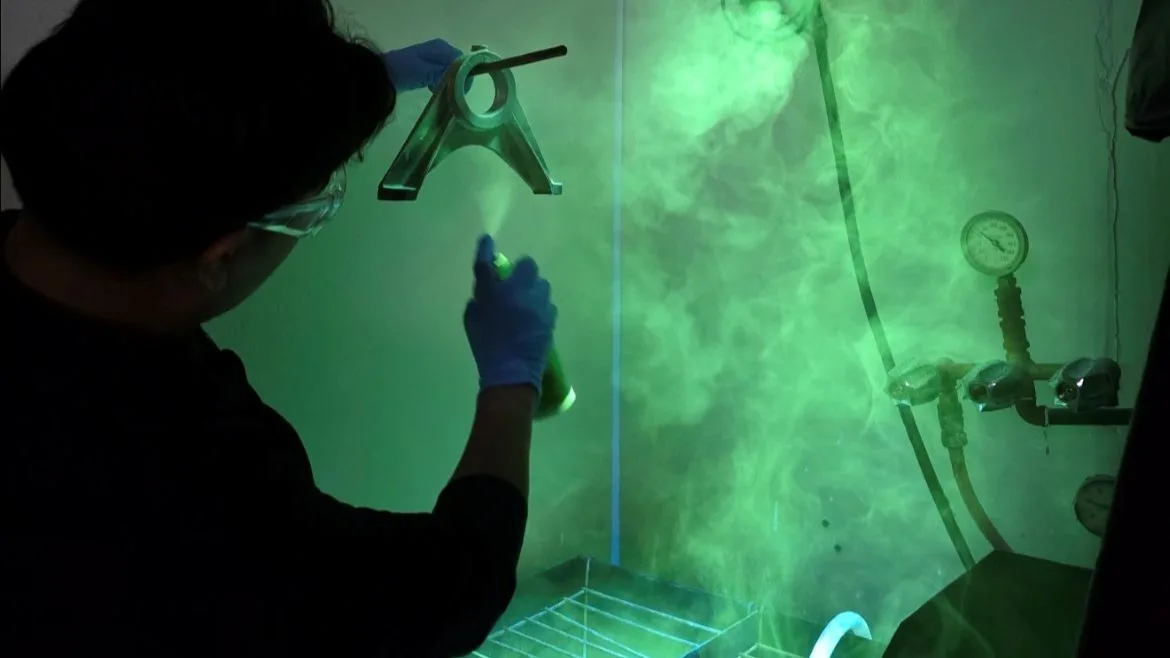
You can learn a lot about NDT from a book, a classroom, or an online course, but at some point, every technician has to put their hands on the equipment. They have to see indications for themselves, make adjustments, ask questions, make mistakes, and understand why each step matters.
That is the idea behind the NDT Gym.
Across the industry, one of the biggest challenges in technician development is the gap between classroom knowledge and real-world readiness. Many technicians complete formal training, pass written exams, or log required hours, but still need more practical time applying the method before they are truly prepared for the field.
Online training has become more common, especially in recent years, and it can be valuable for theory, review, and accessibility. But NDT cannot be fully learned through a screen. It is a hands-on profession. Technicians need to handle probes, prepare parts, adjust equipment, perform calibrations, evaluate indications, and understand how technique affects results.
Access is often the missing piece. Many technicians do not have regular access to equipment, flawed samples, realistic inspection scenarios, or experienced inspectors who can guide them through the process. In production environments, there is often pressure to complete the job quickly. Assistants and newer technicians may be asked to help move the work forward before they have had enough time to fully understand the method, its limitations, and the judgment required to apply it correctly.
That kind of learning only comes through practice.
The NDT Gym was built around that need. Just as athletes use a gym to build strength, repetition, and confidence before competition, inspectors need a place to build skill before the consequences are real. A hands-on training environment gives technicians the opportunity to work with real equipment, realistic samples, and practical inspection challenges while receiving direct supervision and guidance from experienced personnel.
The program is overseen by ASNT Level IIIs, and all training modules and materials are reviewed and approved by Level IIIs in the applicable methods and techniques. It also provides a place where technicians can obtain experience hours in accordance with ASNT SNT-TC-1A 2024 Edition, Paragraph 6.4.
The goal is not to replace classroom training, online learning, certification, or OJT. It is to strengthen them. A technician may have the required hours on paper, but still need more time applying the method in a practical, repeatable way. Certification should represent readiness, not just completed paperwork.
Hands-on practice gives technicians a place to slow down, ask questions, repeat techniques, and build confidence without the pressure of production or a customer waiting on results. It allows them to see how indications present themselves, why calibration matters, how poor technique affects results, and how small decisions can impact the quality of an inspection.
That is where real confidence starts to build.
This type of environment can support new technicians who have completed classroom training but need practical experience. It can help Level I and Level II candidates preparing for exams or practical demonstrations. It can support employees who need retraining or a refresher, companies that want better-prepared people in the field, and experienced inspectors who want to practice a method they do not use every day or become familiar with different equipment.
Most importantly, it supports the industries that depend on NDT. Manufacturing, energy, aerospace, petrochemical, infrastructure, shipbuilding, and many others rely on inspectors to make sound decisions. Better preparation leads to better inspection quality.
A practical training environment also makes it easier to catch bad habits early. A technician may understand the lesson but in the field they still use the wrong probe, rush surface preparation, skip a lighting check, misread a display, or miss something important in a report. In a hands-on setting, these issues can be seen, corrected, and practiced again.
As experienced inspectors retire and the demand for qualified personnel continues to grow, the industry cannot rely on theory alone to develop the next generation. Technicians need better access to practice, guidance, repetition, and real-world learning before they are placed in high-pressure situations.
That is the purpose behind the NDT Gym. It represents a practical approach to building stronger inspectors: giving technicians a place to make mistakes before the consequences are real, build confidence before they are in the field, and develop the habits that lead to better inspection results.
At the end of the day, inspection quality depends on people. Equipment matters. Procedures matter. Codes and standards matter. But the inspector is the one who brings all of those pieces together. When inspectors are better prepared, they ask better questions, make better decisions, and produce more reliable results.
That is why hands-on preparation matters, and why spaces like the NDT Gym are important to the future of NDT.
Looking for a reprint of this article?
From high-res PDFs to custom plaques, order your copy today!