In manufacturing, maintaining product quality is essential. Quality departments should be involved throughout the entire process, from engineering to shipping, to ensure high standards. Consistent quality can be challenging without adequate protocols.
Dilip Shah is the president of E=mc3 Solutions and he sat down with Michelle Bangert at the MAX Show in Nashville to talk about his presentation there and more.
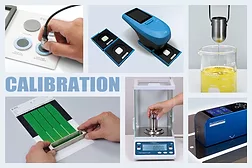
Let’s explore what calibration actually guarantees, where it falls short, and why instruments can pass calibration yet still produce inconsistent results.
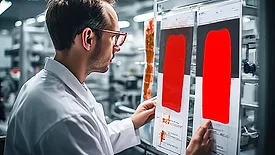
When physical test equipment passes calibration, most customers assume that their results are bulletproof. In practice, however, many quality teams are discovering that “in-spec” instruments are no longer enough to defend their data when auditors or customers start asking questions.
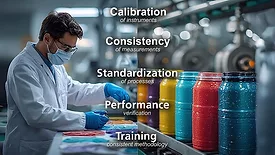
Let’s look at several steps in a typical seamless production process and how they ultimately ensure that quality products are produced and delivered on time.
Renishaw will highlight its latest solutions for maximizing robot performance and manufacturing efficiency at Automate 2026, taking place June 22–25 at McCormick Place in Chicago.
In many laboratories, confidence in physical testing is based on the assumption that results are consistent and that, if a method works once, it can be repeated. However, shifts in operator technique, environmental conditions, or instrument calibration can undermine that confidence.
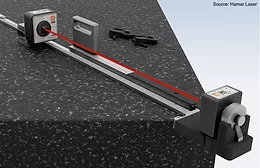
Hamar Laser Instruments, Inc., a leader in laser alignment and calibration systems, announced that the U.S. Air Force Metrology & Calibration Office (AFMETCAL) in Heath, Ohio awarded the company a multi-year contract for its L-703SP Surface Plate Calibration System on August 22.