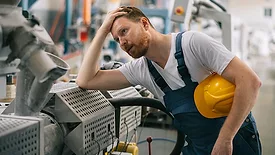
Stress is increasingly prevalent in our fast-paced world, where it can enhance productivity in moderation but hinder performance when excessive. Following a promotion in 2024, the author experienced significant stress that impacted their health.
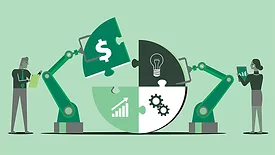
The 2025 landscape may shift significantly as more than half of companies plan to boost AI and automation spending. Insights from the Annual Quality Spending Survey emphasize a focus on quality and rising cybersecurity concerns. Discover the trends shaping the future of manufacturing.
Generative AI Searches are transforming how professionals access technical data in fields like inspection and gages. While these tools deliver quick results, reliance on their outputs can lead to inaccuracies, as shown by discrepancies in thread specifications. Understanding the strengths and limitations of Generative AI is essential for ensuring the accuracy and relevance of information used in gage calibration and metrology.
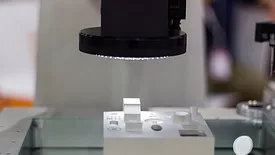
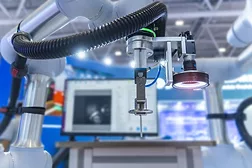
The first part of this series covered the basic principles that make high-accuracy measurements possible for machine vision. The second part of the series looked at challenges to accurate measurements due to the application conditions. This third part looks at characteristics and components of the vision system that can limit the achievable accuracy.
Here we’ll examine challenges that the measurement environment imposes on machine vision and give approaches to mitigate the effects and retain much of the high-accuracy capability.
The first part of this three-part series covered the principles that allow machine vision to make high-accuracy measurements. This second part examines challenges that the measurement environment imposes on machine vision and gives approaches to mitigate the effects and retain much of the high-accuracy capability.
The techniques allowing high-precision measurements are well understood and based on solid principles. Calibration is critical to accurate measurements.
Machine vision can measure with greater precision and accuracy than human vision. This series starts by exploring techniques for high-precision measurements in vision systems. The next installments will examine challenges and solutions for maintaining this precision and accuracy. First, we'll clarify key terms related to measurement accuracy.
Calibration is essential for maintaining quality and safety in industries like pharmaceuticals, food and beverage, and chemicals. The future looks to digital certificates and AI technology to make calibration processes faster and more efficient. This article discusses how AI is set to transform calibration.
As an accreditation assessor, I can say that many common assessment deficiencies could have been prevented if the calibration certificate had been thoroughly reviewed.
This article is an adaptation of my popular presentation, “Beyond the Sticker & the Cert (Ensuring Better Measurements & Reducing Risk).” Product manufacturers, testing labs, and calibration labs often overlook the importance of thoroughly reviewing calibration certificates, leading to potential measurement inaccuracies and increased risks.
Beamex announced the relocation of its US operations, including its state-of-the-art calibration laboratory and warehouse, to a new, expanded facility in Atlanta, GA.