Quality Magazine logo
search
cart
facebook twitter linkedin youtube
  • Sign In
  • Create Account
  • Sign Out
  • My Account
Quality Magazine logo
  • NEWS
  • PRODUCTS
    • FEATURED PRODUCTS
    • SUBMIT YOUR PRODUCT
  • CHANNELS
    • AUTOMATION
    • MANAGEMENT
    • MEASUREMENT
    • NDT
    • QUALITY 101
    • SOFTWARE
    • TEST & INSPECTION
    • VISION & SENSORS
  • MARKETS
    • AEROSPACE
    • AUTOMOTIVE
    • ENERGY
    • GREEN MANUFACTURING
    • MEDICAL
  • MEDIA
    • A WORD ON QUALITY PUZZLE
    • EBOOK
    • PODCASTS
    • VIDEOS
    • WEBINARS
  • EVENTS
    • EVENT CALENDAR
    • IMTS
  • DIRECTORIES
    • BUYERS GUIDE >
      • Supplier Insights
    • NDT SOURCEBOOK
    • VISION & SENSORS
    • TAKE A TOUR
  • INFOCENTERS
    • Digital Quality Management Systems
    • NEXT GENERATION SPC & QUALITY ANALYTICS
  • AWARDS
    • ROOKIE OF THE YEAR
    • PLANT OF THE YEAR
    • PROFESSIONAL OF THE YEAR
  • MORE
    • Expert Columns
    • NEWSLETTERS
    • QUALITY STORE
    • INDUSTRY LINKS
    • SPONSOR INSIGHTS
  • EMAG
    • eMAGAZINE
    • ARCHIVES
    • CONTACT
    • ADVERTISE
  • SIGN UP!
Vision & Sensors

Vision & Sensors | Measurement

Tips on Making Precision Measurements with Machine Vision – Part 2

Here we’ll examine challenges that the measurement environment imposes on machine vision and give approaches to mitigate the effects and retain much of the high-accuracy capability.
By Perry C. West
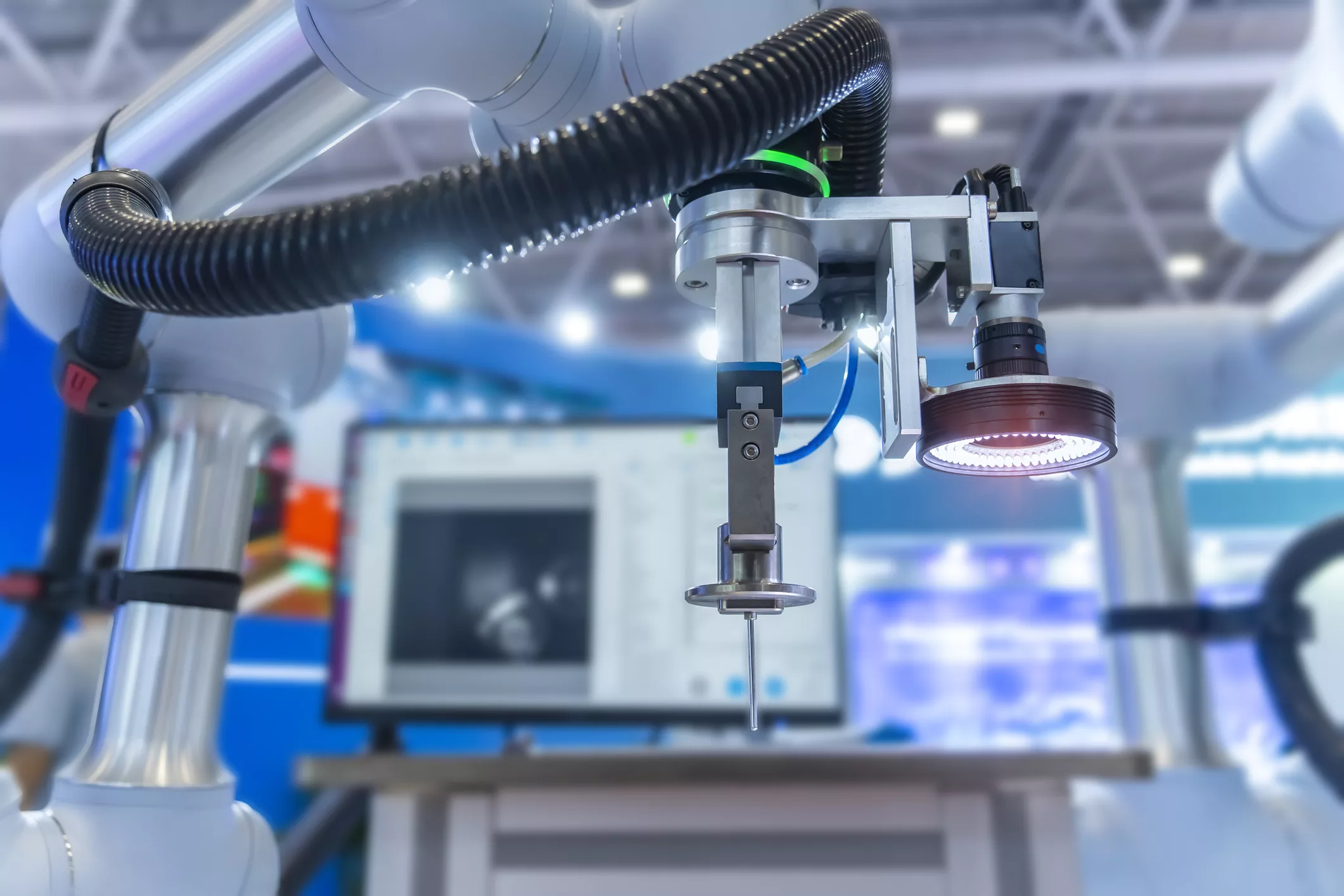
Smart robot in manufacturing industry for industry 4.0 and technology concept.
Getty Images

Image Source: kynny / iStock / Getty Images Plus

October 16, 2024
✕
Image in modal.

The first part of this three-part series covered the principles that allow machine vision to make high-accuracy measurements. This second part examines challenges that the measurement environment imposes on machine vision and gives approaches to mitigate the effects and retain much of the high-accuracy capability.

Machine Vision Measurements v. Conventional Measurements

Figure 1
Figure 1 -- Caliper Measurement Source: Automated Vision Systems

Measuring to an edge with a caliper will measure to the high point (see Figure 1) giving an error between the manually measured value and the measurement value from the machine vision system. Similarly, measuring the diameter of a hole with machine vision usually gives the average diameter. If the hole is just slightly elliptical, then measuring its diameter with a pin gage will give a different diameter than the machine vision measurement.

MACHINE VISION: Tips on Making Precision Measurements with Machine Vision – Part 1

Tips on Making Precision Measurements with Machine Vision

Part 1 | Part 3

There are software tools in many machine vision programs to emulate conventional measurement tools. For example, a tool to find the smallest inside diameter simulates checking a hole with a pin gage. These tools may give better correlation to conventional measurement approaches but with likely less precision than a hole fitting tool that makes use of statistical averaging over all points around the hole.

Lighting

The purpose of lighting is to create contrast. The higher the contrast between an edge and its background, the better results sub-pixel measurement techniques provide due to better edge profile data. Higher contrast also improves the signal-to-noise ratio further improving results. Use as much of the camera’s gray-scale range as practical.

When setting lighting and camera exposure time, it is considered best practice to ensure there is no saturation or black level clipping in the image around the area where measurements are made. When using gray-scale analysis of the edge profile, slight clipping of the bright or the dark areas will not affect the precision of the measurement. The challenge with saturation is that there is no way to tell from image data how much of the edge amplitude is lost.

If there is a risk of saturation or clipping, you must ensure it is only a small amount that won’t distort the edge profile in the area of the inflexion. There is little data to suggest that saturation or clipping has any benefit for measurement accuracy.

Risk in Fitting to a Model

Since all sub-pixel precision techniques in machine vision rely on fitting to a model, the approach comes with the risk the physical reality may not match the model to an acceptable degree. Fitting to a straight edge that isn’t straight gives an estimate of an equivalent straight edge.

Fortunately, a statistical fit can also provide a goodness of fit measurement. There are many such metrics including R-squared and Pearson’s chi-squared test. If the goodness-of-fit result is unsatisfactory, it indicates either the edge doesn’t match the model well enough or the vision system is suffering from too much noise, or the system calibration didn’t adequately correct for lens distortion.
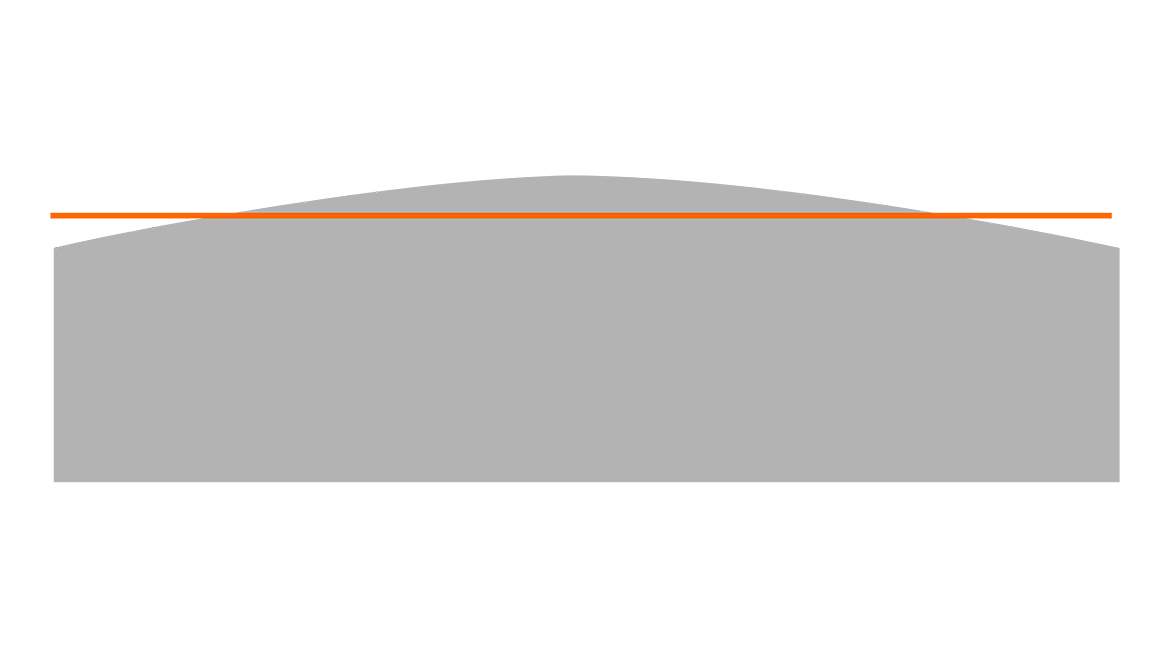
Figure 2
Figure 2 -- Straight Line Fit to a Curved Edge Image Source: Automated Vision Systems

As discussed above, achieving sub-pixel precision relies on fitting the data to a model. What if the real world does not conform to the model as illustrated in Figure 2? For example, if the data from the edge is fit to a straight line, but the edge is not straight, there will not be a gain in precision or the resulting accuracy.

The quality of fit to a straight edge, or any other model, would be a statistical test such as R-squared. A test’s value out of some defined, acceptable range indicates a deviation of data points from the fit model.

The same reasoning applies to finding the true edge position from a gray-scale edge profile. There is an assumption of symmetry about the inflection point. If the edge profile is not symmetric, then the calculated edge position will be in error.
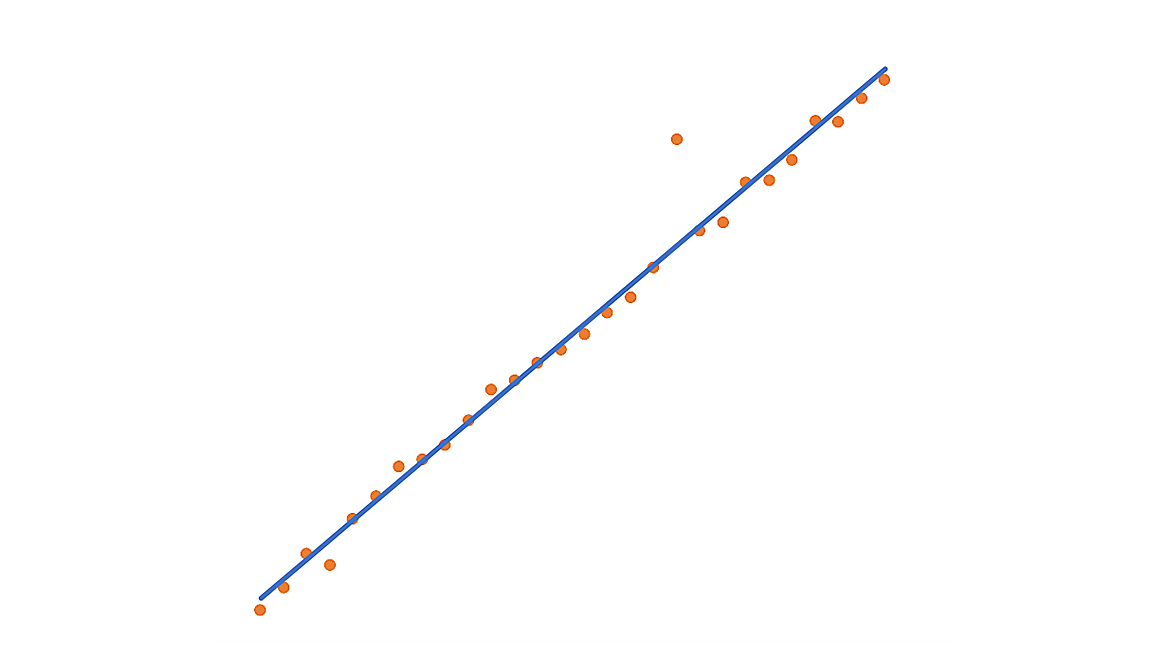
Figure 3 -- Points fit to a Line with an Outlier
Figure 3 -- Points fit to a Line with an Outlier Image Source: Automated Vision Systems

Outliers

In any set of data, there are bound to be a few outliers – data points that deviate rather significantly from the model as shown in Figure 3. It is valid to detect outliers and delete them from the data set to achieve the highest precision. This is due to noise or perhaps random artifacts in the scene.

Because most fitting algorithms use the least squares approach which minimizes the square of the error between data points and the result, an outlier with high error has a stronger effect on the fit to the data than points close to the fit. Eliminating those few outliers and refitting the remaining data points to a line gives improved precision. Hopefully, your machine vision software gives you the option of deleting outliners.
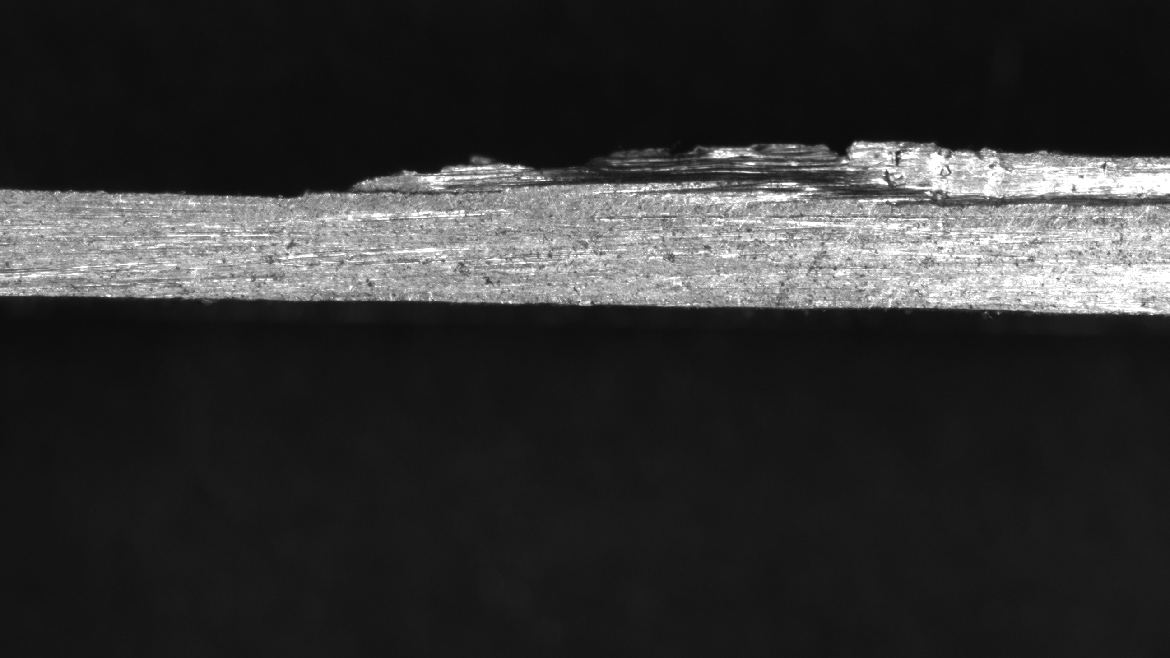
Figure 4 -- Edge with a Burr
Figure 4 -- Edge with a Burr Image Source: Automated Vision Systems

Burrs

An edge with burrs produces outliners (see Figure 4). If the burr extends only along a very short portion of the measured edge, then eliminating outliers will likely cause the burr to be ignored. Otherwise, if the burr is irregular, the use of a statistical test such as R-squared will give evidence of a problematic fit. In the second case where the burr extends for much of the edge, a precision measurement is likely not possible.

Figure 5 -- Chamfered Edge, Off-Axis Lighting
Figure 5 -- Chamfered Edge, Off-Axis Lighting Image Source: Automated Vision Systems

Chamfer or Deburring

Many machined parts and even molded parts have a chamfer or radius on the edge due to the design of the mold or due to deburring. This chamfer results in a distortion of the gray-scale edge profile as shown in Figure 5 and Figure 6. This often leads to errors in determining the true edge position.

Figure 6 -- Radiused Edge, Off-Axis Lighting
Figure 6 -- Radiused Edge, Off-Axis Lighting Image Source: Automated Vision Systems

In Figure 5, the light is coming from the chamfered edge. This results in two edges on either side of the chamfer. Most vision software systems can be set up to pick the correct edge.

In Figure 6, the light is coming from the opposite direction of the radius. The edge brightness fades to dark. Vision software cannot find the correct edge.

When chamfered or radiused edges are present, lighting and software setup becomes extremely important to achieve accurate measurements.

Motion Blur
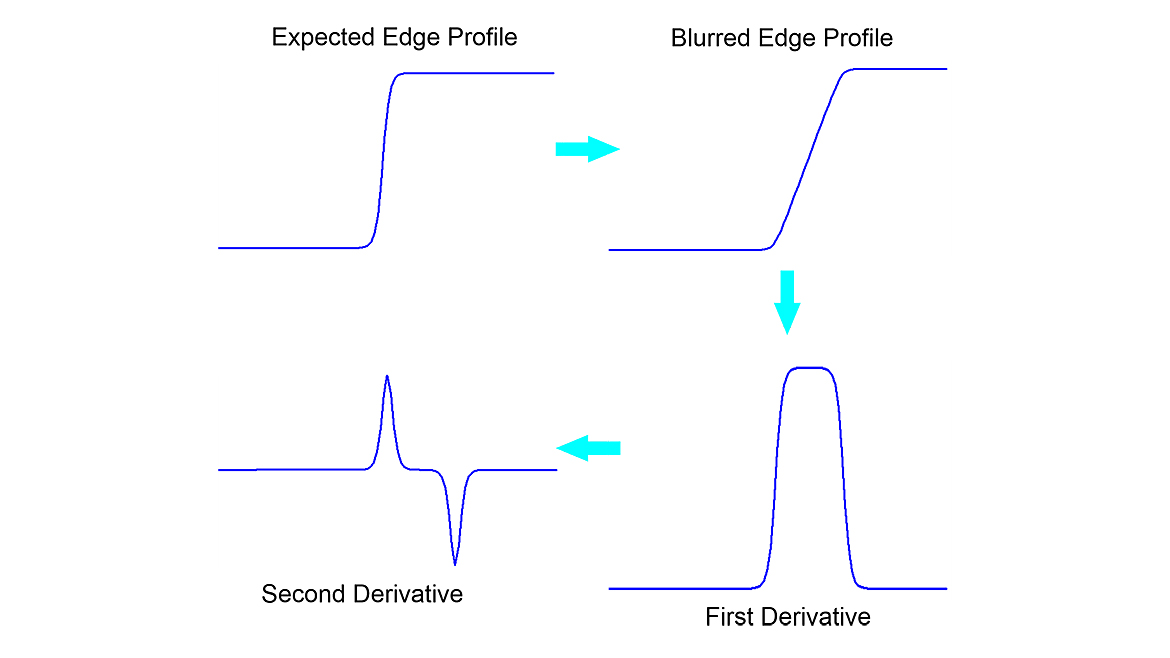
Figure 7 -- Effect of Motion (Blur) on Edge Profile
Figure 7 -- Effect of Motion (Blur) on Edge Profile Image Source: Automated Vision Systems

The blurring of an image due to motion reduces the accuracy of measurements – both trueness and precision. Motion blurs the edge profile that is parallel to the motion direction making the inflection point less distinct as shown in Figure 7. You can notice that the first derivative has a flat top rather than a defined peak. The second derivative has a flat between the opposing spikes rather than a clean zero crossing.

Most algorithms extracting the edge from the edge profile will give greatly degraded trueness and precision in reporting the edge position or possibly fail to report an edge position when dealing with motion blur. Even algorithms anticipating the edge profile distortion will still not give the best precision and trueness.

When making measurements on moving parts, a short exposure is essential. While the typical best practice is an exposure time giving only one pixel of blur, for precision measurements, the exposure time should be reduced to give a blur of just a small fraction of a pixel – much less than the sub-pixel precision target. This usually requires a strobed light source, with overdrive when using LED illumination.

Conclusion

The operating environment critically affects measurement performance. One common challenge is a difference between manual measurement methods and machine vision measurement techniques. Machine vision software has made progress in better emulating manual inspection techniques.

There are problems created by edge artifacts such as burrs, edge conformance to an expectation, chamfers, and radii that can confuse the vision system’s software. Lighting and using statistical principles provide methods to deal with these challenges.

The third part of this series covers some challenges that are part of the vision system design and components.

RELATED ARTICLES

  • What Drives the Trends in Machine Vision
  • Image Processing for Machine Vision – How Did We Get Here?
  • Vision & Sensors 101: Machine Vision System Integration
KEYWORDS: calibration machine vision manufacturing metrology

Share This Story

Looking for a reprint of this article?
From high-res PDFs to custom plaques, order your copy today!

Perry C. West is president of Automated Vision Systems Inc. (San Jose, CA). For more information, call (408) 267-1746, e-mail [email protected] or visit www.autovis.com.


Recommended Content

JOIN TODAY
to unlock your recommendations.

Already have an account? Sign In

  • 2024 Quality Rookie of the Year Justin Wise 1440x750px banner with "Quality Rookie of the Year" logo inset

    Meet the 2024 Quality Rookie of the Year: Justin Wise

    Justin Wise is an exceptional individual who has been...
    Aerospace
    By: Michelle Bangert
  • Man with umbrella and coat stands outside while it rains at night looking at a building.

    Nondestructive Testing: Is there an ethics problem?

    I was a whistleblower who exposed fraudulent activities...
    NDT
    By: Dale Norwood
  • Unraveling Deflategate: Football stadium with closeup of football on field

    Unraveling the Tom Brady Deflategate

    The Deflategate scandal erupted following the 2014 AFC...
    Measurement
    By: Greg Cenker and Henry Zumbrun
Manage My Account
  • eMagazine Subscriptions
  • Newsletters
  • Online Registration
  • Subscription Customer Service
  • Manage My Preferences

More Videos

Sponsored Content

Sponsored Content is a special paid section where industry companies provide high quality, objective, non-commercial content around topics of interest to the Quality audience. All Sponsored Content is supplied by the advertising company and any opinions expressed in this article are those of the author and not necessarily reflect the views of Quality or its parent company, BNP Media. Interested in participating in our Sponsored Content section? Contact your local rep!

close
  • Key Takeaways for Quality Leaders
    Sponsored byComplianceQuest

    Key Takeaways for Quality Leaders from the 2026 Gartner Magic Quadrant™ for QMS

  • This image shows a person seated next to a Bobcat T66 compact track loader.
    Sponsored byPolyWorks by InnovMetric

    Supercharging Digital Gauging at Bobcat North America

  • Dorsey Calibration Lab photo by Tom LaBarbera Picture this Studios
    Sponsored byDorsey Metrology International

    Ensuring Product Quality in a Competitive Manufacturing Landscape

Popular Stories

This image shows a person seated next to a Bobcat T66 compact track loader.

Supercharging Digital Gauging at Bobcat North America

a professional in the aviation field performing maintenance, repair, and overhaul (MRO) work

Manufacturing Retention: Strategies for Improving Company Culture, Engagement and Skill Development

Dorsey Calibration Lab photo by Tom LaBarbera Picture this Studios

Ensuring Product Quality in a Competitive Manufacturing Landscape

2026 Quality Professional of the Year!

Events

June 22, 2026

Automate 2026

Automate is North America's largest robotics and automation event — and the best place to take your ideas from insight to impact.
 
Our show floor features the world’s leading automation solutions, from AI and robotics to motion control, vision systems, and more. Plus, our educational conference is second to none, led by the brightest minds in automation today.
 
Ready to transform the way you work? Take the next step at Automate.
July 14, 2026

Quality Leaders Forum: Better Communication, Better Quality Data

The Quality Leaders Forum is a quarterly, editor-moderated fireside chat series hosted by Quality Magazine, featuring candid conversations with senior manufacturing and operations executives shaping enterprise-level quality.

View All Submit An Event

Products

Lean Manufacturing and Service Fundamentals, Applications, and Case Studies

Lean Manufacturing and Service Fundamentals, Applications, and Case Studies

See More Products
Quality Podcast Channel Custom Content

Related Articles

  • High-quality control in manufacturing optical sorting machine for fasteners screw in product line.

    Tips on Making Precision Measurements with Machine Vision – Part 1

    See More
  • Master sample inspected by optical CMM ; selective focus

    Tips on Making Precision Measurements with Machine Vision – Part 3

    See More
  • This is an Opto Engineering telecentric lens, used in industrial machine vision for precise measurement applications

    Lighting Design for Machine Vision, Part 2

    See More

Related Products

See More Products
  • Machine Vision and Error Proofing DVD

  • leaner.jpg

    Leaner Six Sigma: Making Lean Six Sigma Easier and Adaptable to Current Workplaces

See More Products

Events

View AllSubmit An Event
  • November 18, 2025

    Practical Machine Vision – Successful 3D Robotic Bin Picking

    On Demand In this webinar we will describe 3D bin picking and discuss its recent evolution towards a mature technology.
View AllSubmit An Event

Related Directories

  • Machine Vision Store

    Machine Vision Store has a laser-sharp focus on machine vision imaging. We deliver a select group of components - cameras, lenses, lights, industrial vision PC's - from leading manufacturers known for quality. Components we understand, support and stand behind. Components and consulting services that will power your success.
×

Stay in the know with Quality’s comprehensive coverage of
the manufacturing and metrology industries.

Newsletters | Website | eMagazine

JOIN TODAY!
  • RESOURCES
    • Advertise
    • Contact Us
    • Directories
    • Manufacturing Division
    • Store
    • Want More
  • SIGN UP TODAY
    • Create Account
    • eMagazine
    • Newsletters
    • Customer Service
    • Manage Preferences
  • SERVICES
    • Marketing Services
    • Market Research
    • Reprints
    • List Rental
    • Survey/Respondent Access
  • STAY CONNECTED
    • LinkedIn
    • Facebook
    • YouTube
    • X (Twitter)
  • PRIVACY
    • PRIVACY POLICY
    • TERMS & CONDITIONS
    • DO NOT SELL MY PERSONAL INFORMATION
    • PRIVACY REQUEST
    • ACCESSIBILITY

Copyright ©2026. All Rights Reserved BNP Media, Inc. and BNP Media II, LLC.

Design, CMS, Hosting & Web Development :: ePublishing