On April 20, three days after a Southwest Airlines Boeing 737-700 experienced an engine failure due to a fractured fan blade, resulting in the death of a passenger, the U.S. Federal Aviation Administration issued an emergency airworthiness directive that requires operators of CFM56-7B engines with more than 30,000 flight cycles to perform a one-time ultrasonic inspection of all 24 fan blades to detect cracking.
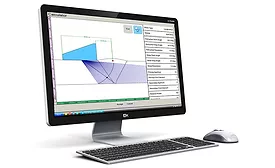
Short range guided wave testing (SRGWT) is an application of guided ultrasonic sound waves using special types of probes. When the guided waves hit the discontinuities, the mode converted sound is reflected back and received by the transducer.
Composite components are used extensively in the design of new generation aircraft. During manufacturing, the aircraft’s structural components must be inspected with ultrasonic technology to ensure their integrity.
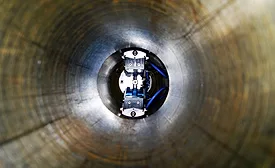
A well-known study published in 1999 by NACE (the National Association of Corrosion Engineers) titled “The United States Cost of Corrosion Study” indicated that the direct cost of corrosion is more than three percent of the Gross Domestic Product (GDP).
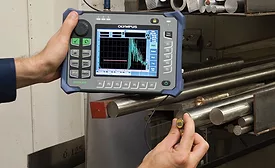
Whether manual, automated, or phased array, ultrasonic testing can help manufacturers of bars, tubing, and related metal products to ensure product quality and customer satisfaction.
Ultrasonic nondestructive testing (NDT) is a well-established technique that utilizes high frequency sound waves to locate cracks and other hidden flaws in metals, composites, and plastics.
Although initially developed as a method for detecting defects in structures in order to safeguard against catastrophic failures, ultrasonic non-destructive testing (NDT) has evolved immensely to a technique considered the mainstay for the NDT industry.