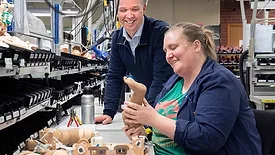
Component Engineers Inc. (CEI) in Wallingford, CT prioritizes quality control by consistently meeting or exceeding customer expectations from quoting to delivery. CEI continuously enhances its processes to adapt to changing requirements and tackles complex manufacturing challenges, solidifying quality as a core business principle.
Visual SLAM (Simultaneous Localization and Mapping) is an AI-driven, 3D vision-based method that marks a departure from conventional navigation systems.
In addition to significantly boosting productivity in factories and warehouses by autonomously moving raw materials, parts, or finished goods between workstations or storage areas, Autonomous Mobile Robots (AMRs) handle tedious, non-value-added tasks like cart pushing, allowing human employees to focus on higher-skill activities.
In a joint Assembly/Quality podcast, Jennifer Pierce, multimedia editor with Assembly Magazine and the host of Assembly Audible, and Michelle Bangert, managing editor of Quality, explore an area where assembly and quality intersect: machine vision, with David Dechow, founder and owner of Machine Vision Source.
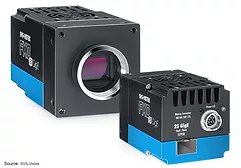
SVS-Vistek expanded its FXO platform by introducing the new FXO 25GigE Series of machine vision cameras enabled with Remote Direct Memory Access (RDMA) technology.
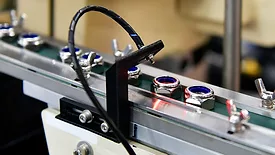
Inline machine vision systems improve efficiency, product quality, and traceability, but challenges like installation complexities and data issues can increase false positives and negatives, leading to frustration and distrust. This article outlines strategies to address these common hurdles.
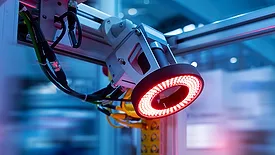
Ensuring adequate light for high-speed applications involves more than measuring lux; it depends on how much light the sample reflects and absorbs and whether it captures direct or scattered light. High-intensity light may still fail if the sample doesn't reflect enough to the camera, making brighter lights essential for short exposure times to prevent blur.
Here are four factors that I believe we as an industry need to closely study, honestly evaluate our contributions to, and commit to work towards—today.
Here are four factors that I believe we as an industry need to study closely, honestly evaluate our contributions to, and commit to working towards today.
Most pipelines still rely on real data—thousands of expertly labeled images captured under every possible condition. A quiet revolution is transforming this approach. Instead of photographing every potential defect, we now generate realistic images on demand, guided by software that mimics human understanding at pixel level.
Laerdal Medical is one of the world’s leading suppliers of models for teaching people how to do CPR, intubate a patient or even deliver a baby. To ensure that each bust is assembled correctly and shipped with the right auxiliary components, Laerdal engineers implemented Tulip Vision, a vision-based error-proofing system from Tulip Interfaces Inc.
--Mover-(right).webp?height=168&t=1754956392&width=275 "AMR-Tug (left) and Mover (right)")