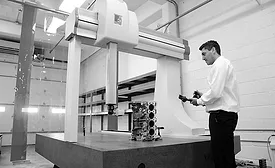
To choose the right 3D surface measurement tool, an engineer must carefully consider the size of the object, the speed of the scan and analysis, and a customer’s tolerance requirements.
This white paper explains the main aspects of ISO 10360 and, in particular, ISO 10360-7, the standard for inspecting coordinate measuring machines with imaging probing systems. Learn why ZEISS chose this standard, how this standard benefits customers and what you need to keep in mind in the implementation.
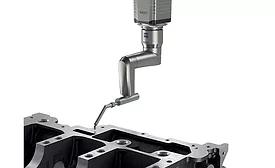
In a previous article, we observed how multi-sensor CMMs can perform 2D and 3D measurements interchangeably in a single run. Today, high-precision CMMs also can carry out form measurement functions, says David Wick, product manager at ZEISS Industrial Metrology.
Quite often in manufacturing, an inspection department is treated primarily as a necessary overhead expense required to assure compliance to customer specifications. Sometimes an inspection department may also be treated as a profit center for compliance to a variety of test protocols dictated by external agencies, or perhaps internal procedures to demonstrate traceability to certain quality standards.
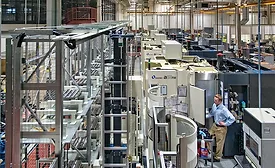
Camcraft Inc., located in Hanover Park, IL, manufactures high-precision components and assemblies. Utilizing the latest machining technology and automation, Camcraft manufactures the most complex hydraulic engine management and fuel system components for on- and off-highway applications.
When explaining surface finish measurement, it can be helpful to start with the classic metaphor of a desert, as often described by gage maker Taylor Hobson. Imagine grains of sand as roughness, the ripples of sand as waviness, and then the undulating dunes as the surface profile.
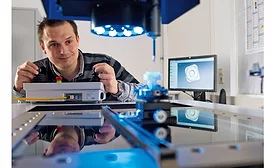
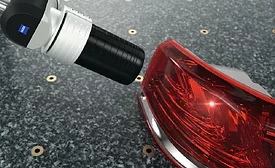
As multi-sensor machines grow in popularity, so does their flexibility and the variety of optional sensors. One of the newest solutions of choice is confocal white light sensors for non-contact measurement.
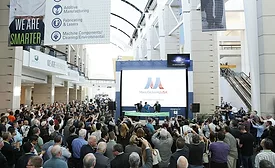
Dominant technologies to watch at IMTS 2018 include an increasing digital thread, robotics and automation, quality assurance and additive manufacturing.
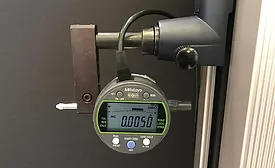
Whether you’re talking about measurement checks in the quality room or a quick, accurate check on the shop floor, height gages remain one of the most useful tools in metrology today.