As industries transition to higher-performance technologies, the materials used in electric vehicles, semiconductors, and aerospace systems are operating under increasingly demanding conditions.
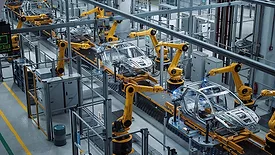
Automotive production is at an inflection point. For decades, automakers relied on traditional industrial robots to deliver the speed, durability and throughput required for mass production. Those large, stationary machines defined efficiency, but often at the expense of flexibility.
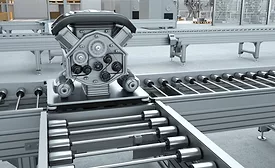
Conveyance has always been central to automotive production. Every vehicle component, from a small subassembly to a complete powertrain, depends on reliable movement through the factory.
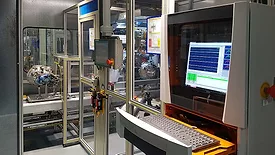
EoL Noise and Vibration (NVH) testing is essential in automotive manufacturing, especially for electric vehicles. Advanced sensors enhance product quality by detecting anomalies, reducing warranty claims, and improving customer experience across various industries.
The transition to electric vehicles (EVs) in the auto industry is a significant transformation that requires a shift in process and culture. A Mississippi manufacturing plant is preparing to evolve into a high-performing EV hub, ensuring it meets rising consumer expectations while upholding its core values of quality, community, and innovation.
As we continue to move towards the ultimate phasing out of Internal Combustion Engine (ICE)-powered cars, and Electric Vehicles (EVs) become the dominant technology, more manufacturers are expected to invest in gigacasting equipment.
Gigacasting, or megacasting, is revolutionizing automotive manufacturing by providing substantial cost and efficiency benefits. When combined with a high percentage of recycled feedstock, gigacasting can support circular economy goals by increasing recycled content in vehicles.
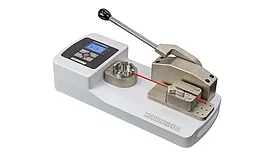
One force measurement application gaining popularity is wire terminal testing, where a controlled pull on a crimped connection is used to measure force, assessing its integrity and quality.
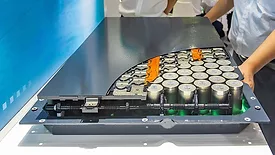
PHILADELPHIA—Engineers at Drexel University have developed a benchtop tool that enables automakers and suppliers to get a better look at the electrochemical and mechanical functions of EV batteries.