After Greg Weaver got out of the Navy, he started working in mining in northern Nevada. After a few winters, it was time to do something else. “It was like six degrees, and I’d be working outside.” He found a listing in the paper for an aerospace company that did turbine blade repair.
Across the global industrial landscape, nondestructive testing (NDT) faces a pivotal moment. The sector is grappling with two simultaneous forces: a shrinking and aging workforce on one hand and accelerating technological change on the other.
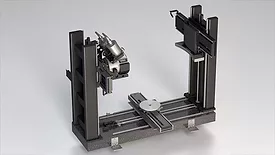
High-quality FIB-cut faces are essential for accurate analysis in materials research, supporting reliable imaging, defect detection, and cross-sectional studies.
Operational excellence is crucial for success in a dynamic industrial landscape. At Waygate Technologies, our Kaizen journey has transformed our efficiency and collaboration, turning challenges into victories. As we near 2025, the lessons learned emphasize a future of continuous improvement, empowering every team member to drive change and cultivate a culture of shared responsibility.
Used together, these technologies provide comprehensive coverage for complex applications, supporting traceability, audit readiness, and supply chain transparency.
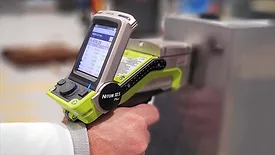
In manufacturing and aerospace, ensuring material integrity is essential. Portable tools like handheld XRF and LIBS are streamlining certification with rapid, on-site analysis for better quality control.
Manufacturers and training providers are overhauling how they prepare nondestructive testing inspectors. New imaging technology, AI, simulation software and changing standards are reshaping training programs, while leaders are expanding their outreach and even changing their organizations’ internal cultures to attract and retain a new generation of inspectors.
Manufacturers and training providers are revamping nondestructive testing training with new technologies and standards, while leaders adapt outreach and culture to attract a new generation of inspectors.
QA/QC is essential in the automotive industry due to rapid product cycles and complex systems. Automakers must meet strict standards while enhancing quality, cost, and lead time, leading many to adopt advanced, data-driven approaches over traditional inspection methods.
ZEISS Industrial Quality Solutions is a leader in metrology and inspection technologies for industries such as Aerospace and Automotive. Their portfolio includes advanced automation, microscopes, and X-ray/CT NDT, ensuring precision and supporting quality throughout the product lifecycle.
Nasrin Azari is the president and CEO of Floodlight Software. She sat down with Michelle Bangert, managing editor at Quality, to discuss transitioning from manual operations to a well-structured digital format.
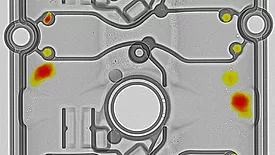
While computed tomography (CT) has garnered attention for its volumetric imaging capabilities, 2D DR remains a faster and more cost-effective option for many production environments. As component complexity and production volumes grow, DR systems with automated image processing provide an effective and efficient solution for quality assurance workflows.
 RSS
RSS


.webp?height=168&t=1763650467&width=275 "a microscopic cross-section showing a high aspect ratio structure")