Guest Column | Benjamin Linke
Kaizen: A Cornerstone of Sustainable Operational Excellence
By implementing the principles of Kaizen, we became a stronger organization and better partner for the nondestructive testing (NDT) industry.
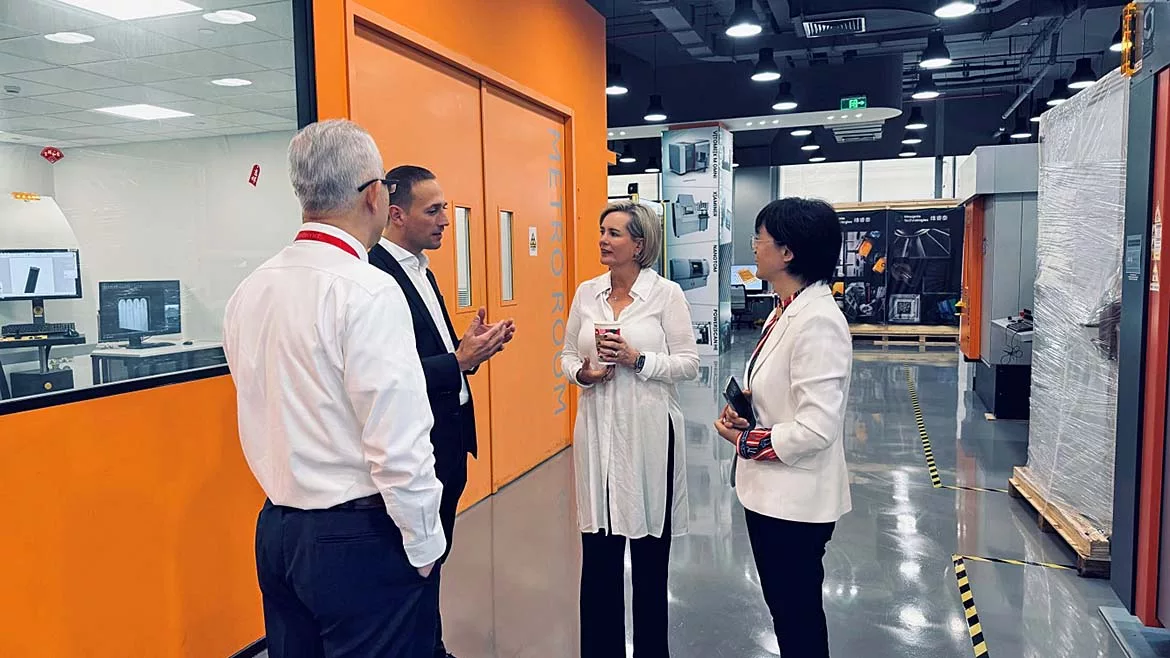
In today’s rapidly evolving industrial landscape, the pursuit of operational excellence is not merely a goal but a necessity to stay ahead of the competition and grow. As we approach the final quarter of 2025, I find myself reflecting on a journey that began over three years ago and has since then fundamentally transformed how we operate at Waygate Technologies, a Baker Hughes business: Our Kaizen journey. By implementing the principles of Kaizen, we became a stronger organization and better partner for the nondestructive testing (NDT) industry.
Understanding Kaizen
But what exactly is Kaizen, and why has it become so integral to our success?
Kaizen, a Japanese term meaning “change for the better,” represents a philosophy of continuous improvement involving all employees across all levels of an organization. Unlike dramatic, disruptive change initiatives, Kaizen focuses on small, incremental improvements that accumulate over time to create significant enhancements in efficiency, quality, and overall performance.
The beauty of Kaizen lies in its simplicity and inclusivity. It’s about empowering every individual to identify inefficiencies and propose solutions within their sphere of influence. This distributed approach to problem-solving creates a powerful collective intelligence that can transform an organization from within.
Our Kaizen Implementation
When we embarked on our Kaizen journey at Waygate Technologies, we faced several challenges: fragmented teams, complex processes, and the need to grow without proportionally increasing costs. We recognized that sustainable improvement would require more than just new policies or procedures—it would demand a fundamental shift in our organizational culture.
Our approach focused on several key elements:
- Practical Training: We provided hands-on training in Kaizen principles and tools, including the PDCA (Plan, Do, Check, Adjust) cycle, ensuring everyone had the practical knowledge to contribute effectively.
- Leadership Engagement: As leaders, we actively participated in Kaizen events, demonstrating our commitment through actions rather than just words. This “gemba” presence - being physically present where the actual work happens - proved crucial for building credibility and trust.
- Structured Problem-Solving: We implemented systematic approaches to identify and address inefficiencies, using value stream mapping to visualize our processes from customer order to delivery and identify non-value-adding activities.
- Mission Control Centers: We established central hubs for project management, providing real-time visibility into our operations and enabling faster, data-driven decision-making.
- Cross-Functional Collaboration: We broke down departmental silos, bringing together diverse perspectives to solve complex problems and create more integrated solutions.
Measurable Results
The results of our Kaizen initiatives have been remarkable. Our Radiography Systems team at Waygate Technologies in Wunstorf, Germany, achieved a 40-point increase in delivery punctuality, a 20% reduction in stock levels, and a 40% reduction in work-in-progress, leading to 33% faster lead times. These improvements resulted in total savings worth millions in released funds.
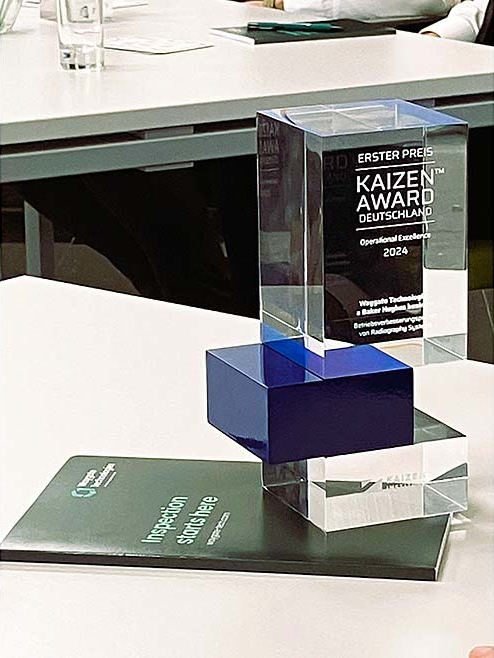
When the team received the Operational Excellence Award at the 2024 German Kaizen Awards for this success, it marked a significant milestone in our transformation. In the world of industrial inspection, where precision and reliability are paramount, I’d say our Kaizen approach has become a competitive advantage.
However, the most significant impact has been the cultural transformation. We’ve witnessed the emergence of a shared mindset of continuous improvement, proactive problem-solving, and collective responsibility for outcomes. This cultural shift has proven more valuable than any single operational improvement, as it creates a self-sustaining engine for ongoing excellence.
Lessons Learned
Our Kaizen journey has taught us several valuable lessons:
First, the best way for transformation to happen is organically, through the active participation and ownership of everyone involved. Leaders must create the conditions for this growth by providing resources, removing obstacles, and recognizing contributions.
Second, measurement matters. Clear metrics and regular reviews provide the feedback necessary to guide improvement efforts and demonstrate progress, maintaining momentum and motivation.
Third, patience is essential. Even after three years, we continue to learn and evolve our approach. Cultural transformation doesn’t happen overnight - it requires persistent effort and reinforcement over time.
Looking Forward
As we continue our Kaizen journey, we’re focusing on fully embedding these principles across our company, a comprehensive approach to strategy deployment and continuous improvement that will guide our operations for years to come. And that path has no endpoint. There will always be inefficiencies to address, processes to streamline, and innovations to implement. But by embracing the Kaizen philosophy, we create the foundation for sustainable excellence in an increasingly competitive global marketplace.
Looking for a reprint of this article?
From high-res PDFs to custom plaques, order your copy today!