Companies are under increasing pressure to deploy AI as a substitute for human labor. It’s critical, therefore, for managers at all levels to understand AI’s strengths and limitations.
AI pioneer Geoffrey Hinton said the quiet part out loud in a December interview with Fortune Magazine – that “companies investing trillions in artificial intelligence can only make their money back by eliminating human jobs.”
Governance, Risk and Compliance (GRC) teams are expected to keep audits moving, close corrective actions, manage supplier issues, maintain training records, meet customer requirements, and stay ready for whatever regulators expect next.
Overcoming the productivity paradox of partial automation.
January 16, 2026
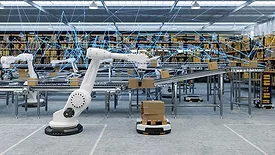
According to Lifecycle Insights, 85 percent of manufacturers now operate with partial automation. Yet few of these businesses have achieved enough connectivity and visibility to unlock performance gains. This article explores where automation delivers the strongest returns and how manufacturers can align technology, processes, and people to sustain their gains.
Any conversation about automation and quality has to start with an acknowledgment that robots inherently improve quality. Robots produce more consistent work than humans.
Access and availability of Quality 4.0 based tools, techniques, and technology has increased over the past two decades. Organizations have benefitted from it in multiple ways across industries.
The momentum behind robotics is stronger than ever, but so too are the expectations. After years of aggressive growth projections and a wave of new entrants promising smarter, faster, and more flexible automation, 2026 will demand demonstrable, validated, production-grade reliability.