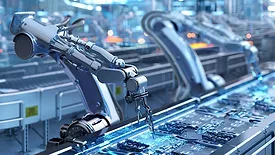
Automotive manufacturers have long relied on end-of-line testing to catch defects before vehicles leave the plant. Increasingly, that approach is giving way to something more proactive.
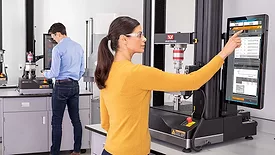
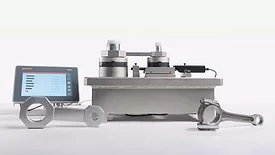
Force testing rarely draws attention until it fails. When components crack, seals leak, or devices do not activate as expected, engineers often trace the problem back to how force was applied, measured, or interpreted.
Air gaging has moved from the inspection bench to the factory floor, where manufacturers are connecting decades-old measurement physics to modern data systems and inline process control.
Instead of waiting until the end of production to confirm size, quality teams increasingly collect dimensional data during machining and finishing operations.
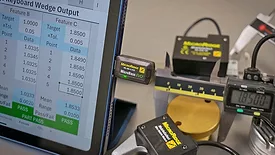
Manufacturing teams continue to use handheld gages during daily quality work, even as they expand their automated inspection systems and adopt more software-driven processes.
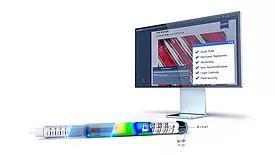
As engineers inspect more complex geometries, validate software-based functions after release and monitor suppliers across global supply chains, they now expect quality systems to support faster innovation.
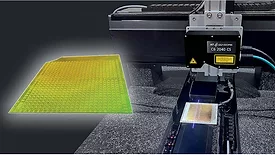
As inspection systems capture more visual and dimensional data than ever before, aerospace manufacturers are using artificial intelligence to find variation earlier, connect processes in real time and redefine what it means to manage quality.
Quality engineers on aircraft and defense programs must verify that every part meets design requirements and keep records that can be audited for years.
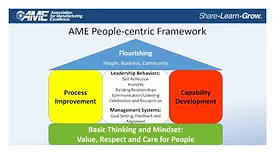
Some organizations may excel at implementing statistical process control and value stream mapping but may neglect to address how leaders interact with their teams. People-Centered Leadership asks leaders to move beyond transactional management and build relationships that support lasting quality.