Trevor Campbell, Sales Development Manager of Microscopy at Zeiss Industrial Quality Solutions, discusses artificial intelligence, microscopy, and a new manufacturing report deployed by Zeiss from the MAX Show in Nashville.
Across industries that depend on advanced composite components, the common feature has been that meaningful quality inspection happens at the end of the production process.
As industries transition to higher-performance technologies, the materials used in electric vehicles, semiconductors, and aerospace systems are operating under increasingly demanding conditions.
Used together, these technologies provide comprehensive coverage for complex applications, supporting traceability, audit readiness, and supply chain transparency.
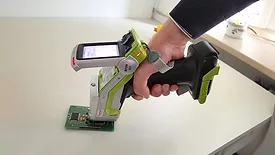
In manufacturing and aerospace, ensuring material integrity is essential. Portable tools like handheld XRF and LIBS are streamlining certification with rapid, on-site analysis for better quality control.
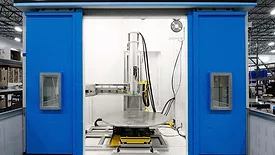
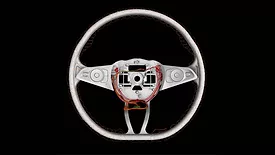
Implementing X-Ray CT technology provides a pathway to increased efficiency by overcoming production bottlenecks, addressing issues related to a shortage of skilled labor, and navigating supply chain challenges.
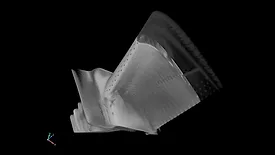
Advances in X-Ray computed tomography (CT) technology can enhance quality processes, improving inspection speed and accuracy, while the 3D data can help address industry challenges.
The EU's RoHS Directive (2002/95/EC) restricts hazardous substances in electrical and electronic products to protect health and the environment, prohibiting materials like lead and cadmium.
The Advanced Photon Source (APS) at Argonne National Laboratory is being upgraded with an $815 million investment to become the brightest synchrotron X-ray facility. This improvement increases X-ray beam brightness by up to 500 times, ensuring a safe and efficient return to world-class research.